Hubbry Logo
SufismSufismMain
Open search
Sufism
Community hub
Sufism
logo
8 pages, 0 posts
0 subscribers
Be the first to start a discussion here.
Sufism
Sufism
from Wikipedia

Sufism (Arabic: الصوفية‎, romanizedaṣ-Ṣūfiyya or Arabic: التصوف‎, romanized: at-Taṣawwuf) is a mystic body of religious practice found within Islam which is characterized by a focus on Islamic purification, spirituality, ritualism, and asceticism.[1]

Practitioners of Sufism are referred to as "Sufis" (from صُوفِيّ, ṣūfīy),[2] and historically typically belonged to "orders" known as tariqa (pl. turuq) — congregations formed around a grand wali (saint) who would be the last in a chain of successive teachers linking back to Muhammad, with the goal of undergoing tazkiya (self purification) and the hope of reaching the spiritual station of ihsan.[3][4][5] The ultimate aim of Sufis is to seek the pleasure of God by endeavoring to return to their original state of purity and natural disposition, known as fitra.[6]

Sufism emerged early on in Islamic history, partly as a reaction against the expansion of the early Umayyad Caliphate (661–750) and mainly under the tutelage of Hasan al-Basri. Although Sufis were opposed to dry legalism, they strictly observed Islamic law and belonged to various schools of Islamic jurisprudence and theology.[7] Although the overwhelming majority of Sufis, both pre-modern and modern, remain adherents of Sunni Islam, certain strands of Sufi thought transferred over to the ambits of Shia Islam during the late medieval period.[8] This particularly happened after the Safavid conversion of Iran under the concept of irfan.[8] Important focuses of Sufi worship include dhikr, the practice of remembrance of God. Sufis also played an important role in spreading Islam through their missionary and educational activities.[7]

Despite a relative decline of Sufi orders in the modern era and attacks from fundamentalist Islamic movements (such as Salafism and Wahhabism), Sufism has continued to play an important role in the Islamic world.[9][10] It has also influenced various forms of spirituality in the West and generated significant academic interest.[11][12][13]

Definitions

[edit]

The Arabic word tasawwuf (lit.''Sufism''), generally translated as Sufism, is commonly defined by Western authors as Islamic mysticism.[14][15][16] The Arabic term Sufi has been used in Islamic literature with a wide range of meanings, by both proponents and opponents of Sufism.[14] Classical Sufi texts, which stressed certain teachings and practices of the Quran and the sunnah (exemplary teachings and practices of the Islamic prophet Muhammad), gave definitions of tasawwuf that described ethical and spiritual goals[note 1] and functioned as teaching tools for their attainment. Many other terms that described particular spiritual qualities and roles were used instead in more practical contexts.[14][15]

Some modern scholars have used other definitions of Sufism such as the "intensification of Islamic faith and practice"[14] and the "process of realizing ethical and spiritual ideals".[15]

The term Sufism was originally introduced into European languages in the 18th century by Orientalist scholars, who viewed it mainly as an intellectual doctrine and literary tradition at variance with what they saw as sterile monotheism of Islam. It was often mistaken as a universal mysticism in contrast to legalistic orthodox Islam.[17] In recent times, historian Nile Green has argued against such distinctions, stating, in the Medieval period Sufism and Islam were more or less the same.[18] In modern scholarly usage, the term serves to describe a wide range of social, cultural, political and religious phenomena associated with Sufis.[15]

Sufism has been variously defined as "Islamic mysticism",[19][20][21] "the mystical expression of Islamic faith",[22] "the inward dimension of Islam",[23][24] "the phenomenon of mysticism within Islam",[2][25] the "main manifestation and the most important and central crystallization" of mystical practice in Islam,[26][27] and "the interiorization and intensification of Islamic faith and practice".[28]

Etymology

[edit]

The original meaning of ṣūfī seems to have been "one who wears wool (ṣūf)", and the Encyclopaedia of Islam calls other etymological hypotheses "untenable".[2][14] Woolen clothes were traditionally associated with ascetics and mystics.[2] Al-Qushayri and Ibn Khaldun both rejected all possibilities other than ṣūf on linguistic grounds.[29] Moreover, medieval scholars like Al Biruni believed that the term 'Sufi' gradually evolved from the Greek term σοφός (sophos), which means wisdom or knowledge.[30]

Another explanation traces the lexical root of the word to ṣafā (صفاء), which in Arabic means "purity", and in this context another similar idea of tasawwuf as considered in Islam is tazkiyah (تزكية, meaning: self-purification), which is also widely used in Sufism. These two explanations were combined by the Sufi al-Rudhabari (d. 322 AH), who said, "The Sufi is the one who wears wool on top of purity."[31][32]

Others have suggested that the word comes from the term Ahl al-Ṣuffa[33] ("the people of the suffah" or the bench), who were a group of impoverished companions of Muhammad who held regular gatherings of dhikr.[34] One of the most prominent companions among them was Abu Hurayra. These men and women who sat at the Prophet's Mosque are considered by some to be the first Sufis.[35][36]

History

[edit]

Origins

[edit]
Rabia Basri, one of the earliest Sufi mystics
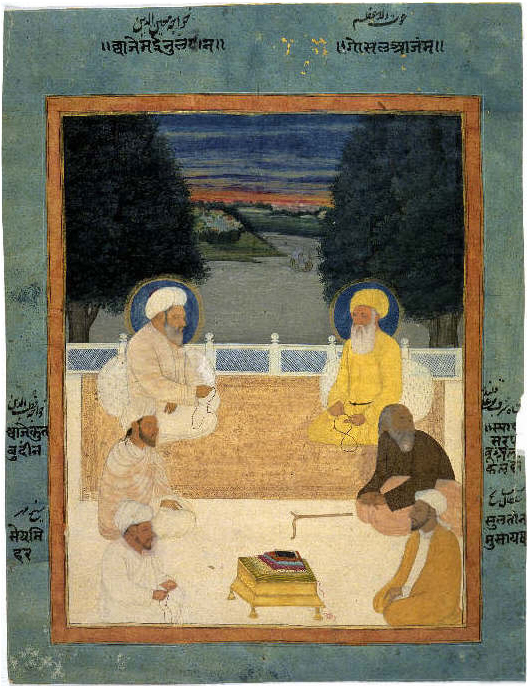
Six Sufi masters, c. 1760

The current consensus is that Sufism emerged in the Hejaz, present day Saudi Arabia and that it has existed as a practice of Muslims from the earliest days of Islam, even predating some sectarian divides.[37]

Sufi orders are based on the 'bayah (Arabic: بَيْعَة, lit.'pledge') that was given to Muhammad by his companions (ṣahabah). By pledging allegiance to Muhammad, the sahabah had committed themselves to the service of God.[38][39][40]

Verily, those who give Bay'âh (pledge) to you (O Muhammad) they are giving Bay'âh (pledge) to God. The Hand of God is over their hands. Then whosoever breaks his pledge, breaks it only to his own harm, and whosoever fulfils what he has covenanted with God, He will bestow on him a great reward. — [Translation of Quran 48:10]

Sufis believe that by giving bayʿah (pledging allegiance) to a legitimate Sufi shaykh, one is pledging allegiance to Muhammad; therefore, a spiritual connection between the seeker and Muhammad is established. It is through Muhammad that Sufis aim to learn about, understand and connect with God.[41] Ali is regarded as one of the major figures amongst the sahaba who have directly pledged allegiance to Muhammad, and Sufis maintain that through Ali, knowledge about Muhammad and a connection with Muhammad may be attained. Such a concept may be understood by the hadith, which Sufis regard to be authentic, in which Muhammad said, "I am the city of knowledge, and Ali is its gate."[42] Eminent Sufis such as Ali Hujwiri refer to Ali as having a very high ranking in Tasawwuf. Furthermore, Junayd of Baghdad regarded Ali as sheikh of the principals and practices of Tasawwuf.[43]

Historian Jonathan A.C. Brown notes that during the lifetime of Muhammad, some companions were more inclined than others to "intensive devotion, pious abstemiousness and pondering the divine mysteries" more than Islam required, such as Abu Dharr al-Ghifari. Hasan al-Basri, a tabi', is considered a "founding figure" in the "science of purifying the heart".[44]

Sufism emerged early on in Islamic history,[2] partly as a reaction against the worldliness of the early Umayyad Caliphate (661–750) and mainly under the tutelage of Hasan al-Basri.[37]

Practitioners of Sufism hold that in its early stages of development Sufism effectively referred to nothing more than the internalization of Islam.[45] According to one perspective, it is directly from the Qur'an, constantly recited, meditated, and experienced, that Sufism proceeded, in its origin and its development.[46] Other practitioners have held that Sufism is the strict emulation of the way of Muhammad, through which the heart's connection to the Divine is strengthened.[47]

Later developments of Sufism occurred from people like Dawud Tai and Bayazid Bastami.[48] Early on Sufism was known for its strict adherence to the sunnah, for example it was reported Bastami refused to eat a watermelon because he did not find any proof that Muhammad ever ate it.[49][50] According to the late medieval mystic, the Persian poet Jami,[51] Abd-Allah ibn Muhammad ibn al-Hanafiyyah (died c. 716) was the first person to be called a "Sufi".[29] The term also had a strong connection with Kufa, with three of the earliest scholars to be called by the term being Abu Hashim al-Kufi,[52] Jabir ibn Hayyan and Abdak al-Sufi.[53] Later individuals included Hatim al-Attar, from Basra, and Al-Junayd al-Baghdadi.[53] Others, such as Al-Harith al-Muhasibi and Sari al-Saqati, were not known as Sufis during their lifetimes, but later came to be identified as such due to their focus on tazkiah (purification).[53]

Important contributions in writing are attributed to Uwais al-Qarani, Hasan of Basra, Harith al-Muhasibi, Abu Nasr as-Sarraj and Said ibn al-Musayyib.[48] Ruwaym, from the second generation of Sufis in Baghdad, was also an influential early figure,[54][55] as was Junayd of Baghdad; a number of early practitioners of Sufism were disciples of one of the two.[56]

Sufi orders

[edit]

Historically, Sufis have often belonged to "orders" known as tariqa (pl. ṭuruq) – congregations formed around a grand master wali who will trace their teaching through a chain of successive teachers back to the Islamic prophet Muhammad.[3]

Within the Sufi tradition, the formation of the orders did not immediately produce lineages of master and disciple. There are few examples before the eleventh century of complete lineages going back to the Prophet Muhammad. Yet the symbolic importance of these lineages was immense: they provided a channel to divine authority through master-disciple chains. It was through such chains of masters and disciples that spiritual power and blessings were transmitted to both general and special devotees.[57]

These orders meet for spiritual sessions (majalis) in meeting places known as zawiyas, khanqahs or tekke.[58]

They strive for ihsan (perfection of worship), as detailed in a hadith: "Ihsan is to worship Allah as if you see Him; if you can't see Him, surely He sees you."[59] Sufis regard Muhammad as al-Insān al-Kāmil, the complete human who personifies the attributes of Absolute Reality,[60] and view him as their ultimate spiritual guide.[61]

Sufi orders trace most of their original precepts from Muhammad through Ali ibn Abi Talib,[62] with the notable exception of the Naqshbandi order, which traces its original precepts to Muhammad through Abu Bakr.[63] However, it was not necessary to formally belong to a tariqa.[64] In the Medieval period, Sufism was almost equal to Islam in general and not limited to specific orders.[65](p24)

Sufism had a long history already before the subsequent institutionalization of Sufi teachings into devotional orders (tariqa, pl. tarîqât) in the early Middle Ages.[66] The term tariqa is used for a school or order of Sufism, or especially for the mystical teaching and spiritual practices of such an order with the aim of seeking ḥaqīqah (ultimate truth). A tariqa has a murshid (guide) who plays the role of leader or spiritual director. The members or followers of a tariqa are known as murīdīn (singular murīd), meaning "desirous", viz. "desiring the knowledge of knowing God and loving God".[67]

Over the years, Sufi orders have influenced and been adopted by various Shi'i movements, especially Isma'ilism, which led to the Safaviyya order's conversion to Shia Islam from Sunni Islam and the spread of Twelverism throughout Iran.[68]

Sufism as an Islamic discipline

[edit]
Dancing dervishes, by Kamāl ud-Dīn Behzād (c. 1480–1490)
Monar Jonban, a "dancing" monument, built over the grave of the Sufi ascetic Amu Abdullah Suqla in 12th century. A person stands on top and shakes one minaret, causing the second minaret to move with the same oscillation.

Existing in both Sunni and Shia Islam, Sufism is not a distinct sect, as is sometimes erroneously assumed, but a method of approaching or a way of understanding the religion, which strives to take the regular practice of the religion to the "supererogatory level" through simultaneously "fulfilling ... [the obligatory] religious duties"[2] and finding a "way and a means of striking a root through the 'narrow gate' in the depth of the soul out into the domain of the pure arid un-imprisonable Spirit which itself opens out on to the Divinity."[21] Academic studies of Sufism confirm that Sufism, as a separate tradition from Islam apart from so-called pure Islam, is frequently a product of Western orientalism and modern Islamic fundamentalists.[69]

As a mystic and ascetic aspect of Islam, it is considered as the part of Islamic teaching that deals with the purification of the inner self. By focusing on the more spiritual aspects of religion, Sufis strive to obtain direct experience of God by making use of "intuitive and emotional faculties" that one must be trained to use.[66] Tasawwuf is regarded as a science of the soul that has always been an integral part of Orthodox Islam. In his Al-Risala al-Safadiyya, ibn Taymiyyah describes the Sufis as those who belong to the path of the Sunna and represent it in their teachings and writings.[citation needed]

Ibn Taymiyya's Sufi inclinations and his reverence for Sufis like Abdul-Qadir Gilani can also be seen in his hundred-page commentary on Futuh al-ghayb, covering only five of the seventy-eight sermons of the book, but showing that he considered tasawwuf essential within the life of the Islamic community.[citation needed]

Al-Ghazali narrates in Al-Munqidh min al-dalal:

The vicissitudes of life, family affairs and financial constraints engulfed my life and deprived me of the congenial solitude. The heavy odds confronted me and provided me with few moments for my pursuits. This state of affairs lasted for ten years, but whenever I had some spare and congenial moments I resorted to my intrinsic proclivity. During these turbulent years, numerous astonishing and indescribable secrets of life were unveiled to me. I was convinced that the group of Aulia (holy mystics) is the only truthful group who follow the right path, display best conduct and surpass all sages in their wisdom and insight. They derive all their overt or covert behaviour from the illumining guidance of the holy Prophet, the only guidance worth quest and pursuit.[70]

Formalization of doctrine

[edit]
A Sufi in Ecstasy in a Landscape. Isfahan, Safavid Persia (c. 1650–1660), LACMA.

In the eleventh-century, Sufism, which had previously been a less "codified" trend in Islamic piety, began to be "ordered and crystallized" into orders which have continued until the present day. All these orders were founded by a major Islamic scholar, and some of the largest and most widespread included the Suhrawardiyya (after Abu al-Najib Suhrawardi [d. 1168]), Qadiriyya (after Abdul-Qadir Gilani [d. 1166]), the Rifa'iyya (after Ahmed al-Rifa'i [d. 1182]), the Chishtiyya (after Moinuddin Chishti [d. 1236]), the Shadiliyya (after Abul Hasan ash-Shadhili [d. 1258]), the Hamadaniyyah (after Sayyid Ali Hamadani [d. 1384]), the Naqshbandiyya (after Baha-ud-Din Naqshband Bukhari [d. 1389]).[71] Contrary to popular perception in the West,[72] however, neither the founders of these orders nor their followers ever considered themselves to be anything other than orthodox Sunni Muslims,[72] and in fact all of these orders were attached to one of the four orthodox legal schools of Sunni Islam.[73] Thus, the Qadiriyya order was Hanbali, with its founder, Abdul-Qadir Gilani, being a renowned jurist; the Chishtiyya was Hanafi; the Shadiliyya order was Maliki; and the Naqshbandiyya order was Hanafi.[74] Thus, it is precisely because it is historically proven that "many of the most eminent defenders of Islamic orthodoxy, such as Abdul-Qadir Gilani, Ghazali, and the Sultan Ṣalāḥ ad-Dīn (Saladin) were connected with Sufism"[75] that the popular studies of writers like Idries Shah are continuously disregarded by scholars as conveying the fallacious image that "Sufism" is somehow distinct from "Islam".[76][75][77] Nile Green has observed that, in the Middle Ages, Sufism more or less was Islam.[65](p24)

Growth of influence

[edit]
A Mughal miniature dated from the early 1620s depicting the Mughal emperor Jahangir (d. 1627) preferring an audience with Sufi saint to his contemporaries, the Ottoman sultan and the king of England, James I (d. 1625); the picture is inscribed in Persian: "Though outwardly shahs stand before him, he fixes his gazes on dervishes."

Historically, Sufism became "an incredibly important part of Islam" and "one of the most widespread and omnipresent aspects of Muslim life" in Islamic civilization from the early medieval period onwards,[78][better source needed] when it began to permeate nearly all major aspects of Sunni Islamic life in regions stretching from India and Iraq to the Balkans and Senegal.[79][better source needed]

The rise of Islamic civilization coincides strongly with the spread of Sufi philosophy in Islam. The spread of Sufism has been considered a definitive factor in the spread of Islam, and in the creation of integrally Islamic cultures, especially in Africa[80] and Asia. The Senussi tribes of Libya and the Sudan are one of the strongest adherents of Sufism. Sufi poets and philosophers such as Khoja Akhmet Yassawi, Rumi, and Attar of Nishapur (c. 1145 – c. 1221) greatly enhanced the spread of Islamic culture in Anatolia, Central Asia, and South Asia.[81][82] Sufism also played a role in creating and propagating the culture of the Ottoman world,[83] and in resisting European imperialism in North Africa and South Asia.[84]

Blagaj Tekke, built c. 1520 next to the Buna wellspring cavern beneath a high vertical karstic cliff, in Blagaj, Mostar, Bosnia. The natural and architectural ensemble, proposed for UNESCO inscription,[85] forms a spatially and topographically self-contained ensemble, and is a National Monument of Bosnia.[86]

Between the 13th and 16th centuries, Sufism produced a flourishing intellectual culture throughout the Islamic world, a "Renaissance" whose physical artifacts survive.[citation needed] In many places a person or group would endow a waqf to maintain a lodge (known variously as a zawiya, khanqah, or tekke) to provide a gathering place for Sufi adepts, as well as lodging for itinerant seekers of knowledge. The same system of endowments could also pay for a complex of buildings, such as that surrounding the Süleymaniye Mosque in Istanbul, including a lodge for Sufi seekers, a hospice with kitchens where these seekers could serve the poor and/or complete a period of initiation, a library, and other structures. No important domain in the civilization of Islam remained unaffected by Sufism in this period.[87]

Modern era

[edit]

Opposition to Sufi teachers and orders from more literalist and legalist strains of Islam existed in various forms throughout Islamic history. It took on a particularly violent form in the 18th century with the emergence of the Wahhabi movement.[88]

Whirling dervishes of the Mevlevi Order photographed by Pascal Sébah (Istanbul, 1870)

Around the turn of the 20th century, Sufi rituals and doctrines also came under sustained criticism from modernist Islamic reformers, liberal nationalists, and, some decades later, socialist movements in the Muslim world. Sufi orders were accused of fostering popular superstitions, resisting modern intellectual attitudes, and standing in the way of progressive reforms. Ideological attacks on Sufism were reinforced by agrarian and educational reforms, as well as new forms of taxation, which were instituted by Westernizing national governments, undermining the economic foundations of Sufi orders. The extent to which Sufi orders declined in the first half of the 20th century varied from country to country, but by the middle of the century the very survival of the orders and traditional Sufi lifestyle appeared doubtful to many observers.[89][88]

However, defying these predictions, Sufism and Sufi orders have continued to play a major role in the Muslim world, also expanding into Muslim-minority countries. Its ability to articulate an inclusive Islamic identity with greater emphasis on personal and small-group piety has made Sufism especially well-suited for contexts characterized by religious pluralism and secularist perspectives.[88]

In the modern world, the classical interpretation of Sunni orthodoxy, which sees in Sufism an essential dimension of Islam alongside the disciplines of jurisprudence and theology, is represented by institutions such as Egypt's Al-Azhar University and Zaytuna College, with Al-Azhar's current Grand Imam Ahmed el-Tayeb recently defining "Sunni orthodoxy" as being a follower "of any of the four schools of [legal] thought (Hanafi, Shafi’i, Maliki or Hanbali) and ... [also] of the Sufism of Imam Junayd of Baghdad in doctrines, manners and [spiritual] purification."[73]

The relationship of Sufi orders to modern societies is usually defined by their relationship to governments.[90]

Sufi Tanoura twirling in Muizz Street, Cairo

Turkey, Persia and The Indian Subcontinent have all been a center for many Sufi lineages and orders. The Bektashi were closely affiliated with the Ottoman Janissaries and are the heart of Turkey's large and mostly liberal Alevi population. They have spread westwards to Cyprus, Greece, Albania, Bulgaria, North Macedonia, Bosnia and Herzegovina, Kosovo, and, more recently, to the United States, via Albania. Sufism is popular in such African countries as Egypt, Tunisia, Algeria, Sudan, Morocco, and Senegal, where it is seen as a mystical expression of Islam.[91] Mbacke suggests that one reason Sufism has taken hold in Senegal is because it can accommodate local beliefs and customs, which tend toward the mystical.[92]

The life of the Algerian Sufi master Abdelkader El Djezairi is instructive in this regard.[93] Notable as well are the lives of Amadou Bamba and El Hadj Umar Tall in West Africa, and Sheikh Mansur and Imam Shamil in the Caucasus. In the twentieth century, some Muslims have called Sufism a superstitious religion which holds back Islamic achievement in the fields of science and technology.[94]

A number of Westerners have embarked with varying degrees of success on the path of Sufism. One of the first to return to Europe as an official representative of a Sufi order, and with the specific purpose to spread Sufism in Western Europe, was the Swedish-born wandering Sufi Ivan Aguéli. René Guénon, the French scholar, became a Sufi in the early twentieth century and was known as Sheikh Abdul Wahid Yahya. His manifold writings defined the practice of Sufism as the essence of Islam, but also pointed to the universality of its message. Spiritualists, such as George Gurdjieff, may or may not conform to the tenets of Sufism as understood by orthodox Muslims.[95]

Aims and objectives

[edit]
The Tomb of Shah Rukn-e-Alam (built 1324 A.D) is located in Multan, Pakistan. Known for its multitude of Sufi shrines, Multan is nicknamed as The City of Saints.

While all Muslims believe that they are on the pathway to Allah and hope to become close to God in Paradise—after death and after the Last Judgment—Sufis also believe that it is possible to draw closer to God and to more fully embrace the divine presence in this life.[citation needed] The chief aim of all Sufis is to seek the pleasure of God by working to restore within themselves the primordial state of fitra.[6]

To Sufis, the outer law consists of rules pertaining to worship, transactions, marriage, judicial rulings, and criminal law—what is often referred to, broadly, as "qanun". The inner law of Sufism consists of rules about repentance from sin, the purging of contemptible qualities and evil traits of character, and adornment with virtues and good character.[96]

Teachings

[edit]
Man holding the hem of his beloved, an expression of a Sufi's agony of longing for the divine union

To the Sufi, it is the transmission of divine light from the teacher's heart to the heart of the student, rather than worldly knowledge, that allows the adept to progress. They further believe that the teacher should attempt inerrantly to follow the Divine Law.[97]

According to Moojan Momen "one of the most important doctrines of Sufism is the concept of al-Insan al-Kamil ("the Perfect Man"). This doctrine states that there will always exist upon the earth a "qutb" (pole or axis of the Universe)—a man who is the perfect channel of grace from God to man and in a state of wilayah (sanctity, being under the protection of Allah). The concept of the Sufi qutb is similar to that of the Shi'i imam.[98][99] However, this belief puts Sufism in "direct conflict" with Shia Islam, since both the qutb (who for most Sufi orders is the head of the order) and the imam fulfill the role of "the purveyor of spiritual guidance and of Allah's grace to mankind". The vow of obedience to the shaykh or qutb which is taken by Sufis is considered incompatible with devotion to the imam.[98]

As a further example, the prospective adherent of the Mevlevi Order would have been ordered to serve in the kitchens of a hospice for the poor for 1001 days prior to being accepted for spiritual instruction, and a further 1,001 days in solitary retreat as a precondition of completing that instruction.[100]

Some teachers, especially when addressing more general audiences, or mixed groups of Muslims and non-Muslims, make extensive use of parable, allegory, and metaphor.[101] Although approaches to teaching vary among different Sufi orders, Sufism as a whole is primarily concerned with direct personal experience, and as such has sometimes been compared to other, non-Islamic forms of mysticism (e.g., as in the books of Seyyed Hossein Nasr).

Many Sufi believe that to reach the highest levels of success in Sufism typically requires that the disciple live with and serve the teacher for a long period of time.[102] An example is the folk story about Baha-ud-Din Naqshband Bukhari, who gave his name to the Naqshbandi Order. He is believed to have served his first teacher, Sayyid Muhammad Baba As-Samasi, for 20 years, until as-Samasi died. He is said to then have served several other teachers for lengthy periods of time. He is said to have helped the poorer members of the community for many years, and after this concluded his teacher directed him to care for animals cleaning their wounds, and assisting them.[103]

Muhammad

[edit]

His [Muhammad's] aspiration preceded all other aspirations, his existence preceded nothingness, and his name preceded the Pen, because he existed before all peoples. There is not in the horizons, beyond the horizons or below the horizons, anyone more elegant, more noble, more knowing, more just, more fearsome, or more compassionate, than the subject of this tale. He is the leader of created beings, the one "whose name is glorious Ahmad". —Mansur Al-Hallaj[104]

The name of Muhammad in Islamic calligraphy. Sufis believe the name of Muhammad is holy and sacred.

Devotion to Muhammad is the strongest practice within Sufism.[105] Sufis have historically revered Muhammad as the prime personality of spiritual greatness. The Sufi poet Saadi Shirazi stated, "He who chooses a path contrary to that of the prophet shall never reach the destination. O Saadi, do not think that one can treat that way of purity except in the wake of the chosen one."[106] Rumi attributes his self-control and abstinence from worldly desires as qualities attained by him through the guidance of Muhammad. Rumi states, "I 'sewed' my two eyes shut from [desires for] this world and the next – this I learned from Muhammad."[107] Ibn Arabi regards Muhammad as the greatest man and states, "Muhammad's wisdom is uniqueness (fardiya) because he is the most perfect existent creature of this human species. For this reason, the command began with him and was sealed with him. He was a Prophet while Adam was between water and clay, and his elemental structure is the Seal of the Prophets."[108] Attar of Nishapur claimed that he praised Muhammad in such a manner that was not done before by any poet, in his book the Ilahi-nama.[109] Fariduddin Attar stated, "Muhammad is the exemplar to both worlds, the guide of the descendants of Adam. He is the sun of creation, the moon of the celestial spheres, the all-seeing eye...The seven heavens and the eight gardens of paradise were created for him; he is both the eye and the light in the light of our eyes."[110] Sufis have historically stressed the importance of Muhammad's perfection and his ability to intercede. The persona of Muhammad has historically been and remains an integral and critical aspect of Sufi belief and practice.[105] Bayazid Bastami is recorded to have been so devoted to the sunnah of Muhammad that he refused to eat a watermelon because he could not establish that Muhammad ever ate one.[111]

In the 13th century, a Sufi poet from Egypt, Al-Busiri, wrote the al-Kawākib ad-Durrīya fī Madḥ Khayr al-Barīya ('The Celestial Lights in Praise of the Best of Creation'), commonly referred to as Qaṣīdat al-Burda ('Poem of the Mantle'), in which he extensively praised Muhammad.[112] This poem is still widely recited and sung amongst Sufi groups and lay Muslims alike all over the world.[112]

Sufi beliefs about Muhammad

[edit]

According to Ibn Arabi, Islam is the best religion because of Muhammad.[60] Ibn Arabi regards that the first entity that was brought into existence is the reality or essence of Muhammad (al-ḥaqīqa al-Muhammadiyya). Ibn Arabi regards Muhammad as the supreme human being and master of all creatures. Muhammad is therefore the primary role model for human beings to aspire to emulate.[60] Ibn Arabi believes that God's attributes and names are manifested in this world and that the most complete and perfect display of these divine attributes and names are seen in Muhammad.[60] Ibn Arabi believes that one may see God in the mirror of Muhammad, meaning that the divine attributes of God are manifested through Muhammad.[60] Ibn Arabi maintains that Muhammad is the best proof of God, and by knowing Muhammad one knows God.[60] Ibn Arabi also maintains that Muhammad is the master of all of humanity in both this world and the afterlife. In this view, Islam is the best religion because Muhammad is Islam.[60]

Sufism and Islamic law

[edit]
Tomb of Salim Chishti, Fatehpur Sikri, Agra, Uttar Pradesh, India

Sufis believe the sharia (exoteric "canon"), tariqa ("order") and haqiqa ("truth") are mutually interdependent.[113] Sufism leads the adept, called salik or "wayfarer", in his sulûk or "road" through different stations (maqāmāt) until he reaches his goal, the perfect tawhid, the existential confession that God is One.[114] Ibn Arabi says, "When we see someone in this Community who claims to be able to guide others to God, but is remiss in but one rule of the Sacred Law—even if he manifests miracles that stagger the mind—asserting that his shortcoming is a special dispensation for him, we do not even turn to look at him, for such a person is not a sheikh, nor is he speaking the truth, for no one is entrusted with the secrets of God Most High save one in whom the ordinances of the Sacred Law are preserved. (Jamiʿ karamat al-awliyaʾ)".[115][116]

It is related, moreover, that Malik, one of the founders of the four schools of Sunni law, was a strong proponent of combining the "inward science" ('ilm al-bātin) of mystical knowledge with the "outward science" of jurisprudence.[117] For example, the famous twelfth-century Maliki jurist and judge Qadi Iyad, later venerated as a saint throughout the Iberian Peninsula, narrated a tradition in which a man asked Malik "about something in the inward science", to which Malik replied: "Truly none knows the inward science except those who know the outward science! When he knows the outward science and puts it into practice, God shall open for him the inward science – and that will not take place except by the opening of his heart and its enlightenment." In other similar traditions, it is related that Malik said: "He who practices Sufism (tasawwuf) without learning Sacred Law corrupts his faith (tazandaqa), while he who learns Sacred Law without practicing Sufism corrupts himself (tafassaqa). Only he who combines the two proves true (tahaqqaqa)".[117]

The Amman Message, a detailed statement issued by 200 leading Islamic scholars in 2005 in Amman, specifically recognized the validity of Sufism as a part of Islam. This was adopted by the Islamic world's political and temporal leaderships at the Organisation of the Islamic Conference summit at Mecca in December 2005, and by six other international Islamic scholarly assemblies including the International Islamic Fiqh Academy of Jeddah, in July 2006. The definition of Sufism can vary drastically between different traditions (what may be intended is simple tazkiah as opposed to the various manifestations of Sufism around the Islamic world).[118]

Traditional Islamic thought and Sufism

[edit]
Tomb of Sayyid Ali Hamadani, Kulob, Tajikistan
Urs of Islamic Naqshbandi saints of Allo Mahar is celebrated on 23 March every year.

The literature of Sufism emphasizes highly subjective matters that resist outside observation, such as the subtle states of the heart. Often these resist direct reference or description, with the consequence that the authors of various Sufi treatises took recourse to allegorical language. For instance, much Sufi poetry refers to intoxication, which Islam expressly forbids. This usage of indirect language and the existence of interpretations by people who had no training in Islam or Sufism led to doubts being cast over the validity of Sufism as a part of Islam. Also, some groups emerged that considered themselves above the sharia and discussed Sufism as a method of bypassing the rules of Islam in order to attain salvation directly. This was disapproved of by traditional scholars.

For these and other reasons, the relationship between traditional Islamic scholars and Sufism is complex, and a range of scholarly opinion on Sufism in Islam has been the norm. Some scholars, such as Al-Ghazali, helped its propagation while other scholars opposed it. William Chittick explains the position of Sufism and Sufis this way:

In short, Muslim scholars who focused their energies on understanding the normative guidelines for the body came to be known as jurists, and those who held that the most important task was to train the mind in achieving correct understanding came to be divided into three main schools of thought: theology, philosophy, and Sufism. This leaves us with the third domain of human existence, the spirit. Most Muslims who devoted their major efforts to developing the spiritual dimensions of the human person came to be known as Sufis.[49]

Persian influence on Sufism

[edit]

Persians played a huge role in developing and systematising Islamic mysticism. One of the first to formalise Sufi principles was Junayd of Baghdad – a Persian from Baghdad.[119] Other great Persian Sufi poets include Rudaki, Rumi, Attar, Nizami, Hafez, Sanai, Shamz Tabrizi and Jami.[120] Famous poems that still resonate across the Muslim world include The Masnavi of Rumi, The Bustan by Saadi, The Conference of the Birds by Attar and The Divān of Hafez.

Neo-Sufism

[edit]
The mausoleum (gongbei) of Ma Laichi in Linxia City, China

The term neo-Sufism was originally coined by Fazlur Rahman and used by other scholars to describe reformist currents among 18th century Sufi orders, whose goal was to remove some of the more ecstatic and pantheistic elements of the Sufi tradition and reassert the importance of Islamic law as the basis for inner spirituality and social activism.[13][11] In recent times, it has been increasingly used by scholars like Mark Sedgwick in the opposite sense, to describe various forms of Sufi-influenced spirituality in the West, in particular the deconfessionalized spiritual movements which emphasize universal elements of the Sufi tradition and de-emphasize its Islamic context.[11][12]

Devotional practices

[edit]
Sufi gathering engaged in dhikr

The devotional practices of Sufis vary widely. Prerequisites to practice include rigorous adherence to Islamic norms (ritual prayer in its five prescribed times each day, the fast of Ramadan, and so forth). Additionally, the seeker ought to be firmly grounded in supererogatory practices known from the life of Muhammad (such as the "sunnah prayers"). This is in accordance with the words, attributed to God, of the following, a famous Hadith Qudsi:

My servant draws near to Me through nothing I love more than that which I have made obligatory for him. My servant never ceases drawing near to Me through supererogatory works until I love him. Then, when I love him, I am his hearing through which he hears, his sight through which he sees, his hand through which he grasps, and his foot through which he walks.[121]

It is also necessary for the seeker to have a correct creed (aqidah),[122] and to embrace with certainty its tenets.[123] The seeker must also, of necessity, turn away from sins, love of this world, the love of company and renown, obedience to satanic impulse, and the promptings of the lower self. (The way in which this purification of the heart is achieved is outlined in certain books, but must be prescribed in detail by a Sufi master.) The seeker must also be trained to prevent the corruption of those good deeds which have accrued to his or her credit by overcoming the traps of ostentation, pride, arrogance, envy, and long hopes (meaning the hope for a long life allowing us to mend our ways later, rather than immediately, here and now).

Sufi practices, while attractive to some, are not a means for gaining knowledge. The traditional scholars of Sufism hold it as absolutely axiomatic that knowledge of God is not a psychological state generated through breath control. Thus, practice of "techniques" is not the cause, but instead the occasion for such knowledge to be obtained (if at all), given proper prerequisites and proper guidance by a master of the way. Furthermore, the emphasis on practices may obscure a far more important fact: The seeker is, in a sense, to become a broken person, stripped of all habits through the practice of (in the words of Imam Al-Ghazali) solitude, silence, sleeplessness, and hunger.[124]

Dhikr

[edit]
The name of Allah as written on the disciple's heart, according to the Sarwari Qadri Order

Dhikr is the remembrance of Allah commanded in the Quran for all Muslims through a specific devotional act, such as the repetition of divine names, supplications and aphorisms from hadith literature and the Quran. More generally, dhikr takes a wide range and various layers of meaning.[125] This includes dhikr as any activity in which the Muslim maintains awareness of Allah. To engage in dhikr is to practice consciousness of the Divine Presence and love, or "to seek a state of godwariness". The Quran refers to Muhammad as the very embodiment of dhikr of Allah (65:10–11). Some types of dhikr are prescribed for all Muslims and do not require Sufi initiation or the prescription of a Sufi master because they are deemed to be good for every seeker under every circumstance.[126]

The dhikr may slightly vary among each order. Some Sufi orders[127] engage in ritualized dhikr ceremonies, or sema. Sema includes various forms of worship such as recitation, singing (the most well known being the Qawwali music of the Indian subcontinent), instrumental music, dance (most famously the Sufi whirling of the Mevlevi order), incense, meditation, ecstasy, and trance.[128]

Some Sufi orders stress and place extensive reliance upon dhikr. This practice of dhikr is called Dhikr-e-Qulb (invocation of Allah within the heartbeats). The basic idea in this practice is to visualize the Allah as having been written on the disciple's heart.[129]

Muraqaba

[edit]
An Algerian Sufi in Murāqabah. La prière ('The Prayer') by Eugène Girardet.

The practice of muraqaba can be likened to the practices of meditation attested in many faith communities.[130] While variation exists, one description of the practice within a Naqshbandi lineage reads as follows:

He is to collect all of his bodily senses in concentration, and to cut himself off from all preoccupation and notions that inflict themselves upon the heart. And thus he is to turn his full consciousness towards God Most High while saying three times: "Ilahî anta maqsûdî wa-ridâka matlûbî—my God, you are my Goal and Your good pleasure is what I seek". Then he brings to his heart the Name of the Essence—Allâh—and as it courses through his heart he remains attentive to its meaning, which is "Essence without likeness". The seeker remains aware that He is Present, Watchful, Encompassing of all, thereby exemplifying the meaning of his saying (may God bless him and grant him peace): "Worship God as though you see Him, for if you do not see Him, He sees you". And likewise the prophetic tradition: "The most favored level of faith is to know that God is witness over you, wherever you may be".[131]

Sufi whirling

[edit]
Whirling Dervishes, at Rumi Fest 2007

Sufi whirling (or Sufi spinning) is a form of Sama or physically active meditation which originated among some Sufis, and practised by the Sufi Dervishes of the Mevlevi order. It is a customary dance performed within the sema, through which dervishes (also called semazens, from Persian سماعزن) aim to reach the source of all perfection, or kemal. This is sought through abandoning one's nafs, egos or personal desires, by listening to the music, focusing on God, and spinning one's body in repetitive circles, which has been seen as a symbolic imitation of planets in the Solar System orbiting the Sun.[132]

As explained by Mevlevi practitioners:[133]

In the symbolism of the Sema ritual, the semazen's camel's hair hat (sikke) represents the tombstone of the ego; his wide, white skirt (tennure) represents the ego's shroud. By removing his black cloak (hırka), he is spiritually reborn to the truth. At the beginning of the Sema, by holding his arms crosswise, the semazen appears to represent the number one, thus testifying to God's unity. While whirling, his arms are open: his right arm is directed to the sky, ready to receive God's beneficence; his left hand, upon which his eyes are fastened, is turned toward the earth. The semazen conveys God's spiritual gift to those who are witnessing the Sema. Revolving from right to left around the heart, the semazen embraces all humanity with love. The human being has been created with love in order to love. Mevlâna Jalâluddîn Rumi says, "All loves are a bridge to Divine love. Yet, those who have not had a taste of it do not know!"

The traditional view of most orthodox Sunni Sufi orders, such as the Qadiriyya and the Chisti, as well as Sunni Muslim scholars in general, is that dancing with intent during dhikr or whilst listening to Sema is prohibited.[134][135][136][137]

Singing

[edit]
Kurdish Dervishes practice Sufism with playing Daf in Sulaymaniyah, Iraqi Kurdistan.

Musical instruments (except the Daf) have traditionally been considered as prohibited by the four orthodox Sunni schools,[134][138][139][140][141] and the more orthodox Sufi tariqas also continued to prohibit their use. Throughout history most Sufi saints have stressed that musical instruments are forbidden.[134][142][143] However some Sufi Saints permitted and encouraged it, whilst maintaining that musical instruments and female voices should not be introduced, although these are common practice today.[134][142]

For example Qawwali was originally a form of Sufi devotional singing popular in the Indian subcontinent, and is now usually performed at dargahs. Sufi saint Amir Khusrau is said to have infused Persian, Arabic Turkish and Indian classical melodic styles to create the genre in the 13th century. The songs are classified into hamd, na'at, manqabat, marsiya or ghazal, among others.

Nowadays, the songs last for about 15 to 30 minutes, are performed by a group of singers, and instruments including the harmonium, tabla and dholak are used. Pakistani singing maestro Nusrat Fateh Ali Khan is credited with popularizing qawwali all over the world.[144]

Saints

[edit]
A Persian miniature depicting the medieval saint and mystic Ahmad Ghazali (d. 1123), brother of the famous Abu Hamid al-Ghazali (d. 1111), talking to a disciple, from the Meetings of the Lovers (1552)

Walī (Arabic: ولي, plural ʾawliyāʾ أولياء) is an Arabic word whose literal meanings include "custodian", "protector", "helper", and "friend".[145] In the vernacular, it is most commonly used by Muslims to indicate an Islamic saint, otherwise referred to by the more literal "friend of God".[146][147][148] In the traditional Islamic understanding of saints, the saint is portrayed as someone "marked by [special] divine favor ... [and] holiness", and who is specifically "chosen by God and endowed with exceptional gifts, such as the ability to work miracles."[149] The doctrine of saints was articulated by Islamic scholars very early on in Muslim history,[150][151][2][152] and particular verses of the Quran and certain hadith were interpreted by early Muslim thinkers as "documentary evidence"[2] of the existence of saints.

Since the first Muslim hagiographies were written during the period when Sufism began its rapid expansion, many of the figures who later came to be regarded as the major saints in Sunni Islam were the early Sufi mystics, like Hasan of Basra (d. 728), Farqad Sabakhi (d. 729), Dawud Tai (d. 777-81), Rabi'a al-'Adawiyya (d. 801), Ma'ruf al-Karkhi (d. 815), and Junayd of Baghdad (d. 910). From the twelfth to the fourteenth century, "the general veneration of saints, among both people and sovereigns, reached its definitive form with the organization of Sufism ... into orders or brotherhoods."[153] In the common expressions of Islamic piety of this period, the saint was understood to be "a contemplative whose state of spiritual perfection ... [found] permanent expression in the teaching bequeathed to his disciples."[153]

Visitation

[edit]
Sufi mosque in Esfahan, Iran

In popular Sufism (i.e. devotional practices that have achieved currency in world cultures through Sufi influence), one common practice is to visit or make pilgrimages to the tombs of saints, renowned scholars, and righteous people. This is a particularly common practice in South Asia, where famous tombs include such saints as Sayyid Ali Hamadani in Kulob, Tajikistan; Afāq Khoja, near Kashgar, China; Lal Shahbaz Qalandar in Sindh; Ali Hujwari in Lahore, Pakistan; Bahauddin Zakariya in Multan Pakistan; Moinuddin Chishti in Ajmer, India; Nizamuddin Auliya in Delhi, India; and Shah Jalal in Sylhet, Bangladesh.

Likewise, in Fes, Morocco, a popular destination for such pious visitation is the Zaouia Moulay Idriss II and the yearly visitation to see the current sheikh of the Qadiri Boutchichi Tariqah, Sheikh Sidi Hamza al Qadiri al Boutchichi to celebrate the Mawlid (which is usually televised on Moroccan National television).[154][155] This action has voiced particular condemnation by the Salafis.

Miracles

[edit]

In Islamic mysticism, karamat (Arabic: کرامات karāmāt, pl. of کرامة karāmah, lit. generosity, high-mindedness[156]) refers to supernatural wonders performed by Muslim saints. In the technical vocabulary of Islamic religious sciences, the singular form karama has a sense similar to charism, a favor or spiritual gift freely bestowed by God.[157] The marvels ascribed to Islamic saints have included supernatural physical actions, predictions of the future, and "interpretation of the secrets of hearts".[157] Historically, a "belief in the miracles of saints (karāmāt al-awliyāʾ, literally 'marvels of the friends [of God]')" has been "a requirement in Sunni Islam".[158]

Shrines

[edit]

A dargah (Persian: درگاه dargâh or درگه dargah, also in Punjabi and Urdu) is a shrine built over the grave of a revered religious figure, often a Sufi saint or dervish. Sufis often visit the shrine for ziyarat, a term associated with religious visits and pilgrimages. Dargahs are often associated with Sufi eating and meeting rooms and hostels, called khanqah or hospices. They usually include a mosque, meeting rooms, Islamic religious schools (madrassas), residences for a teacher or caretaker, hospitals, and other buildings for community purposes.

Theoretical perspectives

[edit]
The works of Al-Ghazali firmly defended the concepts of Sufism within the Islamic faith.

Traditional Islamic scholars have recognized two major branches within the practice of Sufism and use this as one key to differentiating among the approaches of different masters and devotional lineages.[159]

On the one hand there is the order from the signs to the Signifier (or from the arts to the Artisan). In this branch, the seeker begins by purifying the lower self of every corrupting influence that stands in the way of recognizing all of creation as the work of God, as God's active self-disclosure or theophany.[160] This is the way of Imam Al-Ghazali and of the majority of the Sufi orders.

On the other hand, there is the order from the Signifier to his signs, from the Artisan to his works. In this branch the seeker experiences divine attraction (jadhba), and is able to enter the order with a glimpse of its endpoint, of direct apprehension of the Divine Presence towards which all spiritual striving is directed. This does not replace the striving to purify the heart, as in the other branch; it simply stems from a different point of entry into the path. This is the way primarily of the masters of the Naqshbandi and Shadhili orders.[161]

Contemporary scholars may also recognize a third branch, attributed to the late Ottoman scholar Said Nursi and explicated in his vast Qur'an commentary called the Risale-i Nur. This approach entails strict adherence to the way of Muhammad, in the understanding that this wont, or sunnah, proposes a complete devotional spirituality adequate to those without access to a master of the Sufi way.[162]

Contributions to other domains of scholarship

[edit]

Sufism has contributed significantly to the elaboration of theoretical perspectives in many domains of intellectual endeavor. For instance, the doctrine of "subtle centers" or centers of subtle cognition (known as Lataif-e-sitta) addresses the matter of the awakening of spiritual intuition.[163] In general, these subtle centers or latâ'if are thought of as faculties that are to be purified sequentially in order to bring the seeker's wayfaring to completion. A concise and useful summary of this system from a living exponent of this tradition has been published by Muhammad Emin Er.[159]

Sufi psychology has influenced many areas of thinking both within and outside of Islam, drawing primarily upon three concepts. Ja'far al-Sadiq (both an imam in the Shia tradition and a respected scholar and link in chains of Sufi transmission in all Islamic sects) held that human beings are dominated by a lower self called the nafs (self, ego, person), a faculty of spiritual intuition called the qalb (heart), and ruh (soul). These interact in various ways, producing the spiritual types of the tyrant (dominated by nafs), the person of faith and moderation (dominated by the spiritual heart), and the person lost in love for God (dominated by the ruh).[164]

Of note with regard to the spread of Sufi psychology in the West is Robert Frager, a Sufi teacher authorized in the Jerrahi order. Frager was a trained psychologist, born in the United States, who converted to Islam in the course of his practice of Sufism and wrote extensively on Sufism and psychology.[165][non-primary source needed]

Sufi cosmology and Sufi metaphysics are also noteworthy areas of intellectual accomplishment.[166]

Prominent Sufis

[edit]

Rabi'a Al-'Adawiyya

[edit]
Depiction of Rabi'a grinding grain from a Persian dictionary

Rābiʼa al-ʼAdawiyya or Rabia Basri was a Sufi saint, one of the earliest Sufi mystics and an influential religious figure from Iraq.[167] Rabi'a was born of very poor origin, but was captured by bandits at a later age and sold into slavery. She was, however, released by her master when he awoke one night to see the light of sanctity shining above her head.[168] Prominent Sufi leader Hasan of Basra is said "I passed one whole night and day with Rabi'a ... it never passed through my mind that I was a man nor did it occur to her that she was a woman... when I saw her I saw myself as bankrupt and Rabi'a as truly sincere."[169] Rabi'a al-Adawiyya is known for her teachings and emphasis on the centrality of the love of God to a holy life.[170] She is said to have proclaimed, running down the streets of Basra, Iraq:

O God! If I worship You for fear of Hell, burn me in Hell, and if I worship You in hope of Paradise, exclude me from Paradise. But if I worship You for Your Own sake, grudge me not Your everlasting Beauty.

— Rabi'a al-Adawiyya

There are different opinions about the death and resting place of Rabia Basri. Some believe her resting place to be Jerusalem whereas others believe it to be Basra.[171][172]

Junayd of Baghdad

[edit]

Junayd al-Baghdadi (830–910) was one of the earlier Sufis. He was a Persian Sufi and one of the most famous of the early Islamic saints and is a central figure in the spiritual lineages of many Sufi orders.[173][174] Junayd al-Baghdadi taught in Baghdad throughout his lifetime and was an important figure in the development of Sufi beliefs. Like Hasan of Basra before him, was widely revered by his students and disciples as well as quoted by other mystics. Because of his importance among Sufis, Junayd was often referred to as the "Sultan".[175]

Bayazid Bastami

[edit]

Bayazid Bastami was a recognized and influential Sufi personality from the Tayfuriyya order.[176] Bastami was born in 804 in Bastam.[177] Bayazid is regarded for his devout commitment to the Sunnah and his dedication to fundamental Islamic principles and practices.

Shaykh Abdul Qadir Gilani

[edit]
Geometric tiling on the underside of the dome of Hafiz Shirazi's tomb in Shiraz

Shaykh Abdul Qadir Gilani (1077–1166) was a Mesopotamian-born Hanbali jurist and prominent Sufi scholar based in Baghdad, with Persian roots. Gilani spent his early life in Na'if, a town just East of Baghdad, also the town of his birth. There, he pursued the study of Hanbali law. Abu Saeed Mubarak Makhzoomi gave Gilani lessons in fiqh. He was given lessons about hadith by Abu Bakr ibn Muzaffar. He was given lessons about Tafsir by Abu Muhammad Ja'far, a commentator. His Sufi spiritual instructor was Abu'l-Khair Hammad ibn Muslim al-Dabbas. After completing his education, Gilani left Baghdad. He spent twenty-five years as a reclusive wanderer in the desert regions of Iraq. In 1127, Gilani returned to Baghdad and began to preach to the public. He joined the teaching staff of the school belonging to his own teacher, Abu Saeed Mubarak Makhzoomi, and was popular with students. In the morning he taught hadith and tafsir, and in the afternoon held discourse on the science of the heart and the virtues of the Quran. He is the founder of the Qadiriyya order, of which its eponym is his patronym.[178]

Abul Hasan ash-Shadhili

[edit]

Abul Hasan ash-Shadhili (died 1258) was the founder of the Shadhiliyya order, and introduced dhikr jahri (the remembrance of God out loud, as opposed to the silent dhikr). He taught that his followers need not abstain from what Islam has not forbidden, but to be grateful for what God has bestowed upon them,[179] in contrast to the majority of Sufis, who preach to deny oneself and to destroy the ego-self (nafs). The "Order of Patience" (Tariqus-Sabr), Shadhiliyya is formulated to be "Order of Gratitude" (Tariqush-Shukr). Imam Shadhili also gave eighteen valuable hizbs (litanies) to his followers, out of which the notable Hizb al-Bahr[180] is recited worldwide even today.

Moinuddin Chishti

[edit]
A Mughal-era Sufi prayer book from the Chishti order

Moinuddin Chishti (1141–1236), known as Gharīb Nawāz ("Benefactor of the Poor"), was the most famous Sufi saint of the Chishti Order. Moinuddin Chishti introduced and established the order in the Indian subcontinent. The initial spiritual chain or silsila of the Chishti order in India, comprising Moinuddin Chishti, Bakhtiyar Kaki, Baba Farid, Nizamuddin Auliya (each successive person being the disciple of the previous one), constitutes the great Sufi saints of Indian history. Moinuddin Chishtī turned towards India, reputedly after a dream in which Muhammad blessed him to do so. After a brief stay at Lahore, he reached Ajmer along with Sultan Shahāb-ud-Din Muhammad Ghori, and settled down there. In Ajmer, he attracted a substantial following, acquiring a great deal of respect amongst the residents of the city. Moinuddin Chishtī practiced the Sufi Sulh-e-Kul (peace to all) concept to promote understanding between Muslims and non-Muslims.[181]

Bahauddin Naqshband

[edit]

Bahauddin Naqshband (1318–1389) was a prominent Sufi master of the 14th century who founded the Naqshbandi Sufi order. Born in the village of Qasr-i Hinduvan near Bukhara, Uzbekistan, he was a descendant of the Prophet Muhammad. His early life was marked by a deep spiritual inclination. He sought out the guidance of renowned Sufi teachers and quickly demonstrated exceptional talent and understanding. His primary teacher was Mohammad Baba As-Samasi, who initiated him into the spiritual path. His approach to Sufism emphasized inner contemplation, discipline, and a focus on the unseen. He advocated for a balanced lifestyle, combining spiritual practices with worldly responsibilities. His teachings were rooted in the Quran and the Sunnah, and he emphasized the importance of following the example of the Prophet Muhammad.

The Naqshbandi order became one of the most influential Sufi orders in Islamic history. It spread throughout Central Asia, the Middle East, and eventually to South Asia and the West. The order's emphasis on spiritual discipline, inner work, and social engagement resonated with many seekers.

Ahmad Al-Tijani

[edit]
A manuscript of Sufi Islamic theology, Shams al-Ma'arif (The Book of the Sun of Gnosis) was written by the Algerian Sufi master Ahmad al-Buni during the 12th century.

Ahmed Tijani (1737–1815), in Arabic سيدي أحمد التجاني (Sidi Ahmed Tijani), was the founder of the Tijaniyya Sufi order. He was born in a Berber family,[182][183][184] in Aïn Madhi, present-day Algeria, and died at the age of 78 in Fez.[185][186]

Al-Ghazālī

[edit]

al-Ghazali (c. 1058 – 1111) was a Sunni Muslim polymath.[187] He was a prominent Sufi, jurisconsult, legal theoretician, mufti, philosopher, theologian, logician and mystic.[188] He is considered to be the 11th century's mujaddid, a renewer of the faith, who appears once every 100 years.[189] Al-Ghazali's works were so highly acclaimed by his contemporaries that he was awarded the honorific title "Proof of Islam".[190] He was a prominent mujtahid in the Shafi'i school of law.[191] His magnum opus was Iḥyā’ ‘ulūm ad-dīn ("The Revival of the Religious Sciences").[192] His works include Tahāfut al-Falāsifa ("Incoherence of the Philosophers"), a landmark in the history of philosophy.[193]

Sayyed Badiuddin

[edit]

Sayyid Badiuddin[194] was a Sufi saint who founded the Madariyya Silsila and order.[195] He was also known by the title Qutb-ul-Madar.[196]

He hailed originally from Syria, and was born in Aleppo[194] to a Syed Hussaini family.[197] His teacher was Bayazid Tayfur al-Bistami.[198] After making a pilgrimage to Medina, he journeyed to India to spread the Islamic faith, where he founded the Madariyya order.[196] His tomb is at Makanpur.[199]

Ibn Arabi

[edit]

Ibn 'Arabi (or Ibn al-'Arabi) (AH 561 – AH 638; 1165–1240) was one of the most influential Sufis, revered for his profound spiritual insight, refined taste, and deep knowledge of God. Over the centuries, he has been honored with the title "The Grand Master" (Arabic: الشيخ الأكبر). Ibn Arabi founded the Sufi order known as "Al Akbariyya" (Arabic: الأكبرية), which remains active to this day. The order, based in Cairo, continues to spread his teachings and principles through its own sheikh. Ibn Arabi's writings, especially al-Futuhat al-Makkiyya and Fusus al-Hikam, have been studied within all Sufi orders as the clearest expression of tawhid (Divine Unity), though because of their recondite nature they were often only given to initiates. His teachings later became known as the school of wahdat al-wujud (the Oneness of Being). He himself considered his writings to have been divinely inspired. As he expressed the way to one of his close disciples, his legacy is that "you should never ever abandon your servant-hood (ubudiyya), and that there may never be in your soul a longing for any existing thing".[200]

Mansur Al-Hallaj

[edit]

Mansur Al-Hallaj (died 922) is renowned for his claim, Ana-l-Haqq ("I am the Truth"), his ecstatic Sufism and state-trial. His refusal to recant this utterance, which was regarded as apostasy, led to a long trial. He was imprisoned for 11 years in a Baghdad prison, before being tortured and publicly beheaded on March 26, 922. He is still revered by Sufis for his willingness to embrace torture and death rather than recant. It is said that during his prayers, he would say "O Lord! You are the guide of those who are passing through the Valley of Bewilderment. If I am a heretic, enlarge my heresy".[201]

Yusuf Abu al-Haggag

[edit]

Yusuf Abu al-Haggag (c. 1150 – c. 1245) was a Sufi scholar and sheikh preaching principally in Luxor, Egypt.[202] He devoted himself to knowledge, asceticism and worship.[203] In his pursuits, he earned the nickname "Father of the Pilgrim". His birthday is celebrated today annually in Luxor, with people convening at the Abu Haggag Mosque.

Notable Sufi works

[edit]

Among the most popular Sufi works are:[204][205][206]

Sufi commentaries on the Qur'an

[edit]

Sufis have also made contributions to the Qur'anic exegetical literature, expounding the inner esoteric meanings of the Qur'an.[218][219] Among such works are the following:[220]

Reception

[edit]

Persecution of Sufi Muslims

[edit]
Muslim pilgrims gathered around the Ḍarīẖ covering the grave (qabr) of the 13th-century Sufi saint Lal Shahbaz Qalandar (shrine located in Sehwan Sharif, Pakistan); on 16 February 2017, ISIS claimed responsibility for a suicide attack on the shrine, which resulted in the deaths of 90 people.[227][228][229]

The persecution of Sufism and Sufi Muslims over the course of centuries has included acts of religious discrimination, persecution and violence, such as the destruction of Sufi shrines, tombs, and mosques, suppression of Sufi orders, and discrimination against adherents of Sufism in a number of Muslim-majority countries.[230] The Republic of Turkey banned all Sufi orders and abolished their institutions in 1925, after Sufis opposed the new secular order. The Islamic Republic of Iran has harassed Shia Sufis, reportedly for their lack of support for the government doctrine of "governance of the jurist" (i.e., that the supreme Shiite jurist should be the nation's political leader).

In most other Muslim-majority countries, attacks on Sufis and especially their shrines have come from adherents of puritanical fundamentalist Islamic movements (Salafism and Wahhabism), who believe that practices such as visitation to and veneration of the tombs of Sufi saints, celebration of the birthdays of Sufi saints, and dhikr ("remembrance" of God) ceremonies are bid‘ah (impure "innovation") and shirk ("polytheistic").[230][231][232][233][234]

In Egypt, at least 305 people were killed and more than 100 wounded during the November 2017 Islamic terrorist attack on a Sufi mosque located in Sinai; it is considered one of the worst terrorist attacks in the history of modern Egypt.[231][235] Most of the victims were Sufis.[231][235]

Perception outside Islam

[edit]
A choreographed Sufi performance on a Friday in Sudan

Sufi mysticism has long exercised a fascination upon the Western world, and especially its Orientalist scholars.[236] In the eighteenth and nineteenth centuries, European orientalists treated Sufism and Islam as distinct subjects, leading to "an over-emphasis on the translation of classical Sufi mystical literature" in the academic study of Sufism at the expense of the lived practices in Islam, as well as a separation of Sufism from its Islamic roots in the development of Sufism as a religious form in the West.[237][238] Figures like Rumi have become well known in the United States, where Sufism is perceived as a peaceful and apolitical form of Islam.[236][239] Seyyed Hossein Nasr states that the preceding theories are false according to the point of view of Sufism.[240]

A 17th-century miniature of Nasreddin, a Seljuk satirical figure, currently in the Topkapı Palace Museum Library

The Islamic Institute in Mannheim, Germany, which works towards the integration of Europe and Muslims, sees Sufism as particularly suited for interreligious dialogue and intercultural harmonisation in democratic and pluralist societies; it has described Sufism as a symbol of tolerance and humanism—nondogmatic, flexible and non-violent.[241] According to Philip Jenkins, a professor at Baylor University, "the Sufis are much more than tactical allies for the West: they are, potentially, the greatest hope for pluralism and democracy within Muslim nations." Likewise, several governments and organisations have advocated the promotion of Sufism as a means of combating intolerant and violent strains of Islam.[242] For example, the Chinese and Russian[243] governments openly favor Sufism as the best means of protecting against Islamist subversion. The British government, especially following the 7 July 2005 London bombings, has favoured Sufi groups in its battle against Muslim extremist currents. The influential RAND Corporation, an American think-tank, issued a major report titled "Building Moderate Muslim Networks", which urged the US government to form links with and bolster[244] Muslim groups that opposed Islamist extremism. The report stressed the Sufi role as moderate traditionalists open to change, and thus as allies against violence.[245][246] News organisations such as the BBC, Economist and Boston Globe have also seen Sufism as a means to deal with violent Muslim extremists.[247]

Idries Shah states that Sufism is universal in nature, its roots predating the rise of Islam and Christianity.[248] He quotes Suhrawardi as saying that "this (Sufism) was a form of wisdom known to and practiced by a succession of sages including the mysterious ancient Hermes of Egypt.", and that Ibn al-Farid "stresses that Sufism lies behind and before systematization; that 'our wine existed before what you call the grape and the vine' (the school and the system)..."[249] Shah's views have however been rejected by modern scholars.[7] Such modern trends of neo-Sufis in Western countries allow non-Muslims to receive "instructions on following the Sufi path", not without opposition by Muslims who consider such instruction outside the sphere of Islam.[250]

Similarities with Eastern religions

[edit]

Numerous comparisons have been made between Sufism and the mystic components of some Eastern religions.

The tenth-century Persian polymath Al-Biruni in his book Tahaqeeq Ma Lilhind Min Makulat Makulat Fi Aliaqbal Am Marzula (Critical Study of Indian Speech: Rationally Acceptable or Rejected) discusses the similarity of some Sufism concepts with aspects of Hinduism, such as: Atma with ruh, tanasukh with reincarnation, Mokhsha with Fanafillah, Ittihad with Nirvana: union between Paramatma in Jivatma, Avatar or Incarnation with Hulul, Vedanta with Wahdatul Ujud, Mujahadah with Sadhana.[citation needed]

Other scholars have likewise compared the Sufi concept of Waḥdat al-Wujūd to Advaita Vedanta,[251] Fanaa to Samadhi,[252] Muraqaba to Dhyana, and tariqa to the Noble Eightfold Path.[253]

The ninth-century Iranian mystic Bayazid Bostami is alleged to have imported certain concepts from Hindusim into his version of Sufism under the conceptual umbrella of baqaa, meaning perfection.[254] Ibn al-Arabi and Mansur al-Hallaj both referred to Muhammad as having attained perfection and titled him as Al-Insān al-Kāmil.[255][256][257][258][259][260] Inayat Khan believed that the God worshipped by Sufis is not specific to any particular religion or creed, but is the same God worshipped by people of all beliefs. This God is not limited by any name, whether it be Allah, God, Gott, Dieu, Khuda, Brahma, or Bhagwan.[261]

Buddhist stories also circulated in Sufi circles. One of them being a story about blind men trying to describe an elephant.[262]

Influence on Judaism

[edit]

There is evidence that Sufism influenced the development of some schools of Jewish philosophy and ethics. In the first writing of this kind, we see Kitab al-Hidayah ila Fara'iḍ al-Ḳulub, Duties of the Heart, of Bahya ibn Paquda. This book was translated by Judah ibn Tibbon into Hebrew under the title Chovot HaLevavot.[263]

The precepts prescribed by the Torah number 613 only; those dictated by the intellect are innumerable.

— Kremer, Alfred Von. 1868. "Notice sur Sha‘rani". Journal Asiatique 11 (6): 258.

In the ethical writings of the Sufis Al-Kusajri and Al-Harawi there are sections which treat of the same subjects as those treated in the Chovot ha-Lebabot and which bear the same titles: e.g., "Bab al-Tawakkul"; "Bab al-Taubah"; "Bab al-Muḥasabah"; "Bab al-Tawaḍu'"; "Bab al-Zuhd". In the ninth gate, Baḥya directly quotes sayings of the Sufis, whom he calls Perushim. However, the author of the Chovot HaLevavot did not go so far as to approve of the asceticism of the Sufis, although he showed a marked predilection for their ethical principles.

Abraham Maimonides, the son of the Jewish philosopher Maimonides, believed that Sufi practices and doctrines continue the tradition of the biblical prophets.[264]

Abraham Maimonides' principal work was originally composed in Judeo-Arabic and entitled "כתאב כפאיה אלעאבדין" Kitāb Kifāyah al-'Ābidīn (A Comprehensive Guide for the Servants of God). From the extant surviving portion it is conjectured that the treatise was three times as long as his father's Guide for the Perplexed. In the book, he evidences a great appreciation for, and affinity to, Sufism. Followers of his path continued to foster a Jewish-Sufi form of pietism for at least a century, and he is rightly considered the founder of this pietistic school, which was centered in Egypt.[265]

The followers of this path, which they called Hasidism (not to be confused with the [later] Jewish Hasidic movement) or Sufism (Tasawwuf), practiced spiritual retreats, solitude, fasting and sleep deprivation. The Jewish Sufis maintained their own brotherhood, guided by a religious leader like a Sufi sheikh.[266]

The Jewish Encyclopedia, in its entry on Sufism, states that the revival of Jewish mysticism in Muslim countries is probably due to the spread of Sufism in the same geographical areas. The entry details many parallels to Sufic concepts found in the writings of prominent Kabbalists during the Golden age of Jewish culture in Spain.[267][268]

Culture

[edit]

Literature

[edit]
Tomb shrine of Rumi, Konya, Turkey

The 13th century Persian poet Rumi is considered one of the most influential figures of Sufism, as well as one of the greatest poets of all time. He has become one of the most widely read poets in the United States, thanks largely to the interpretative translations published by Coleman Barks.[269] Elif Şafak's novel The Forty Rules of Love is a fictionalized account of Rumi's encounter with the Persian dervish Shams Tabrizi.[270]

Muhammad Iqbal, one of the greatest Urdu poets, has discussed Sufism, philosophy and Islam in his English work The Reconstruction of Religious Thought in Islam.[271][non-primary source needed]

Sama

[edit]

Sama is regarded as an important element in different Sufi orders. In South Asia, it is affiliated mostly with Chishti Order. It develops into a distinct art form, especially during the reign of Khwaja Amir Khusrau and his contemporary Sufi masters, such as Khwaja Nizamuddin Auliya and others.[272] Spiritual experiences were desired by Sufis through Sama, listening to poetry or Islamic mystical verses with the use of different musical instruments, aiming to attain ecstasy in divine love of Allah and his Prophet.[273]

Visual art

[edit]

Many painters and visual artists have explored the Sufi motif through various disciplines. One of the outstanding pieces in the Brooklyn Museum's Islamic gallery has been the museum's associate curator of Islamic art, is a large 19th- or early-20th-century portrayal of the Battle of Karbala painted by Abbas Al-Musavi,[274] which was a violent episode in the disagreement between the Sunni and Shia branches of Islam; during this battle, Husayn ibn Ali, a pious grandson of the Islamic prophet Muhammad, died and is considered a martyr in Islam.[275]

In July 2016, at International Sufi Festival held in Noida Film City, UP, India, H.E. Abdul Basit who was the High Commissioner of Pakistan to India at that time, while inaugurating the exhibition of Farkhananda Khan ‘Fida’ said, "There is no barrier of words or explanation about the paintings or rather there is a soothing message of brotherhood, peace in Sufism".[276]

Scientific research

[edit]

A systematic review published in 2023 examined the relationship between Islamic-Sufi spirituality and mental health outcomes, revealing a positive connection between Sufi spirituality and reductions in anxiety and depression among patients.[277]

A study on political Sufism in contemporary Kazakhstan examined patterns of religious continuity and the role of Sufi networks in political mobilization.[278]

An overview of Sufi studies at American universities indicated that Sufism has become a significant area of scholarly inquiry, with dedicated programs and research centers focusing on its various aspects.[279]

Recent bibliometric analyses have also mapped the intellectual structure and global trends in Sufi studies.[280]

References

[edit]
[edit]
Revisions and contributorsEdit on WikipediaRead on Wikipedia
from Grokipedia
Sufism, or taṣawwuf in , constitutes the mystical and introspective dimension of , emphasizing spiritual purification (tazkiya), direct of the divine (maʿrifa), and the annihilation of the self in (fanāʾ) through ascetic discipline and devotion. Emerging as an organized tradition in the 8th and 9th centuries CE amid the Abbasid era, it traces its roots to early Islamic asceticism (zuhd) modeled on the Prophet Muhammad's companions, though scholarly analysis reveals gradual development influenced by Quranic injunctions toward inner rather than sudden innovation. Central to Sufi practice is , the repetitive invocation of God's names to foster constant remembrance and transcend ego, often conducted in solitary meditation or communal gatherings under the guidance of a spiritual master (shaykh) within structured brotherhoods known as tariqas. These orders, such as the or Qadiri, transmit esoteric knowledge (ʿilm ladun) alongside strict adherence to Islamic law (shariʿa), distinguishing orthodox Sufism from fringe ecstatic variants that have invited charges of excess. Historically, Sufis facilitated Islam's dissemination across , , and via tolerant adaptation to local customs, producing influential poets like and architects of shrine-based piety that shaped Muslim societies. Despite its contributions to and culture, Sufism has endured persistent controversy, particularly from reformist movements like Salafism, which decry certain rituals—such as saint veneration or audition (samāʿ)—as unscriptural accretions (bidʿa) veering toward (shirk), a critique rooted in scriptural literalism but amplified by modern geopolitical tensions. Orthodox defenders maintain Sufism's alignment with prophetic , evidenced by endorsements from medieval jurists, underscoring a perennial tension between exoteric jurisprudence and esoteric realization within .

Definitions and Terminology

Etymology

The Arabic term ṣūfī (صُوفِيّ), denoting an individual practitioner of Sufism, derives from ṣūf (صُوف), meaning "," in reference to the simple, coarse woolen cloaks (jubba or suf) worn by early ascetics in 8th-century and as a mark of detachment from material luxury and emulation of prophetic simplicity. This association with woolen attire is attested in biographical accounts of figures like (d. 728 CE), who advocated amid the Umayyad Caliphate's opulence. Alternative etymologies, such as derivation from safāʾ (صَفَاء, "purity") to signify spiritual cleanliness or from al-ṣuffa (الصُّفَّة), the raised platform in the Prophet Muhammad's mosque in Medina where indigent companions resided circa 622–632 CE, have been proposed but lack robust linguistic or historical support compared to the wool hypothesis. Claims linking it to Greek sophia ("wisdom") or Persian roots appear speculative and influenced by later comparative mysticism rather than primary Arabic sources. The endogenous Arabic designation for the tradition is taṣawwuf (تَصَوُّف), a implying the adoption of Sufi qualities or the path of spiritual refinement (taṣawwufa meaning "to become a Sufi"), which emerged by the to describe inward purification alongside Islamic practice. The anglicized "Sufism," formed by appending the "-ism" to "Sufi," entered European in the via Orientalists translating Persian and texts on Islamic esotericism.

Core Concepts and Distinctions from Mainstream Islam

Sufism, or tasawwuf, constitutes the mystical and introspective dimension of Islamic practice, centered on achieving direct experiential union with the Divine through rigorous self-purification (tazkiyah al-nafs) and devotion. At its foundation lies tawhid, the doctrine of God's absolute oneness, interpreted not as abstract creed but as a transformative realization that obliterates the illusion of separation between the servant and the Creator. This pursuit culminates in fana, the annihilation of the individual ego in divine essence, followed by baqa, a state of enduring subsistence wherein the mystic acts solely through God's will. Sufis delineate the soul's progression through stages of the nafs (lower self), from commanding evil to complete serenity, emphasizing ethical refinement over mere ritual compliance. A pivotal concept is , the pinnacle of faith articulated in the , entailing worship as if beholding , or at minimum, with acute awareness of His gaze upon the worshipper. This extends to maqamat (spiritual stations) like repentance, patience, and gratitude, attained via disciplined practices such as (remembrance of ) and guidance from a spiritual master (shaykh). Divine love (ishq ilahi) permeates Sufi ethos, portraying the seeker's journey as one of passionate longing for the Beloved, often expressed in and , contrasting with more juridical expressions of . In distinction from mainstream Sunni or Shi'a , which prioritizes exoteric observance of —encompassing ritual prayer, fasting, almsgiving, pilgrimage, and legal rulings derived from and —Sufism accentuates the esoteric , a supplementary path of inward purification that presupposes but transcends legal formalism. Orthodox , particularly in its Salafi or Wahhabi strains, views core religious duties through the lens of textual literalism and communal uniformity, whereas Sufism fosters individualistic contemplation and ecstatic states (ahwal), such as those induced by sama (auditory spiritual concerts), potentially veering into practices deemed innovative () by stricter jurists. While mainstream traditions emphasize prophetic emulation via (jurisprudence), Sufis integrate (spiritual reality) and (gnosis), arguing these reveal 's deeper intent, though historical tensions arose, as evidenced by executions like that of Husayn ibn Mansur in 922 CE for utterances interpreted as claiming divinity. Proponents like Abu Hamid (d. 1111 CE) reconciled Sufism with orthodoxy by subordinating mystical excesses to , yet persistent critiques from literalist scholars highlight Sufism's risk of or with pre-Islamic elements.

Historical Development

Origins in Early Islamic Asceticism

The origins of Sufism trace back to the ascetic movement known as zuhd (renunciation) that emerged among Muslims in the late 7th and early 8th centuries CE, particularly in regions like and in , amid the growing wealth and political corruption following the Umayyad Caliphate's expansions after 661 CE. Early ascetics, or zuhhad, reacted to this by withdrawing from worldly attachments, focusing instead on rigorous devotion, prayer, and moral self-examination to cultivate piety and closeness to God. This practice drew from Quranic exhortations to moderation and prophetic traditions emphasizing detachment, but it intensified as a personal spiritual discipline rather than mere legal observance. The term "Sufi" likely derives from ṣūf, the Arabic word for wool, alluding to the coarse woolen garments (ṣūfī) worn by these ascetics as a deliberate rejection of fine clothing and luxury, symbolizing humility and otherworldliness. By the mid-8th century, such individuals formed loose circles for mutual exhortation and teaching, prioritizing inner purification (tazkiyah) over external rituals alone. Practices included prolonged fasting, night vigils (tahajjud), and remembrance of God (dhikr), aimed at combating spiritual complacency in an era of imperial prosperity. Prominent early figures include (642–728 CE), a Basran scholar often regarded as a foundational ascetic who systematized zuhd within Sunni orthodoxy, preaching against Umayyad excesses and stressing accountability on through sermons that blended with ethical rigor. His teachings influenced subsequent generations by framing as a bulwark against hypocrisy (nifaq). Another key personality was (c. 718–782 CE), who renounced princely status for wandering poverty, advocating extreme detachment, , and focus on the as paths to divine favor. Rabia al-Adawiyya (c. 717–801 CE), a female ascetic from , marked a shift toward mystical (mahabba) over mere fear or hope of reward, famously praying for God's sake alone and rejecting transactional worship. Her emphasis on disinterested devotion laid groundwork for Sufism's later experiential dimensions, though she remained rooted in ascetic simplicity without formal institutional ties. These pioneers operated individually or in small groups, predating organized orders and representing Sufism's nascent phase as an intensification of prophetic spirituality amid early Islamic society's challenges.

Emergence and Formalization of Sufi Orders

The transition from early Islamic to formalized Sufi orders, or tariqas, began in the , as individual Sufi masters established structured brotherhoods with defined lineages (silsilas), initiations, and communal practices to preserve and transmit mystical teachings. This formalization responded to the need for organized spiritual guidance amid growing Islamic and scholarly consolidation under Abbasid and post-Abbasid influences, evolving from informal teacher-disciple relationships in ribats and khanqahs into hierarchical organizations often tracing spiritual authority back to the Prophet Muhammad through Ali ibn Abi Talib or . Among the earliest orders was the , founded by the Hanbali jurist and preacher Jilani (1077–1166) in , emphasizing strict adherence to alongside inner purification through and moral exhortation, which attracted widespread followers across the Islamic world by the 13th century. Concurrently, the emerged in under Abu al-Najib Suhrawardi (d. 1168), with his nephew (1144–1234) further systematizing its doctrines of sobriety (sahw) and balanced , establishing khanqahs that served as centers for education and charity. These pioneering orders laid the groundwork for institutional Sufism, facilitating doctrinal codification and expansion into regions like Persia, , and . By the late 12th and early 13th centuries, additional orders formalized, such as the Shadhiliyya initiated by Abu al-Hasan al-Shadhili (1196–1258) in , focusing on silent and elite spiritual training without reliance on ecstatic practices, which influenced Mediterranean Sufism. This period's institutionalization enabled Sufi orders to integrate with broader Islamic society, often receiving patronage from rulers while maintaining autonomy through bay'ah (oaths of allegiance) and specialized rituals, though it also sparked debates over potential deviations from orthodox Sunni creed. The proliferation of silsilas ensured continuity, with orders like the Chishti (via Moinuddin Chishti, d. 1236) adapting to local contexts in .

Medieval Expansion and Integration with Islamic Scholarship

Sufism underwent significant institutionalization during the 12th and 13th centuries, marked by the formation of structured orders or tariqas that facilitated its expansion across the Islamic world. The order, established by Jilani (1077–1166) in , represented an early example of this development, emphasizing adherence to alongside spiritual discipline. Similarly, the order emerged under (1145–1234) in Persia, promoting organized monastic communities that integrated ascetic practices with communal worship. These structures enabled Sufism to disseminate from urban centers like and to peripheral regions, including and the , often through missionary activities tied to trade routes and military campaigns. A pivotal integration of Sufism with mainstream Islamic scholarship occurred through the efforts of Abu Hamid al-Ghazali (1058–1111), whose Ihya Ulum al-Din (Revival of the Religious Sciences) reconciled mystical experiences with jurisprudential orthodoxy. Al-Ghazali argued that authentic Sufi paths, focused on inner purification and ethical conduct, complemented rather than contradicted the Quran and Sunnah, thereby defending Sufism against accusations of innovation (bid'ah) from literalist scholars. His critique of philosophical rationalism in works like Tahafut al-Falasifa further positioned Sufi intuition as a valid epistemic tool within Sunni theology, influencing subsequent generations of ulama. This synthesis elevated Sufism's credibility, allowing it to permeate madrasa curricula and gain endorsement from Hanbali and Shafi'i jurists. Geographic expansion intertwined with scholarly networks, as Sufi missionaries adapted teachings to local contexts while maintaining ties to Abbasid intellectual hubs. In Persia, figures like Farid al-Din Attar (1145–1221) and later Jalaluddin Rumi (1207–1273) blended Sufi poetry with theological discourse, fostering wahdat al-wujud (unity of being) concepts that engaged with Avicennian philosophy. To the east, the took root in under Muinuddin Chishti (1142–1236), who arrived circa 1192 amid Ghurid conquests, establishing hospices that merged Sufi with indigenous devotional traditions without compromising core Islamic tenets. In the and , (1165–1240) synthesized Sufi metaphysics with Quranic exegesis, influencing debates on divine unity despite controversies over his pantheistic leanings. These integrations often involved Sufi scholars authoring treatises that addressed () and falsafa (philosophy), ensuring doctrinal alignment amid expansions driven by Seljuk and Mongol-era migrations. By the 13th century, Sufi lodges (khanqahs) proliferated in cities like Nishapur and Damascus, serving as centers for both spiritual training and scholarly exchange, where masters transmitted lineages (silsila) linking back to early ascetics. This period's expansions, totaling hundreds of documented orders by 1300, reflected Sufism's adaptability, yet tensions persisted with orthodox critics who viewed ecstatic practices as deviations, prompting defensive apologetics from integrated scholars like al-Ghazali's followers.

Imperial and Regional Growth

Sufism expanded significantly during the (750–1258 CE), with emerging as a central hub for early Sufi institutions such as ribats and expanded madrasas that disseminated mystical teachings to disciples and broader populations. This period saw the formalization of influential orders, including the founded by Jilani (1077–1166 CE), whose emphasis on orthodox piety facilitated Sufism's integration into urban Islamic life amid the caliphate's eastern shift. Under the (1037–1194 CE), Sufis gained respect among ruling strata, with Turkic sultans supporting mystical figures as Abbasid authority waned, enabling orders to embed in military and scholarly networks across and Persia. The Wafa'iyya order, established by Taj al-Arifin Abu Abdullah Wafa (d. 1107 CE), exemplified this era's distinctive Sufi sects, influencing subsequent Ottoman formations through ascetic and communal practices. In the (1299–1924 CE), Sufi orders like the Bektashiyyah and Mevleviyyah received state patronage, providing religious, psychological, and military training to corps and integrating into imperial administration, with over 250 lodges by the 1800s housing 16 orders. and Khalwatiyya tariqas dominated Balkan expansions from the , aiding conversion and cultural propagation while navigating tensions with orthodox ulema. Sufism's imperial reach extended to the (1526–1857 CE), where rulers like (r. 1556–1605 CE) patronized Chishtiyya and Naqshbandiyya silsilas, fostering syncretic policies that blended mystical tolerance with governance, as seen in the construction of Sufi shrines at . These orders influenced Mughal religious thought, promoting equality and devotion that permeated subcontinental society, though later emperors like maintained orthodox ties while supporting Sufi institutions. Regionally, Sufism penetrated via from the 12th–13th centuries, with lineages establishing holy families in by the and later order, founded by (1737–1815 CE), expanding rapidly post-1780s to become the dominant . In , Sufi missionaries facilitated Islam's adoption from the 13th century onward, particularly in Indonesia's region, where traders and scholars like (15th–16th centuries) adapted mystical practices to local cultures, embedding orders such as Naqshbandiyya through maritime networks.

Modern Transformations and Declines

In the early , secular reforms in under led to the official suppression of Sufi orders (tarīqas) in 1925, as they were viewed as remnants of Ottoman backwardness incompatible with the new republican ideology emphasizing and ; this included the closure of tekkes (Sufi lodges) and prohibition of their rituals, driving many orders underground or into exile. Similar patterns emerged elsewhere, such as in , where the regime from 1996 to 2001 banned Sufi practices like gatherings and shrine veneration, labeling them un-Islamic innovations, though partial recovery occurred post-2001 before renewed attacks on Sufi sites under subsequent Islamist control. The rise of Salafism and , amplified by Saudi Arabia's oil-funded global da'wa from the mid-20th century onward, contributed significantly to Sufism's marginalization in Sunni-majority regions, as these movements condemned core Sufi elements—such as saint veneration, ecstatic rituals, and metaphysical interpretations—as shirk () or (heretical innovation), leading to shrine destructions in places like Saudi Arabia's Hijaz and Salafi-influenced insurgencies in and targeting Sufi communities. This puritanical push, rooted in a return to perceived salaf (early Muslim) practices, eroded Sufi influence in public life and , particularly in the and , where state-backed Wahhabi curricula supplanted tolerant Sufi traditions historically embedded in local cultures. Amid these pressures, Sufism underwent transformations, including the emergence of "neo-Sufism" in the West from the late 19th century, which adapted classical teachings to modern psychology and philosophy, often detaching from strict adherence; figures like in the popularized this through writings framing Sufism as universal wisdom accessible outside Islamic orthodoxy, attracting non-Muslims via psychotherapy-like approaches to spiritual stations. In Muslim societies, some orders integrated with , as seen with the Naqshbandi-Khalidi branch influencing Turkey's Justice and Development Party (AKP) since 2002, blending Sufi networks with Islamist governance to navigate secular bans. Persistence occurred in and , where Sufi brotherhoods like the Tijaniyya maintained millions of adherents through syncretic adaptations, countering Salafi inroads via communal resilience rather than doctrinal confrontation. Overall, while institutional declines marked the era, Sufism's experiential core endured through hybridization, though often at the cost of traditional rigor.

Theological and Philosophical Foundations

Relationship to Quran, Sunnah, and Sharia

Sufism maintains that its core principles derive directly from the and the , interpreting these sources through an emphasis on their inner, spiritual dimensions alongside their exoteric applications. Sufi theoreticians argue that verses such as 91:9 ("He has succeeded who purifies it [the soul]") and hadiths on the primacy of intention in worship underpin the pursuit of ihsan (spiritual excellence), which the Prophet Muhammad described as "worshipping as if you see Him." This approach posits Sufism not as an addition to Islam but as its experiential fulfillment, with early figures like Al-Hasan al-Basri (d. 728 CE) exemplifying drawn from prophetic traditions of zuhd (). Central to Sufi doctrine is the distinction between sharia (the revealed law), tariqa (the path of spiritual discipline), and haqiqa (divine reality), where adherence to —encompassing ritual obligations, ethics, and derived from and —forms the indispensable foundation for mystical ascent. Orthodox Sufi orders, such as the Shadhiliyya, historically integrated juristic scholarship with esoteric practices, viewing deviation from as invalidating spiritual claims; this alignment was reinforced by scholars who held that true gnosis (ma'rifa) presupposes legal conformity. Abu Hamid al-Ghazali (1058–1111 CE), in his Ihya' Ulum al-Din, synthesized , theology, and Sufism, contending that ecstatic experiences must align with prophetic norms to avoid , thereby legitimizing Sufism within Sunni orthodoxy. Critics, including Salafi and certain Hanbali scholars, contend that some Sufi rituals—such as communal involving music, , or saint intercession—constitute (religious innovation) absent from the , potentially veering into shirk (associating partners with ) by prioritizing experiential claims over textual literalism. Sufi apologists respond that such practices revive the Prophet's emphasis on heart purification, as in hadiths enjoining constant remembrance of , while condemning excesses as aberrations not representative of authentic . Historical evidence shows mainstream Sufism, particularly in medieval periods, produced jurists who upheld rigorously, though contemporary non-juristic expressions in Western contexts sometimes de-emphasize legal observance, prompting renewed debates on fidelity to sources.

Core Doctrines: Tawhid, Divine Love, and Stations of the Soul

In Sufism, , the doctrine of 's absolute oneness, extends beyond orthodox creedal affirmation to an experiential realization attained via inner purification and fana' (annihilation of the self in God), enabling the mystic to witness divine unity directly. Sufis contend that human intellect is inherently limited in grasping the Divine, thus prioritizing submission to God's self-disclosures over speculative theology, while criticizing excessive rationalism for veiling true oneness. This mystical approach, however, has drawn orthodox rebuke for concepts like Ibn al-Arabi's (d. 1240) wahdat al-wujud (unity of being), which posits existence as a unified divine reality with creation as its manifestations, accused by critics such as Ibn Taymiyyah (d. 1328) of blurring the Creator-creation distinction and bordering on shirk (associating partners with God). Divine love, termed ishq haqiqi (true love), forms a core Sufi doctrine as an ardent, selfless passion for God that consumes the seeker's ego and motivates spiritual ascent, often using earthly love (ishq majazi) as an initial metaphor to ascend toward unadulterated devotion. Early exemplar Rabi'a al-Adawiyya (d. c. 801) shifted emphasis from fear of punishment or hope of reward to pure love, praying: "O my Lord, if I worship you from fear of , burn me in hell. If I worship you from hope of Paradise, bar me from its gates. But if I worship you for your Own Sake, grudge me not Your everlasting Beauty." This evolved from milder hubb () in proto-Sufi thought to ishq's fiery intensity by the classical period, as seen in poets like (d. 1273), where love obliterates separation between lover and Beloved. The maqamat (stations) delineate the soul's methodical stages of refinement in Sufism, fixed achievements gained through ascetic discipline and ethical striving, contrasting with fleeting ahwal (states) bestowed by grace. (d. 1111), in Ihya' Ulum al-Din, outlines key stations beginning with tawba (repentance from sin with resolve against recurrence) and progressing through zuhd (detachment from worldly attachments), (endurance of trials), (trust in God), and culminating in rida (contentment with divine will) and fana', purifying the soul from base urges (nafs al-ammara) toward angelic repose (nafs al-mutma'inna). These stations, drawn from early texts like Abu Talib al-Makki's (d. 996) Qut al-Qulub and systematized by , map the seeker's causal progression from ego dominance to divine alignment, essential for realizing and sustaining divine love.

Sufi Interpretations of Prophethood and Sainthood

In Sufi doctrine, prophethood is understood through both exoteric (sharia-based) and esoteric (haqiqa) dimensions, with particular emphasis on the inner spiritual perfections and direct divine inspirations (ilham and kashf) accessible to the prophet. Muhammad is regarded as the archetype of humanity (insan al-kamil), embodying the fullness of divine attributes in human form, and the Seal of Prophets (khatam al-nabiyyin), closing legislative revelation while opening channels for non-legislative prophetic knowledge to saints. This interpretation draws from Quranic verses like 33:40, which affirms Muhammad's finality, but extends to metaphysical prefigurations such as the Muhammadan Light (nur Muhammad), described in certain Sufi texts as the first creation from God's light, predating the Throne, Pen, and universe, serving as the primordial substance from which all existence derives. The Muhammadan Reality (haqiqat al-Muhammadiyya) represents this light as the eternal prototype of creation, manifesting in prophets and saints as spiritual inheritance rather than temporal sequence. Sufis like those in the and orders maintain that this light existed in potentia before time, enabling Muhammad's mi'raj (ascension) to traverse cosmic realms, a journey symbolizing the soul's potential ascent. Such views, while rooted in like the weak narration of on primordial creation, prioritize experiential verification over strict isnad (chain of transmission), contrasting with mainstream Sunni emphasis on textual finality to guard against post-Muhammadan claimants. Sainthood (wilayah or walaya) is construed as divine friendship and viceregency, attained through ego annihilation (fana fi ) and subsistence (baqa bi ), rendering the saint () a polished mirror reflecting divine realities without prophetic legislation. Unlike prophethood, which ceased with in 632 CE, persists as the esoteric continuation of prophetic guidance, with saints inheriting () and miracles () as signs of proximity to God, per 10:62-64 on the security of God's friends. Sufi hierarchies delineate levels, including the Pole (qutb) as the axial saint upholding cosmic order, substitutes (), and seals of Muhammadan sainthood, ensuring perpetual spiritual authority. Ibn Arabi (1165–1240 CE), a pivotal Akbarian thinker, systematized these as complementary: prophethood transmits , while sainthood realizes its inward quintessence, with sealing the former and the Seal of Saints (khatam al-awliya, whom identified esoterically with himself or figures like ) sealing the latter, actualizing all prophetic types in a single realization. This framework posits 124,000 prophets mirrored in 124,000 saints across history, though critics in orthodox circles, such as Ibn Taymiyyah (d. 1328 CE), contested it for blurring prophetic exclusivity and risking . Empirical attestation of saintly states relies on Sufi chains () and documented , like those attributed to Abdul Qadir Jilani (1077–1166 CE), verified through communal transmission rather than isolated claims.

Debates on Orthodoxy versus Innovation

Sufism has long provoked debates among Muslim scholars concerning its alignment with Islamic , defined by strict adherence to the , , and , versus perceived innovations () that risk deviating into unorthodox territory. Critics, particularly from literalist schools like Hanbalism and later Salafism, argue that certain Sufi practices—such as ecstatic rituals, of saints' tombs, and metaphysical doctrines—introduce elements absent from prophetic , potentially leading to , , or (shirk). Defenders, including influential theologians, maintain that authentic Sufism represents the inner dimension (batin) of Islam, complementing exoteric law (zahir) without contradiction, as exemplified by early ascetics who emulated the Muhammad's spiritual . A pivotal defense came from Abu Hamid al-Ghazali (d. 1111 CE), whose Ihya Ulum al-Din (Revival of the Religious Sciences) synthesized Sufi mysticism with orthodox Sunni theology, portraying Sufi stations (maqamat) and states (ahwal) as extensions of Sharia-compliant purification rather than innovations. Al-Ghazali critiqued philosophical excesses but endorsed experiential knowledge () derived from and , arguing that true Sufism avoids by subordinating ecstasy to legal observance; his work helped legitimize Sufism within mainstream Ash'ari and Shafi'i circles, influencing subsequent orders. In contrast, Taqi al-Din Ibn Taymiyyah (d. 1328 CE) distinguished between "orthodox" early Sufism—focused on (zuhd) and adherence to , which he praised as exemplary—and later "innovative" manifestations involving pilgrimages, musical samāʿ sessions, and claims of saintly , which he deemed deviations fostering and idolatry. In treatises like Al-Sufiyya wa al-Fuqara, Ibn Taymiyyah affirmed the validity of tasawwuf (Sufi discipline) when grounded in prophetic precedent but condemned practices contradicting (divine oneness), such as excessive veneration that elevates saints to near-divine status; his views, rooted in Hanbali literalism, prefigured stricter reformist critiques without rejecting mysticism outright. Doctrinal controversies intensified around Muhyi al-Din (d. 1240 CE), whose concept of wahdat al-wujud (unity of being)—positing existence as a singular divine reality manifesting through creation—drew accusations of from orthodoxy, blurring the creator-creation distinction and implying over transcendence. Critics like Ibn Taymiyyah and later (d. 1624 CE) rejected it as subjective innovation incompatible with ic anthropomorphism's rejection, viewing it as a metaphysical overreach that could justify ecstatic union (fana) as ontological merger rather than metaphorical submission. Proponents countered that Ibn Arabi's ideas derive from ic verses on divine permeation (e.g., "Wheresoever you turn, there is the Face of God," Quran 2:115), emphasizing interpretive depth over literalism, though the doctrine's ambiguity fueled ongoing polemics. In modern times, Salafi and Wahhabi movements have amplified these debates, classifying shrine-based rituals and order affiliations as warranting eradication, as seen in the 18th-century campaigns of , who allied with the Saudi house to demolish mausolea in Arabia, and contemporary attacks by groups like on Sufi sites in , , and since 2011, framing them as polytheistic. Such actions stem from a causal emphasis on purging accretions to restore "pure" , though Sufi apologists highlight historical precedents in prophetic visits to graves and argue that destruction reflects ideological rigidity rather than textual fidelity; these tensions underscore Sufism's dual legacy as both innovative spiritual path and target of reformist purism.

Practices and Rituals

Dhikr, Muraqaba, and Ascetic Disciplines

Dhikr, meaning "remembrance" in , constitutes the foundational practice in Sufism, involving the repetitive invocation of God's names or phrases such as "La ilaha illallah" to foster constant awareness of the Divine. This can occur silently within the heart, vocally in solitude, or collectively in assemblies led by a spiritual guide, often incorporating rhythmic breathing or bodily movements to intensify focus. Sufi orders like the Naqshbandiyya emphasize silent to internalize divine presence without external distraction, while others, such as the , may include audible chants to evoke ecstatic states. Performed daily alongside obligatory prayers, aims to purify the (lower self) and elevate the practitioner toward fana (annihilation in God). Muraqaba, translated as "contemplation" or "vigilance," represents a meditative discipline in Sufism where the seeker maintains unwavering awareness of 's gaze upon them, drawing from the Prophet Muhammad's injunction to as if seeing or knowing He sees you. Practitioners sit in seclusion, focusing inwardly to observe thoughts, emotions, and the heart's states, thereby supervising the self and dissolving ego barriers to divine proximity. In traditions like the , muraqaba involves contemplating 's attributes within the heart to achieve mystical unveiling (). This practice, often combined with , progresses through stages of self-accounting (muhasaba) to higher realizations, emphasizing disciplined observation over mere repetition. Ascetic disciplines, embodied in zuhd or renunciation, entail detachment from worldly attachments through fasting beyond Ramadan, voluntary poverty, seclusion (khalwa), and moderation in desires to weaken material pulls on the soul. Early Sufis like Hasan al-Basri exemplified zuhd by limiting possessions and prioritizing eternal over transient concerns, viewing it as essential for heart purification rather than self-punishment. Unlike extreme forms in other traditions, Sufi asceticism aligns with Sharia, avoiding innovations like prolonged self-mortification, and serves as a preliminary station (maqam) to facilitate dhikr and muraqaba by curbing distractions. These practices interlink: ascetic rigor prepares the ground for contemplative muraqaba, which in turn deepens dhikr's transformative power, guiding the seeker along the path of spiritual stations toward divine union.

Ecstatic and Communal Rituals

Ecstatic rituals in Sufism, distinct from solitary ascetic practices, emphasize communal experiences designed to induce states of spiritual intoxication (wajd) and annihilation in the divine (fana). These include sama', auditory assemblies involving recitation of poetry, music, and sometimes dance, which aim to evoke overwhelming love for God and transcend ego boundaries. Originating in early medieval Persia and , sama' gained prominence through figures like Jalal al-Din Rumi (1207–1273), whose inspired such gatherings as pathways to mystical union. The sema ceremony of the exemplifies ecstatic whirling (raqs), formalized after Rumi's death in 1273 by his disciple Salah al-Din Zarkub and later institutionalized under Ottoman patronage. Participants, clad in white skirts symbolizing shrouds, rotate counterclockwise to mimic planetary motion and the soul's around , progressing through stages of , unity, and rapture. This ritual, performed weekly in traditional khanqahs, induces trance-like states interpreted as direct encounter with the eternal. Communal dhikr variants, known as hadra in orders like the Shadhiliyya, involve group chanting of divine names with synchronized swaying, , or to amplify collective spiritual presence. In the , founded by Moinuddin Chishti (d. 1236) in , qawwali performances feature rhythmic poetry and harmonium accompaniment, fostering ecstasy through devotional song that has persisted in shrines like Ajmer Sharif since the 13th century. More intense manifestations occur in the Rifa'iyya order, established by Ahmad al-Rifa'i (d. 1182) in , where ecstatic leads to displays of baraka such as piercing cheeks with skewers or handling fire, attributed to divine protection rather than mere performance. These practices, documented in 12th-century accounts, spread to and by the 13th century, emphasizing physical transcendence of worldly limits in communal frenzy.

Veneration of Saints, Miracles, and Shrine Practices

![Tomb of Shah Rukn-e-Alam][float-right]
In Sufism, saints known as awliya (singular: , meaning "") are revered for their proximity to the divine, spiritual insight, and exemplary piety, serving as models for devotees seeking union with . This stems from classical Sunni doctrines affirming the of such figures post-prophethood, distinct from prophets yet capable of extraordinary acts through divine favor. Practices include invoking their () in prayers, viewing them as intermediaries who amplify supplications without equating to .
Sufis attribute karamat (pl. karamat al-awliya, marvels or miracles of the saints) to these figures, distinguishing them from prophetic miracles (mu'jizat). Mu'jizat are public signs accompanying claims of prophethood to affirm truthfulness, often issued as challenges to disbelievers. In contrast, karamat occur privately as unbidden divine graces supporting the saint's righteousness, without prophetic claims or publicity, emphasizing to avoid ostentation. Historical accounts document such events among early Sufis, like healings or revelations of the unseen, interpreted as manifestations of God's ongoing support for the faithful. Shrine practices center on (visitation) to saints' tombs, a pilgrimage seeking (blessing) and spiritual renewal. Devotees perform prayers, recitations, and offerings at these sites, believing the saint's enduring presence facilitates proximity to the divine and protection. In , the annual pilgrimage to Moulay Idris I's shrine in Zerhoun, dating to the , draws tens of thousands for rituals honoring his role in Islamic propagation. South Asian dargahs (shrines) similarly attract pilgrims for ziyarat, motivated by vows, healing petitions, and communal , with historical continuity from medieval periods. These sites often integrate mosques and orders' centers, fostering ecstatic gatherings while maintaining doctrinal focus on .

Key Figures and Orders

Pioneering Ascetics and Early Theoreticians

Early Sufism originated from the practice of zuhd, or ascetic , which emerged in the 8th century among Muslim renunciants in regions like and , emphasizing detachment from worldly concerns to focus on piety and divine obedience. These zuhhād (ascetics) drew from Quranic injunctions against and prophetic examples of simplicity, predating formalized Sufi orders and representing a response to the increasing and political stability of the Umayyad . Hasan al-Basri (642–728 CE), a tabi'i and prominent preacher in , exemplified early through his teachings on moral vigilance, fear of divine judgment, and purification of the heart from . His emphasis on inner over outward influenced subsequent generations, positioning him as a proto-Sufi figure who bridged traditional with introspective discipline. Rabia al-Adawiyya (c. 717–801 CE), a freed slave and ascetic in , advanced the motif of disinterested love for , famously praying without motive of reward or punishment, as in her supplication: "O , if I worship Thee for fear of , burn me in ; if for hope of Paradise, deny me Paradise." Her life of extreme , including constant and night vigils, marked her as one of the first to prioritize mahabba (divine love) in ascetic practice, influencing later Sufi understandings of devotion beyond legalism. Other pioneering ascetics included (d. 778 CE), who abandoned his princely status in for wandering renunciation, embodying detachment through almsgiving and manual labor while reciting in solitude. Transitioning to theoreticians in the 9th century, particularly in , figures systematized ascetic practices into psychological and doctrinal frameworks compatible with Sunni orthodoxy. (781–857 CE) pioneered self-scrutiny (muhasaba) to combat spiritual diseases like pride and envy, authoring treatises on ethical introspection that integrated with inner purification techniques. Junayd al-Baghdadi (830–910 CE), a jurist and mystic, founded the "sober" school of Sufism, advocating sahw (sobriety) over ecstatic states to ensure practices aligned with Sharia, and taught that true union with God occurs through annihilation of the ego (fana) while maintaining social responsibility. His epistles and sermons, delivered to disciples, emphasized sobriety in mystical states to avoid antinomianism, establishing doctrinal guardrails that preserved Sufism's legitimacy amid orthodox scrutiny. These early theoreticians shifted Sufism from mere asceticism to a structured path (tariqa), influencing the formation of later orders.

Medieval Sages and Order Founders

Abu Hamid al-Ghazali (1058–1111), a Shafi'i and theologian, played a crucial role in legitimizing Sufism within Sunni orthodoxy by integrating its spiritual disciplines with and ethics in works like Ihya Ulum al-Din, arguing that true mysticism requires adherence to Islamic law rather than antinomian excesses. His emphasis on inner purification and experiential knowledge of God influenced subsequent Sufi thought, bridging rational theology and mystical intuition without endorsing philosophical rationalism he critiqued. Abdul Qadir al-Jilani (1077–1166), a Hanbali scholar born in Gilan, Persia, founded the order in , emphasizing strict adherence to , moral reform, and practices while attracting followers through his and reported miracles. The order, formalized posthumously by his disciples, spread widely across the Muslim world, promoting a balanced approach that combined scholarly learning with spiritual guidance. Shihab al-Din Umar al-Suhrawardi (1145–1234), nephew of Abu al-Najib al-Suhrawardi, systematized the order in , advocating for organized Sufi communities that engaged with rulers while maintaining doctrinal purity and communal worship. His treatise Awarif al-Ma'arif outlined rules for Sufi conduct, including hierarchy and rituals, influencing orders that prioritized social integration over isolation. In the , Moinuddin Chishti (1142–1236), originally from , established the in , , focusing on service to the poor, music-infused sama' sessions, and tolerance toward non-Muslims to facilitate conversions and coexistence. His emphasized love and , diverging from more scholastic approaches by prioritizing ecstatic devotion. Jalaluddin Rumi (1207–1273), a Persian jurist and poet in , inspired the through his teachings on divine love and poetry in the , with his followers institutionalizing whirling as a of spiritual ascent after his . Though not formally founding an order, Rumi's emphasis on fana (annihilation in God) and universal mysticism shaped Mevlevi practices that blended poetry, music, and dance. Baha-ud-Din Naqshband (1318–1389), born near , founded the order, stressing silent , sobriety, and independence from rulers while tracing spiritual lineage to earlier figures like . The order's principles of khalwa (retreat) and rabita (spiritual connection to the sheikh) promoted inner vigilance and ethical conduct, later influencing Central Asian and Ottoman Sufism.

Regional and Later Influential Sufis

In , Sufism adapted to local contexts through orders like the Chishti, which gained prominence under Moinuddin Chishti (1142–1236), who established a center in , , after arriving around 1192 CE, facilitating conversions among Hindu populations via inclusive practices such as sama music sessions. His successors, including (d. 1235) and (d. 1325), expanded influence in , integrating Persian poetry and into devotional life, with Nizamuddin mentoring figures like the poet . Later, in the , (1564–1624) of the Naqshbandi-Mujaddidi line critiqued pantheistic interpretations like Ibn Arabi's wahdat al-wujud, advocating wahdat ash-shuhud (unity of witness) to align mysticism with , impacting Mughal emperors and . By the 19th century, Sufi leaders like (1797–1861) led resistance against British rule, issuing fatwas for during the uprising and embodying armed Sufi activism. In , the order, originating from Jilani (1077–1166) but localized through figures like Abd al-Qadir al-Jazuli (d. 1503), spread via trade routes, emphasizing litanies and moral reform amid animist influences. The Tijaniyya, founded by (1737–1815) in , claimed direct prophetic initiation and proliferated in and post-1800, with leaders like Umar Tall (d. 1864) conquering territories and amassing followers exceeding 50 million by the late through centralized hierarchies and anti-colonial stances. These orders often mediated between Islamic orthodoxy and indigenous customs, though critics noted accommodations like use that blurred doctrinal lines. Across and the Ottoman realms, the Shadhili-Darqawi branch revitalized under (1869–1934) in , who trained European disciples and stressed silent , influencing 20th-century perennialist thought while maintaining Maliki . In the , Naqshbandi scholars like Khalid al-Baghdadi (1779–1827) reformed quietist tendencies, promoting political engagement against Wahhabi threats, with the order advising sultans on orthodoxy until the 1925 abolition of tariqas. Central Asian Naqshbandi-Mujaddidis, continuing Sirhindi's legacy, resisted Russian incursions in the 19th century, with khalifas like in sustaining underground networks emphasizing sobriety and anti-imperial fatwas. Later figures bridged regional traditions globally; Muhammad al-Sanusi (1787–1859) founded the Sanusiyya in Libya, blending Wahhabi rigor with Sufi brotherhoods to foster Libyan independence movements against Ottoman and Italian forces, establishing zawiyas that educated over 10,000 students by 1900. In the 20th century, such leaders faced modernist critiques from Salafis, yet tar iqas like Tijaniyya endured, adapting to nation-states while preserving shrine-based authority in post-colonial settings.

Intellectual and Cultural Contributions

Sufi Literature and Quranic Exegesis

Sufi literature primarily consists of poetic and prosaic works that articulate mystical doctrines, ethical guidance, and experiential insights into divine love and union, often employing , , and symbolic language to transcend literal interpretations of Islamic texts. Early examples include collections of sayings (aqwal) attributed to ascetics like Abu Yazid al-Bistami (d. 874 CE), whose ecstatic utterances emphasized annihilation in God (fana), compiled in later anthologies such as those by (d. 1038 CE). By the , prose treatises emerged, exemplified by Abu al-Qasim al-Qushayri's al-Risala al-Qushayriyya (1045–1046 CE), a systematic exposition of Sufi , practices, and biographical sketches of over 80 early masters, defending Sufism against charges of by grounding it in prophetic traditions. Poetic expression dominated Persian Sufi literature from the onward, with didactic mathnavis serving as vehicles for moral and spiritual instruction. Farid al-Din Attar (d. c. 1221 CE) composed Mantiq al-Tayr (, c. 1177 CE), an allegorical epic of over 4,500 verses depicting birds' quest for the as a for the soul's journey to divine realization. Jalal al-Din Rumi (d. 1273 CE) expanded this tradition in his Mathnawi-ye Ma'nawi (Spiritual Couplets), a six-volume work of approximately 25,000 verses completed between 1258 and 1273 CE, integrating Quranic references, , and parables to elucidate stages of spiritual ascent. These poetic forms prioritized experiential knowledge () over rational discourse, influencing subsequent authors like Hafiz (d. 1390 CE), whose ghazals explored themes of divine intoxication (sukr) and longing. Hagiographical literature, such as tabaqat (generations of saints) compilations, preserved narratives of miracles and virtues, with works like Jami's Nafahat al-Uns (c. 1491 CE) cataloging over 400 Sufi figures to legitimize the tradition's continuity from the Prophet Muhammad. In Quranic (), Sufis emphasized ta'wil (esoteric interpretation) to uncover the inner (batin) dimensions beneath the outer (zahir) legalistic readings, viewing the as a multifaceted accommodating mystical ascent. Early efforts focused on compiling oral interpretations from predecessors; Abd al-Sulami (d. 1021 CE) authored Haqa'iq al-Tafsir (Realities of ), aggregating esoteric glosses from figures like Sahl al-Tustari (d. 896 CE) and al-Junayd (d. 910 CE), such as interpreting "the fish in the sea" ( 18:61) as the seeker's immersion in divine knowledge without textual precedent, which drew criticism for subjectivity. Al-Qushayri's Lata'if al-Isharat (Subtle Allusions, d. 1072 CE) systematized this approach across the entire , balancing Sufi insights with orthodox to affirm compatibility. Later syntheses, like those in Rumi's , treated verses as prompts for contemplative realization, while Muhyi al-Din (d. 1240 CE) devoted sections of al-Futuhat al-Makkiyya (Meccan Revelations, begun c. 1203 CE) to ishraqi (illuminative) interpretations linking Quranic symbols to the unity of existence (wahdat al-wujud). These works, while enriching spiritual depth, often faced orthodox scrutiny for potentially diverging from prophetic precedent, prompting Sufi authors to cite chains of transmission (isnad) for validation.

Impacts on Philosophy, Poetry, and Arts

Sufism exerted significant influence on by merging mystical intuition with theological and metaphysical frameworks. Abu Hamid al-Ghazali (1058–1111 CE), a pivotal Sunni scholar, integrated Sufi experiential knowledge into orthodox through works like Ihya' 'Ulum al-Din (), completed around 1106 CE, where he defended mystical practices against philosophical rationalism while affirming their compatibility with . This synthesis helped establish Sufism as a legitimate dimension of Islamic intellectual life, countering earlier ascetic excesses. (1165–1240 CE), in extensive writings exceeding 800 works, formulated wahdat al-wujud (unity of being), asserting that creation reflects divine essence without pantheistic conflation, profoundly shaping Sufi and inspiring thinkers across Islamic traditions. Sufi poetry, particularly in Persian, employed and to articulate the soul's pursuit of divine union, profoundly impacting literary traditions. Farid al-Din Attar (c. 1145–1221 CE) in Mantiq al-Tayr (), composed around 1177 CE, narrates birds' journey symbolizing spiritual stages, influencing subsequent mystics. Jalal al-Din Rumi (1207–1273 CE), guided initially by Attar, authored the (c. 1258–1273 CE), a six-volume epic of over 25,000 verses using romantic and everyday imagery for Sufi doctrines, later translated into English by 1881 CE and affecting Western poets like Emerson. Hafez (c. 1315–1390 CE) in his , comprising 500+ ghazals, utilized wine, lovers, and taverns as veils for ecstatic union with the divine, embedding Sufi esotericism in classical Persian form and enduring in cultural recitations. In the arts, Sufism fostered devotional performance and visual symbolism to evoke spiritual states. , emerging in 13th-century under saints like (1253–1325 CE), involves harmonium-accompanied poetry recitation inducing trance, as practiced by Nusrat Fateh Ali Khan's performances reaching global audiences by the 1980s. The Mevlevi order's sema ritual, formalized after Rumi's death in 1273 CE, features whirling dervishes in white skirts symbolizing shrouds shed for ego-death, rotating counterclockwise to mimic planetary motion and achieve fana (annihilation in God). Visually, Sufi themes permeated paintings from the 16th century, depicting dervishes in ecstatic postures drawn from hagiographic motifs, while evolved as "geometry of the spirit," with scripts like embodying letter mysticism for meditative contemplation.

Influences on Non-Islamic Traditions

Sufi emphasis on personal devotion, ecstatic poetry, and music in medieval India contributed to the development of the Bhakti movement within Hinduism, particularly from the 12th to 17th centuries, by promoting accessible spiritual practices that resonated with Hindu reformers seeking alternatives to ritualistic orthodoxy. Sufi saints like Chishti order figures, active in regions such as Punjab and Bengal since the 13th century, exemplified vernacular preaching, sama (spiritual listening to music), and rejection of caste hierarchies, elements mirrored in Bhakti poets such as Kabir (c. 1440–1518) and Nanak (1469–1539), who drew on Sufi-inspired ideas of divine love transcending religious boundaries. This influence is evident in shared motifs of ishq (passionate love for the divine) paralleling Bhakti's bhakti (devotional surrender), though Bhakti retained Hindu scriptural roots while adapting Sufi relational mysticism to critique social inequalities. In the Western context, Sufi literature, especially the poetry of Jalaluddin Rumi (1207–1273), exerted influence on 19th-century Transcendentalist thinkers and Romantic writers through translations that emphasized themes of unity, ecstasy, and self-transcendence. (1803–1882) incorporated ideas from Persian Sufi poets, including 's Masnavi, into essays like "Persian Poetry" (1858), where he praised their mystical intuition as aligning with innate human divinity, shaping Transcendentalist views on and . Similarly, European Romantics such as (1749–1832) engaged with Hafez's (d. 1390) Sufi-influenced ghazals, integrating motifs of divine eros into West-Eastern Divan (1819), which blended Oriental mysticism with Western individualism. These transmissions occurred via 18th- and 19th-century Orientalist scholarship, amplifying Sufism's appeal in philosophical circles focused on experiential over dogma. Sufi concepts of fana (annihilation of self) and wahdat al-wujud (unity of existence), articulated by (1165–1240), indirectly shaped Iberian during the medieval period through cultural exchanges in , influencing figures like (1232–1316) in their emphasis on interior transformation and divine . In Castilian literature, Sufi-inspired notions of ecstatic union informed mystical texts prioritizing personal revelation, as seen in works adapting Sufi interiority to Christian devotion amid 13th–15th-century interfaith dialogues. However, such impacts were mediated by shared Neoplatonic heritage rather than direct doctrinal adoption, with Christian mystics maintaining Trinitarian orthodoxy distinct from Sufi . Limited evidence exists for direct Sufi influence on Eastern traditions like , where interactions in during the 13th–14th centuries under Mongol rule introduced ritual elements such as communal resembling meditative practices, but primary scholarly consensus points to predominant Buddhist and Vedantic impacts on early Sufism rather than reciprocal effects.

Criticisms and Controversies

Internal Sufi Disputes and Reform Movements

One prominent internal doctrinal dispute in Sufism centered on the concept of wahdat al-wujud (unity of being), advanced by (d. 1240), which posits that all existence manifests the divine essence, leading some critics to accuse it of blurring distinctions between Creator and creation. This view sparked opposition from within Sufi circles, particularly among adherents who argued it risked pantheistic excesses incompatible with strict (divine oneness). (1564–1624), a Mughal-era shaykh known as Mujaddid Alf Thani (Renewer of the Second Millennium), systematically critiqued wahdat al-wujud in his Maktubat, proposing instead wahdat al-shuhud (unity of witness), which emphasizes perceiving divine unity through spiritual discernment without ontological merger. Sirhindi's framework sought to safeguard Sufi esotericism () by subordinating it firmly to exoteric law (), influencing subsequent Naqshbandi-Mujaddidi lineages across and . These debates extended to methodological tensions between "sober" (sahw) and "ecstatic" (sukr) approaches, with sober Sufis like the s prioritizing silent remembrance (dhikr khafi) and adherence to orthodox jurisprudence, while ecstatic traditions such as the Chishtis or Mevlevis incorporated (sama') and , prompting mutual accusations of deviation. In the during the 17th century, intra-Sufi polemics arose over interpretations of Rumi's , pitting reformers against Mevlevi defenders who viewed ecstatic practices as essential to spiritual realization, resulting in official scrutiny and occasional bans on certain rituals. Leadership succession disputes further exacerbated fractures, as seen in various orders where rival claimants invoked differing visions of the founder's intent, leading to schisms and competing branches by the 19th century. Reform movements within Sufism emerged particularly in the 18th and 19th centuries amid broader Islamic revivalism, aiming to purge perceived accretions like excessive saint veneration or syncretic folk practices while reinvigorating core disciplines. (1703–1762) in advocated a balanced Sufism integrated with scholarship, critiquing overly speculative metaphysics and promoting purification through rigorous self-accounting (muhasaba), which influenced later reformist tariqas. In , the order under al-Mukhtar al-Kunti (d. 1811) drove reforms emphasizing ethical conduct and resistance to colonial influences, establishing it as a vehicle for moral renewal. Neo-Sufism, as termed by scholars, arose in the with figures adapting practices for lay audiences, stripping hierarchical initiations and focusing on psychological , though critics within traditional orders decried this as dilution of initiatic transmission (). These efforts often responded to external pressures but originated internally, prioritizing doctrinal fidelity and ethical rigor over ritualistic elaboration.

Sunni Orthodox Critiques: Salafi and Wahhabi Perspectives

Salafi and Wahhabi scholars maintain that authentic Sunni orthodoxy demands strict adherence to the , , and the practices of the (early generations), viewing many Sufi doctrines and rituals as later innovations () that erode (pure monotheism). They argue that while early (zuhd) among some Sufis aligned with prophetic teachings on self-purification, subsequent developments introduced polytheistic tendencies (shirk), such as excessive veneration of saints and reliance on intermediaries beyond . This perspective traces to medieval critiques, notably those of Ibn Taymiyyah (d. 1328 CE), who categorized Sufis into three groups: those following the and , whom he praised; innovators with flawed practices; and outright heretics like (d. 1240 CE), whose doctrine of wahdat al-wujud (unity of existence) he condemned as blurring the creator-creation distinction, akin to and incompatible with . Muhammad ibn Abd al-Wahhab (d. 1792 CE), founder of the Wahhabi movement, amplified these concerns in 18th-century , denouncing prevalent Sufi customs like seeking blessings () at graves and (intercession) through deceased saints as idolatrous deviations that mimic pre-Islamic practices. In his treatise Kitab al-Tawhid, he cited hadiths prohibiting prayer toward graves, such as the Prophet Muhammad's warning: "May curse the Jews and because they took the graves of their Prophets as places of worship," to argue that building domes over tombs and circumambulating them constitutes major shirk. Wahhabi forces under Saudi alliance demolished numerous mausoleums in the early , including those in and associated with Sufi figures, to eradicate what they deemed sites of ; for instance, in 1803 CE, they razed structures over graves in the Baqi cemetery. Contemporary Salafi authorities, such as Abdul Aziz ibn Baz (d. 1999 CE), issued fatwas equating Sufi gatherings with ecstatic rituals (e.g., sama' involving music or dance in orders like the Mawlawiyya) to forbidden innovations that foster emotional excess over scriptural evidence, potentially leading to where mystical experiences supersede . They contend that orders (tariqas) with hierarchical pledges of allegiance () to living or dead shaykhs undermine direct servitude to , citing Quranic verses like "And do not take other than Me as allies" (51:56). Wahhabis in have sustained this by prohibiting public Sufi practices, viewing them as relics of cultural rather than pristine , though they distinguish ascetic self-discipline from ritualistic excesses.

Accusations of Syncretism, Superstition, and Political Quietism

Orthodox Sunni critics, including medieval scholars like Ibn Taymiyyah (d. 1328) and modern Salafi thinkers, have accused certain strands of Sufism of by alleging the incorporation of non-Islamic philosophical and mystical elements that compromise Islamic (). Specifically, doctrines such as wahdat al-wujud (unity of being), advanced by Muhyi al-Din (d. 1240), have been denounced as resembling pantheistic ideas from or , blurring the distinction between Creator and creation and thus veering into . Ibn Taymiyyah, while praising early ascetic Sufis for their adherence to the and , critiqued later Sufi theoreticians for adopting speculative philosophies that introduced (innovation) and diluted orthodox creed. Salafi scholars extend this to popular Sufi practices in regions like and , where rituals allegedly blend local animist or pagan customs with Islamic forms, such as ecstatic dances or amulets, fostering a hybrid spirituality at odds with scriptural purity. Accusations of superstition center on Sufi veneration of saints (awliya) and their tombs, which critics label as forms of shirk (polytheism) or grave worship. Practices like tawassul (seeking intercession through the dead), circumambulating shrines, and attributing supernatural powers (karamaat) to buried saints are viewed as superstitious deviations, akin to pre-Islamic idolatry, where devotees pray at graves for blessings, healing, or averting harm—acts reserved solely for God in orthodox theology. Ibn Taymiyyah condemned such excesses among ecstatic Sufis as Satanic illusions or philosophical corruptions, arguing they elevate humans to divine status and contradict prophetic warnings against tomb-building or ritualizing graves. Salafis, drawing on his fatwas, have campaigned against these in practice, as evidenced by the 18th-century Wahhabi destruction of Sufi shrines in Arabia and ongoing demolitions in places like Mali (2012-2013), framing them as idolatrous strongholds that perpetuate ignorance (jahiliyyah). Sufism has also faced charges of political quietism, with detractors arguing its inward focus on spiritual purification (tazkiyah) and renunciation (zuhd) fosters passivity toward tyranny and neglects the Islamic duty of amr bil-ma'ruf wa-nahy anil-munkar (enjoining good and forbidding wrong), including armed resistance or jihad. Critics contend that tariqa hierarchies often prioritize loyalty to spiritual masters and accommodation with rulers—exchanging endorsement for patronage—over challenging oppression, contributing to perceived Muslim societal stagnation since the medieval era. Orthodox reformers like Ibn Taymiyyah highlighted this by urging Sufis to align asceticism with active orthodoxy rather than escapist mysticism, while Salafis decry tariqas for enabling authoritarianism by diverting energy from political revivalism. Though some historical Sufi orders, such as the Sanusiyya in 19th-century Libya, engaged militarily, the prevailing critique portrays mainstream Sufism as conducive to docility under non-Islamic or unjust regimes.

Reception and Global Influence

Perceptions Within the Muslim World

Sufism is widely regarded within the Muslim world as the mystical dimension of Islam, emphasizing spiritual purification and closeness to God, though its practices elicit varied responses from acceptance to critique. Many Muslims view Sufism positively, associating it with (spiritual excellence) and tazkiya (self-purification), core concepts derived from prophetic traditions. Surveys indicate substantial favorability toward Sufis across Muslim-majority regions. A 2012 study found that 79% of respondents in the Middle East-North Africa held favorable views of Sufis, with 77% in , 68% in Southern-Eastern Europe, 54% in , 39% in , and 33% in expressing similar sentiments. Beliefs in the , a common Sufi practice, are prevalent in many areas, such as 92% in and 85% in . These attitudes reflect Sufism's integration into everyday piety, particularly through tariqas (orders) like the Tijaniyya and Mourides, which wield significant social and political influence in countries such as and . Regional differences shape perceptions. In and , Sufi orders like the Naqshbandiyya and maintain strong followings and state tolerance, contributing to . In , veneration at Sufi shrines remains popular among the masses, despite occasional tensions with state authorities. Conversely, in Gulf states influenced by , such as , Sufism faces suppression, with practices like shrine visitation condemned as innovations () or (shirk). Orthodox Sunni critiques, particularly from Salafi and Wahhabi perspectives, focus on perceived excesses, arguing that certain rituals deviate from Quran and Sunnah. Scholars like Ibn Taymiyyah historically opposed saint intercession and ecstatic practices, viewing them as un-Islamic accretions. Modern Salafi movements amplify these views, associating Sufism with superstition and political quietism, though mainstream Sunni scholarship, as exemplified by al-Ghazali, accommodates ascetic Sufism within orthodoxy. Despite criticisms, Sufism persists as a vital expression of faith for millions, often countering rigid literalism in contemporary discourse.

Western and Eastern Misconceptions and Appropriations

In Western scholarship and , Sufism has often been misconstrued as a distinct, esoteric detached from orthodox , rather than an ascetic and devotional dimension integrated within Sunni and Shia traditions. This Orientalist framing, prominent since the , portrays Sufism as inherently tolerant and apolitical in contrast to a stereotyped "legalistic" , overlooking historical instances of Sufi involvement in military orders and governance, such as the 13th-century Chishti and networks that supported rulers while adhering to . Appropriations in the West accelerated in the early with figures like Hazrat , who established universalist Sufi orders in 1910 that emphasized inner experience over ritual obligations, attracting non-Muslims and integrating elements from and . By the late , movements commodified Sufi practices, such as and Rumi's poetry—translated and anthologized in over 20 million copies sold globally since the —stripping them of Islamic doctrinal context to fit focused on personal ecstasy rather than submission to . These adaptations, while claiming universality, often dilute Sufism's emphasis on prophetic emulation, as evidenced by Western Sufi groups prioritizing ego-dissolution exercises over . Contemporary misconceptions also include unsubstantiated claims that a minimum IQ is required to understand Islamic mysticism or Sufi metaphysics; no reliable academic, traditional Islamic, or scholarly sources specify any IQ threshold, as comprehension relies on spiritual preparation, sincerity, adherence to Islamic practice, and guidance from a qualified teacher (shaykh), rather than cognitive intelligence measured by IQ tests. Such IQ-related assertions typically originate from internet memes or jokes, lacking factual basis. In Eastern contexts, particularly South and Southeast Asia, misconceptions portray Sufism as inherently syncretic, allegedly borrowing from Hindu or animist traditions to facilitate conversions, whereas historical records show Sufi saints like Moinuddin Chishti (d. 1236) in prioritizing and Quranic recitation to counter without doctrinal compromise. This view stems from colonial-era ethnographies exaggerating folk practices at shrines, ignoring that core , rooted in like the Prophet's hadith qudsi on divine proximity, resisted fusion; for instance, 14th-century texts by Ala al-Dawla Semnani refuted pantheistic interpretations as heretical. Appropriations in manifested through accommodations to local cosmologies, as in 16th-century Java where Sufi wali like (d. circa 1518) encoded in gamelan rituals and shadow plays to Islamize Javanese society, blending form while preserving monotheistic —a pragmatic causal strategy for propagation amid Hindu-Buddhist dominance, not theological dilution. In , Bhakti-Sufi parallels, such as shared devotional poetry, led to mutual influences by the under Mughal patronage, but reformist critiques post-1800, including Deobandi scholars, highlighted deviations like saint veneration as , attributing them to cultural osmosis rather than Sufi essence. Such appropriations expanded Sufism's reach—evident in over 500 million adherents in by 1900—but invited accusations of quietism, despite evidence of Sufi-led resistance, like the 1857 Indian uprising involving orders like the Mujahidin.

Role in Islamic Revivalism and Anti-Extremism Efforts

Sufism has contributed to Islamic revivalism by emphasizing experiential as a response to perceived doctrinal rigidity and colonial-era secular influences, particularly in the 19th and 20th centuries. In regions like , Sufi networks facilitated the integration of popular devotional practices with emerging revivalist discourses, adapting to print media to disseminate mystical teachings and sustain communal faith amid modernization. This role extended to countering materialist trends, with Sufi orders promoting inner purification and divine intimacy to reinvigorate Muslim identity, as seen in movements that blended with calls for ethical renewal. In anti-extremism efforts, Sufism is frequently positioned by governments and international actors as a tolerant alternative to literalist ideologies like Salafism, which underpin groups such as and . Morocco's Ministry of Endowments and Islamic Affairs, for example, has sponsored Sufi conferences and restored shrines since the early 2000s to propagate moderate interpretations, crediting them with reducing radical recruitment post-2003 bombings. In , Sufi brotherhoods like the and Alawiyya have resisted violent extremism by maintaining communal rituals and hierarchies that prioritize spiritual authority over transnational , as evidenced in and where they deterred al-Shabaab infiltration among coastal Muslims. Similarly, Indonesia's Qadiriyyah wa Naqshbandiyyah order actively campaigns against radicalism through teachings on peaceful coexistence, rejecting violence as antithetical to Sufi principles of love and unity. U.S. foreign policy has endorsed Sufi promotion as "soft power" since the post-9/11 era, funding initiatives in Pakistan and Central Asia to amplify voices denouncing terrorism, though outcomes vary due to local political instrumentalization. In the Horn of Africa, alliances like Ethiopia's with the U.S. have backed Sufi institutions in Djibouti and Somalia to counter al-Shabaab, with programs emphasizing Sufi tolerance over Wahhabi puritanism. Despite these efforts, analysts caution that Sufism's introspective focus may limit direct ideological confrontation with extremism, and state sponsorship risks alienating youth if perceived as top-down. Nonetheless, growing Muslim adherence to Sufi paths reflects a grassroots turn toward mysticism as a bulwark against doctrinal militancy.

Contemporary Sufism

Adaptations to Modernity and Globalization

Sufi orders have adapted to technological advancements by leveraging the and to propagate teachings and foster global communities since the mid-1990s, enabling multidirectional communication that bypasses traditional geographic constraints. For instance, the Naqshbandi-Haqqani and Nimatullahi orders have established online presences that integrate traditional with digital consumer culture, attracting Western adherents through and forums. In , Sufi leader Luthfi's draws 100,000 to 300,000 monthly visitors, facilitating the dissemination of practices and affiliations amid rapid digital growth. These platforms have transformed Sufi , allowing virtual initiations and live-streamed gatherings, though they risk diluting esoteric transmission through . Globalization has prompted Sufi adaptations via diaspora networks, particularly in Western countries where Muslim migration since the late 20th century has embedded tariqas within multicultural societies. Orders such as the Inayati have utilized blogs, social media, and webpages to expand American Muslim networks, blending Sufi principles with local contexts while preserving initiatory chains. In Europe and North America, Sufism's presence has grown through interfaith dialogues and public performances, like Mevlevi whirling ceremonies at global festivals, adapting rituals for secular audiences without altering doctrinal cores. This diaspora-driven spread counters isolationist critiques by emphasizing universal spiritual access, yet faces tensions from host societies' secularism and intra-Muslim reformist oppositions. In response to globalization's challenges, including state secularism and anti-Sufi hostilities, many Sufi masters have pursued strategic alliances with governments to secure institutional survival and influence policy. Enhanced travel and communication technologies have enabled transnational tariqas, such as branches, to coordinate responses to by promoting tolerant interpretations across borders. These adaptations reflect pragmatic navigation of modernity's rationalist pressures, incorporating elements like Western into spiritual counseling while upholding adherence, though empirical data on efficacy remains limited to anecdotal reports from order publications.

Recent Developments and Challenges (Post-2000)

In the early , Sufi orders have increasingly adapted to by leveraging digital technologies for dissemination of teachings, establishing branches in Western communities, and participating in interfaith initiatives to promote tolerance. For instance, in , a form of "affect" Sufism has emerged, where adherents engage with practices through online events or neutral third spaces rather than traditional hierarchical structures, reflecting broader shifts away from charismatic sheikh-led models toward more decentralized participation. Similarly, Sufi masters in regions like have tightened alliances with state institutions to navigate secular modernity, while global travel and communication tools have facilitated transnational networks, such as the Nur movements that emphasize textual study over personal sainthood. These adaptations have positioned Sufism as a counter-narrative to rigid literalism, with orders like the and Chishti promoting universalist themes in multicultural contexts. However, Sufism faces acute challenges from Islamist extremists who classify its devotional practices, such as shrine veneration and saint intercession, as heretical innovations () warranting violence. The rise of groups like has intensified targeted , with the explicitly deeming Sufis non-Muslims and prioritizing their elimination in and operations. Notable incidents include the February 16, , -claimed suicide bombing at the shrine in , , which killed 88 people and injured over 250 during a gathering. In , affiliates conducted a , , assault on Al-Rawda in Sinai—a Sufi-affiliated site—using gunfire and a vehicle bomb, resulting in 305 deaths, the deadliest attack on Egyptian civilians to date. These attacks form part of a pattern since 2005 in , where shrines have been bombed repeatedly by and -linked factions, underscoring Salafi-Wahhabi ideological rejection of Sufi rituals as polytheistic. Broader pressures include the global spread of Salafism, funded in part by Gulf states, which has eroded Sufi influence in traditional strongholds like and through doctrinal critiques and competition for followers. In response, some Sufi leaders have advocated revivalism, framing as an antidote to , yet institutional bans persist in countries like , and intra-Muslim tensions hinder unified defenses. Despite resilience—evidenced by continued shrine pilgrimages and digital outreach—Sufism's quietist tendencies limit political mobilization against such threats, exacerbating vulnerabilities in unstable regions.

References

Add your contribution
Related Hubs
User Avatar
No comments yet.