


Community hub
Recent from talks
Contribute something
Nothing was collected or created yet.
Islam in the United States
View on Wikipedia
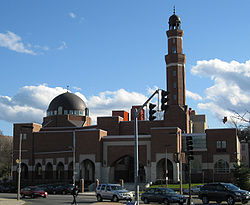
 Islamic Society of Boston mosque in Roxbury | |
| Total population | |
|---|---|
| 4,453,908 (2020 estimate)[1] | |
| Regions with significant populations | |
 Major urban centers, especially in New York City, Los Angeles, Chicago, Houston, Dallas, Detroit, and Washington, D.C. |
| Part of a series on |
| Islam |
|---|
 |
| Islam by country |
|---|
 |
 Islam portal Islam portal |
Islam is the third-largest religion in the United States (1.34%) after Christianity (67%) and Judaism (2.4%).[2] The 2020 United States Religion Census estimates that there are about 4,453,908 Muslim Americans of all ages living in the United States in 2020, making up 1.34% of the total U.S. population.[1] In 2017, twenty states, mostly in the South and Midwest, reported Islam to be the largest non-Christian religion.[3]
The first Muslims to arrive in America were enslaved people from West Africa (such as Omar ibn Said and Ayuba Suleiman Diallo). During the Atlantic slave trade, an estimated 10 to 30 percent[4][5][6][7][8][9] of the slaves brought to colonial America from Africa were Muslims,[10][11] however Islam was suppressed on plantations and the majority were forced to convert to Christianity.[4][8] Nearly all enslaved Muslims and their descendants converted to Christianity during the 18th and 19th centuries, though the Black power movement of the 20th century would later influence the revival of Islam among descendants of slaves. Prior to the late 19th century, the vast majority of documented Muslims in North America were merchants, travelers, and sailors.[10]
From the 1880s to 1914, several thousand Muslims immigrated to the United States from the former territories of the Ottoman Empire and British India.[12] The Muslim population of the U.S. increased dramatically in the second half of the 20th century due to the passage of the Immigration and Nationality Act of 1965, which abolished previous immigration quotas.[13] About 72 percent of American Muslims are "second generation".[14][15]
In 2005, more people from Muslim-majority countries became legal permanent United States residents—nearly 96,000—than there had been in any other year in the previous two decades.[16][17] In 2009, more than 115,000 Muslims became legal residents of the United States.[18]
American Muslims come from various backgrounds and, according to a 2009 Gallup poll, are one of the most racially diverse religious groups in the United States.[19] According to a 2017 study done by the Institute for Social Policy, "American Muslims are the only faith community surveyed with no majority race, with 26 percent white, 18 percent Asian, 18 percent Arab, 9 percent black, 7 percent mixed race, and 5 percent Hispanic".[20] The Pew Research Center estimates about 73% of American Muslims are Sunni and 16% are Shia; the remainder identify with neither group, and include movements such as the Nation of Islam, Ahmadiyya, or non-denominational Muslims.[a][21] Conversion to Islam in large cities[22] and in prisons[23] have also contributed to its growth over the years.
History
[edit]Historical overview
[edit]Islam in the United States can be traced back to the 16th century when African slaves were brought to the United States of America. Historians estimate that between 15% to 30% of the enslaved Africans were Muslim.[24] Most slaves who tried to maintain Islamic religious practices after their arrival were forcibly converted to Christianity. Some enslaved Muslims managed to preserve their religious practices.[25] In the mid-17th century, Ottoman Muslims are documented to have immigrated with other European immigrants, such as Anthony Janszoon van Salee, a merchant of mixed origin from Morocco. Immigration drastically increased from 1878 to 1924 when Muslims from the Balkans, and Syria settled especially in the Midwestern United States. During that era, the Ford Motor Company employed Muslims as well as African-Americans, since they were the most inclined to work in its factories under demanding conditions. By the 1930s and 1940s, Muslims in the US built mosques for their communal religious observance. As of the early 21st century, the number of Muslims in the United States is estimated at 3.5 to 4.5 million,[26] and Islam is predicted to eventually become the second-largest religion in the US.[27][28]
Early records
[edit]One of the earliest accounts of Islam's possible presence in North America dates to 1528, when a Moroccan slave, called Mustafa Azemmouri, was shipwrecked near what is now Galveston, Texas.[29] He and three Spanish survivors subsequently traveled through much of the American southwest and the Mexican interior before reaching Mexico City.
Historian Peter Manseau wrote:
Muslims' presence [in the United States] is affirmed in documents dated more than a century before religious liberty became the law of the land, as in a Virginia statute of 1682 which referred to "negroes, moores, molatoes, and others, born of and in heathenish, idolatrous, pagan, and Mahometan parentage and country" who "heretofore and hereafter may be purchased, procured, or otherwise obtained, as slaves."[30]
American Revolution and thereafter
[edit]Records from the American Revolutionary War indicate that at least a few likely Muslims fought on the American side. Among the recorded names of American soldiers are "Yusuf ben Ali" (a member of the Turks of South Carolina community), "Bampett Muhamed"[31] and possibly Peter Salem.[32][33]
-
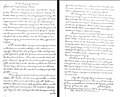 Letter of George Washington to Mohammed ben Abdallah in appreciation of the Treaty of Peace and Friendship, signed in 1787.
 -


,_1819._Charles_Willson_Peale.jpg)
The first country to recognize the United States as an independent nation was the Sultanate of Morocco, under its ruler Mohammed ben Abdallah, in the year 1777.[34] He maintained several correspondences with President George Washington. On December 9, 1805, President Thomas Jefferson hosted a dinner at the White House for his guest Sidi Soliman Mellimelli, an envoy from Tunis.[35]
Bilali "Ben Ali" Muhammad was a Fula Muslim from Timbo, Futa-Jallon, in present-day Guinea-Conakry, who arrived at Sapelo Island during 1803. While enslaved, he became the religious leader and Imam for a slave community numbering approximately eighty Muslim men residing on his plantation. During the War of 1812, Muhammad and the eighty Muslim men under his leadership protected their master's Sapelo Island property from a British attack.[36] He is known to have fasted during the month of Ramadan, worn a fez and kaftan, and observed the Muslim feasts, in addition to consistently performing the five obligatory prayers.[37] In 1829, Bilali authored a thirteen-page Arabic Risala on Islamic beliefs and the rules for ablution, morning prayer, and the calls to prayer. Known as the Bilali Document, it is currently housed at the University of Georgia in Athens.
Nineteenth century
[edit]On the morning of April 5, 1865, near the end of the American Civil War, Union troops commanded by Col. Thomas M. Johnston set ablaze the University of Alabama; a copy of the Quran known as The Koran: Commonly Called The Alcoran was saved by one of the university's staff.[38]
Estimates ranging from a dozen to 292 Muslims served in the Union military during the American Civil War,[39] including Private Mohammed Kahn, who was born in Persia, raised in Afghanistan, and emigrated to the United States.[40] The highest-ranking Muslim officer in the Union Army was Captain Moses Osman.[39] Nicholas Said (born 1836), formerly enslaved to an Arab master, came to the United States in 1860 and found a teaching job in Detroit. In 1863, Said enlisted in the 55th Massachusetts Colored Regiment in the United States Army and rose to the rank of sergeant. He was later granted a transfer to a military hospital, where he gained some knowledge of medicine. His Army records state that he died in Brownsville, Tennessee, in 1882.[41] Another Muslim soldier from the Civil War was Max Hassan, an African who worked for the military as a porter.[42]

A Greek/Syrian convert to Islam, Phillip Tedro (a name he reverted to later in life), born in Smyrna, who renamed himself Hajj Ali, 'Ali who made the pilgrimage to Mecca,' (commonly spelled as "Hi Jolly") was hired by the United States Cavalry in 1856 to tend camels in Arizona and California. He would later become a prospector in Arizona.[43][44] Hajj Ali died in 1903.[41]
During the American Civil War, the "scorched earth" policy of the North destroyed churches, farms, schools, libraries, colleges, and a great deal of other property. The libraries at the University of Alabama managed to save one book from the debris of their library buildings. On the morning of April 4, 1865, when Federal troops reached the campus with an order to destroy the university, Andre Deloffre, a modern language professor and custodian of the library, appealed to the commanding officer to spare one of the finest libraries in the South. The officer, being sympathetic, sent a courier to Brigadier General John T. Croxton at his headquarters in Tuscaloosa, Alabama asking permission to save the Rotunda, but the general refused to allow this. The officer reportedly said, "I will save one volume as a memento of this occasion." The volume selected was a rare copy of the Qur'an.[45]
Alexander Russell Webb is considered by historians to be the earliest prominent Anglo-American convert to Islam in 1888. In 1893, he was the sole representative of Islam at the first Parliament of the World's Religions.[46] The Russian-born Muslim scholar and writer Achmed Abdullah (1881–1945) was another prominent early American Muslim.[47]
In the 1891 Supreme Court case In re Ross, the Court referred to “the intense hostility of the people of Muslim faith to all other sects, and particularly to Christians".[48] Scores of Muslim immigrants were turned away at U.S. ports in the late 19th and early 20th centuries. Christian immigrants suspected of secretly being Muslims were also excluded.[49]
Slaves
[edit]
Many enslaved people brought to America from Africa were Muslims from the predominantly-Muslim West African region.[4][12][50] Between 1701 and 1800, some 500,000 Africans arrived in what became the United States.[51] Historians estimate that between 15 and 30 percent of all enslaved African men and less than 15 percent of the enslaved African women were Muslims. According to 21st century researchers Donna Meigs-Jaques and R. Kevin Jaques, "[t]hese enslaved Muslims stood out from their compatriots because of their resistance, determination and education."[52]
It is estimated that over 50% of the slaves imported to North America came from areas where Islam was followed by at least a minority population. Thus, no less than 200,000 came from regions influenced by Islam. Substantial numbers originated from Senegambia, a region with an established community of Muslim inhabitants extending to the 11th century.[53]
Through a series of conflicts, primarily with the Fulani jihad states, about half of the Senegambian Mandinka were converted to Islam, while as many as a third were sold into slavery to the Americas through capture in conflict.[54]
Michael A. Gomez speculated that Muslim slaves may have accounted for "thousands, if not tens of thousands", but does not offer a precise estimate. He also suggests many non-Muslim slaves were acquainted with some tenets of Islam, due to Muslim trading and proselytizing activities.[55] Historical records indicate many enslaved Muslims conversed in the Arabic language. Some even composed literature (such as autobiographies) and commentaries on the Quran.[56]
Some newly arrived Muslim slaves assembled for communal salat (prayers). Some were provided a private praying area by their owner. The two best documented Muslim slaves were Ayuba Suleiman Diallo and Omar Ibn Said. Suleiman was brought to America in 1731 and returned to Africa in 1734.[53] Like many Muslim slaves, he often encountered impediments when attempting to perform religious rituals and was eventually allotted a private location for prayer by his master.[56]
Omar ibn Said (c. 1770–1864) is among the best documented examples of a practicing-Muslim slave. He lived on a 19th Century North Carolina plantation and wrote many Arabic texts while enslaved. Born in the kingdom of Futa Tooro (modern Senegal), he arrived in America in 1807, one month before the U.S. abolished importation of slaves. Some of his works include the Lords Prayer, the Bismillah, this is How You Pray, Quranic phases, the 23rd Psalm, and an autobiography. In 1857, he produced his last known writing on Surah 110 of the Quran. In 1819, Omar received an Arabic translation of the Christian Bible from his master, James Owen. Omar converted to Christianity in 1820, an episode widely used throughout the South to "prove" the benevolence of slavery. However, many scholars believe he continued to be a practicing Muslim, based on dedications to Muhammad written in his Bible.[57][58]
-
 Ayuba Suleiman Diallo was the son of an Imam of Boonda in Africa, before being enslaved.
 -
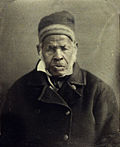 Omar Ibn Said was an Islamic scholar from Senegal.
 -

.jpg)

.jpg)
Religious freedom
[edit]Views of Islam in America affected debates regarding freedom of religion during the drafting of the state constitution of Pennsylvania in 1776. Constitutionalists promoted religious toleration while Anti-constitutionalists called for reliance on Protestant values in the formation of the state's republican government. The former group won out and inserted a clause for religious liberty in the new state constitution. American views of Islam were influenced by favorable Enlightenment writings from Europe, as well as Europeans who had long warned that Islam was a threat to Christianity and republicanism.[59]
In 1776, John Adams published "Thoughts on Government", in which he mentions the Islamic prophet Muhammad as a "sober inquirer after truth" alongside Confucius, Zoroaster, Socrates, and other thinkers.
In 1785, George Washington stated a willingness to hire "Mahometans", as well as people of any nation or religion, to work on his private estate at Mount Vernon if they were "good workmen".[60]
In 1790, the South Carolina legislative body granted special legal status to a community of Moroccans.[citation needed]
In 1797, President John Adams signed the Treaty of Tripoli, declaring the United States had no "character of enmity against the laws, religion, or tranquillity, of Mussulmen".[61]

In his autobiography, published in 1791, Benjamin Franklin stated that he "did not disapprove" of a meeting place in Pennsylvania that was designed to accommodate preachers of all religions. Franklin wrote that "even if the Mufti of Constantinople were to send a missionary to preach Mohammedanism to us, he would find a pulpit at his service".[62]
President Thomas Jefferson defended religious freedom in America, including those of Muslims. Jefferson explicitly mentioned Muslims when writing about the movement for religious freedom in Virginia. In his autobiography Jefferson wrote "[When] the [Virginia] bill for establishing religious freedom ... was finally passed, ... a singular proposition proved that its protection of opinion was meant to be universal. Where the preamble declares that coercion is a departure from the plan of the holy author of our religion, an amendment was proposed, by inserting the word 'Jesus Christ', so that it should read 'a departure from the plan of Jesus Christ, the holy author of our religion'. The insertion was rejected by a great majority, in proof that they meant to comprehend within the mantle of its protection the Jew and the Gentile, the Christian and Mahometan, the Hindoo and infidel of every denomination."[63] While President, Jefferson also participated in an iftar with the Ambassador of Tunisia in 1809.[64]
However, not all politicians were pleased with the religious neutrality of the Constitution, which prohibited any religious test. Anti-Federalists in the 1788 North Carolina ratifying convention opposed the new constitution; one reason was the fear that some day Catholics or Muslims might be elected president. William Lancaster said:[65]
- Let us remember that we form a government for millions not yet in existence ... In the course of four or five hundred years, I do not know how it will work. This is most certain, that Papists may occupy that chair, and Mahometans may take it. I see nothing against it.
In 1788, Americans held inaccurate, and often contradicting, views of the Muslim world, and used that in political arguments. For example, the anti-Federalists compared a strong central government to the Sultan of the Ottoman Empire and the American army to Turkish Janissaries, arguing against a strong central government. On the other hand, Alexander Hamilton argued that despotism in the Middle East was the result of the Sultan not having enough power to protect his people from oppressive local governors; thus he argued for a stronger central government.[66]
20th century
[edit]Modern Muslims
[edit]

Small-scale migration to the U.S. by Muslims began in 1840, with the arrival of Yemenis and Turks,[53] and lasted until World War I. Most of the immigrants, from Arab areas of the Ottoman Empire, came with the purpose of making money and returning to their homeland. However, the economic hardships of 19th-century America[clarification needed] prevented them from prospering, and as a result the immigrants settled in the United States permanently. These immigrants settled primarily in Dearborn, Michigan; Paterson, New Jersey; Quincy, Massachusetts; and Ross, North Dakota. Ross, North Dakota is the site of the first documented mosque and Muslim Cemetery, but it was abandoned and later torn down in the mid-1970s. A new mosque was built in its place in 2005.[46] Construction of mosques sped up in the 1920s and 1930s, and by 1952, there were over 20 mosques.[46] Although the first mosque was established in the U.S. in 1915, relatively few mosques were founded before the 1960s.
- 1893: Alexander Russell Webb starts the first Islamic Mission in the United States called the American Muslim Propagation Movement.
- 1906: Bosniaks (Bosnian Muslims) in Chicago, Illinois, started the Džemijetul Hajrije (Jamaat al-Khayriyya) (The Benevolent Society; a social service organization devoted to Bosnian Muslims). This is the longest lasting incorporated Muslim community in the United States. They met in Bosnian coffeehouses and eventually opened the first Islamic Sunday School with curriculum and textbooks under Bosnian scholar Sheikh Kamil Avdich (Ćamil Avdić) (a graduate of al-Azhar and author of Survey of Islamic Doctrines).
- 1907: Lipka Tatar immigrants from the Podlasie region of Poland founded the first Muslim organization in New York City, the American Mohammedan Society which became the Powers Street Mosque.[67][68] In 2017 they celebrated the 110th anniversary of their establishment.[69]
- 1915: What is most likely the first American mosque was founded by Albanian Muslims in Biddeford, Maine. A Muslim cemetery still exists there.[70][71]
- 1920: The Ahmadiyya Muslim Community was established by the arrival of Mufti Muhammad Sadiq, an Indian Ahmadi Muslim missionary, he later purchased a building in south Chicago and converted it to what is today known as the Al-Sadiq Mosque which was rebuilt as purpose-built mosque in 1990s.
- 1921: The Highland Park Mosque was built in Highland Park, Michigan, although closed a few years later.
- 1929: The Ross Masjid in North Dakota was founded by Syrian Muslims, there is still a cemetery nearby.[72]
- 1934: The oldest continuously and still standing building built specifically to be a mosque was established in Cedar Rapids, Iowa. The mosque is where Abdullah Igram a notable Muslim veteran would teach the Quran, Abdullah Igram later wrote a letter to President Eisenhower persuading him to add the M option (for Muslims) on military dog tags.
- 1935: The statue of Mohammed was drawn on the north wall of the US Supreme Court building in 1935. Also, statues of Charlemagne and Justinian as one of eighteen great law givers of history are seen around the statue of Mohammed.[73]
- 1945: A mosque existed in Dearborn, Michigan, home to the largest Arab-American population in the U.S.
"Since the 1950s," many notable political activists and socialites with influence over politicians have come from the American Muslim community.[74]
The Muslim population of the U.S. increased dramatically after President Lyndon B. Johnson signed the Immigration and Nationality Act of 1965 into law.[13] The act abolished former immigration quotas, and expanded immigration opportunities from countries with significant Muslim populations.[13]
The Xoraxaya, Muslim Roma from Northern Macedonia, also came to the USA, where they founded mainly in the Bronx two Mosques.[75]
Approximately 2.78 million people immigrated to the United States from countries with significant Muslim populations between 1966 and 1997, with some estimating 1.1 million people of that population being Muslims.[13] One-third of those immigrants originated from North Africa or the Middle East, one-third originated from South Asian countries, with the remaining third originating from across the entire world.[13] Immigration to the United States post-1965 favored those deemed to have specialized educational and skills, thus impacting the socio-economic makeup of American Muslims.[13] The United States began seeing Muslim immigrants arrive in the late 20th century as refugees due to such reasons as political unrest, war, and famine.[13]
Subgroups of Muslim Americans
[edit]According to the Pew Research Center, approximately 55% of Muslims in the United States are Sunni Muslims, with Shia Muslims representing roughly 16% of the American Muslim population[21] of which there are also sub-sects within the Shia Muslim denomination such as Nizar'i Ismailism, Bohras, etc. The remainder identify with neither group, including some who consider themselves to be non-denominational Muslims.
Black Muslim movements
[edit]
During the first half of the 20th century, several groups based on Islamic and Gnostic teachings combined with pseudohistorical colonial beliefs were established by African Americans.
Moorish Science Temple of America
[edit]The Moorish Science Temple of America is an American organization founded in 1913 by Noble Drew Ali, making it the oldest Islamic organization in the United States. Drew taught that black people were of Moorish origin but their Muslim identity was taken away through slavery and racial segregation, advocating the return to Islam of their Moorish ancestry.[76] The founder stated that the organization practiced the "Old Time Religion" of Islamism, but he also drew inspiration from Mohammedanism, Buddhism, Christianity, Gnosticism, and Taoism. Its significant divergences from mainstream Islam[77] make its classification as an Islamic denomination a matter of debate among Muslims and scholars of religion.
Its primary tenet was the belief that they are the ancient Moabites who inhabited the Northwestern and Southwestern shores of Africa. The organization also believes that their descendants after being conquered in Spain are slaves who were captured and held in slavery from 1779 to 1865 by their slaveholders.
Adherents of the Moorish Science Temple of America believe that the so-called "Asiatics" were the first human inhabitant of the Western Hemisphere. In their religious texts members refer to themselves as "Asiatics",[78] within the teachings of Noble Drew Ali, the members are taught man cannot be a Negro, Colored Folk, Black people, Ethiopians, because these names were given to slaves by slave holders in 1779 and lasted until 1865 during the time of slavery.
The Moorish Science Temple of America's current leader is R. Jones-Bey.[79]
Nation of Islam
[edit]
The Nation of Islam (NOI) was created in 1930 by Wallace Fard Muhammad. Fard drew inspiration for NOI doctrines from those of Timothy Drew's Moorish Science Temple of America. He provided three main principles which serve as the foundation of the NOI: "Allah is God, the white man is the devil and the so-called Negroes are the Asiatic Black People, the cream of the planet earth".[80]
In 1934, Elijah Muhammad became the leader of the NOI, he deified Fard, saying that he was an incarnation of God, and taught that he was a prophet who had been taught directly by God in the form of Fard. Two of the most famous people to join the NOI were Malcolm X, who became the face of the NOI in the media, and Muhammad Ali, who, while initially rejected, was accepted into the group shortly after his first world heavyweight championship victory.[81] Both Malcolm X and Ali later became Sunni Muslims.[82][83]
Malcolm X was one of the most influential leaders of the NOI and, in accordance with NOI doctrine, advocated the complete separation of blacks from whites.[84] He left the NOI after being silenced for 90 days (due to a controversial comment on the John F. Kennedy assassination), and proceeded to form Muslim Mosque, Inc. and the Organization of Afro-American Unity before his pilgrimage to Mecca and conversion to Sunni Islam. He is viewed as the first person to start the movement among African-Americans towards Sunni Islam.
It was estimated that there were at least 20,000 members in 2006.[85] However, today the group has a wide influence in the African-American community. The first Million Man March took place in Washington, D.C. in 1995 and was followed later by another one in 2000 which was smaller in size but more inclusive, welcoming individuals other than just African-American men.[86] The group sponsors cultural and academic education, economic independence, and personal and social responsibility.
The Nation of Islam has received a great deal of criticism for its anti-white, anti-Christian, and anti-semitic teachings,[87] and is listed as a hate group by the Southern Poverty Law Center.[88]
Five-Percent Nation
[edit]The Five-Percent Nation, sometimes referred to as NGE or NOGE, the Nation of Gods and Earths, or the Five Percenters, is an American organization founded in 1964 in the Harlem section of the borough of Manhattan, New York City, by a former member of the Nation of Islam named Clarence 13X (born Clarence Edward Smith and later known as "Allah the Father"). Clarence 13X, a former student of Malcolm X, left the Nation of Islam after a theological dispute with the Nation's leaders over the nature and identity of God.[89] Specifically, Clarence 13X denied that the Nation's biracial founder Wallace Fard Muhammad was Allah and instead taught that the Black man was himself God personified.[89]
Members of the group call themselves Allah's Five Percenters, which reflects the concept that ten percent of the people in the world know the truth of existence, and those elites and agents opt to keep eighty-five percent of the world in ignorance and under their controlling thumb; the remaining five percent are those who know the truth and are determined to enlighten the rest.[90]
United Nation of Islam
[edit]The United Nation of Islam (UNOI) is a group based in Kansas City, Kansas. It was founded circa 1978 by Royall Jenkins, who continues to be the leader of the group and styles himself "Royall, Allah in Person".
Conversion to orthodox Sunni Islam
[edit]After the death of Elijah Muhammad, he was succeeded by his son, Warith Deen Mohammed. Mohammed rejected many teachings of his father, such as the divinity of Fard Muhammad, and saw a white person as also a worshiper. As he took control of the organization, he quickly brought in new reforms.[91] He renamed it the World Community of al-Islam in the West; later it became the American Society of Muslims. It was estimated that there were 200,000 followers of W. D. Mohammed at the time.
W. D. Mohammed introduced teachings which were based on orthodox Sunni Islam.[92] He removed the chairs in the organization's temples, and replaced the entire "temple" concept with the traditional Muslim house of worship, the mosque, also teaching how to pray the salat, to observe the fasting of Ramadan, and to attend the pilgrimage to Mecca.[93]
A small number of Black Muslims however rejected these new reforms brought by Imam Mohammed. Louis Farrakhan, who broke away from the organization, re-established the Nation of Islam under the original Fardian doctrines, and remains its leader.[94]
Shia Islam
[edit]An estimated 386,000[95] to 900,000 Shia Muslims live in the United States.[96][97] They originate from South Asia, Europe, Middle East, and East Africa;[98] and are often from the countries of: Islamic Republic of Pakistan, India, Islamic Republic of Iran, Lebanon, Iraq, Afghanistan, Syria, Yemen and East Africa; Shiites in the United States also make up about 16 percent of the country's total Muslim population.[99]

The "heart of Shiism in the U.S." is placed in Dearborn,[100] home to the Islamic Center of America. The North American Shia Ithna-Asheri (Twelver Shi'ism) Muslim Communities Organization (NASIMCO) is the largest umbrella group for North American Shias.[98]
Sufism
[edit]Some Muslim Americans adhere to the doctrines of Sufism. The Islamic Supreme Council of America (ISCA) is a small body representing Sufi teachings, which, according to adherents, is the inner, mystical dimension of Islam. The ISCA's stated aims include providing practical solutions for American Muslims, based on the traditional Islamic legal rulings of an international advisory board, many of whom are recognized as the highest-ranking Islamic scholars in the world. ISCA aims to integrate traditional scholarship in resolving contemporary issues affecting the maintenance of Islamic beliefs in a modern, secular society.[101] It has been linked to neo-traditionalist thought.[citation needed]
Quranic movement
[edit]The largest Quranist movement in the United States is the United Submitters International. This movement was founded by Rashad Khalifa. His movement popularized the phrase: "The Qur'an, the whole Qur'an, and nothing but the Qur'an". Although he was initially well received by many, his subsequent claims of divine inspiration caused friction between him and others, and he was assassinated in 1990.[102] Notable Americans influenced by Rashad Khalifa include his son, Sam Khalifa, a retired professional baseball player, and Ahmad Rashad, a sportscaster and retired football player.
Non-denominational Muslims
[edit]Research by Pew in 2011 found that Non-denominational Muslims make up roughly one in seven of all American Muslims, at 15%. Non-denominational Muslims, do not have any specific affiliation with a religious body and usually describe themselves as being "just a Muslim". Muslims who were born in the US are more likely to be non-denominational than immigrant Muslims. 24% or one in four US-born Muslims are non-denominational, versus 10% of immigrant Muslims.[103]
Ahmadiyya
[edit]
The Ahmadiyya Community was established in 1920 in the United States.[104] Ahmadi Muslims were among the earliest Muslim missionaries in America, the first being Mufti Muhammad Sadiq, who arrived in America on February 15, 1920, and between 1921 and 1925 alone they converted over 1000 people to Islam. Although at first their efforts were broadly concentrated over a large number of racial and ethnic groups, subsequent realization of the deep-seated racial tensions and discrimination made Ahmadi missionaries focus their attention on mainly African Americans and the Muslim immigrant community and became vocal proponents of the civil rights movement.[105] Officially incorporated in Illinois in 1948 as the Ahmadiyya Movement In Islam, Inc. and commonly referred to as the Ahmadiyya Muslim Community since 2006(?). Many Ahmadi Muslims fled countries like Pakistan due to persecution in recent times.[106]
Other Muslims
[edit]There are some mosquegoers who adhere to sects and denominations that form very small minorities. Examples of such small branches include progressive Muslims, Mahdavi Muslims, Ibadi Muslims, and Ismaili Muslims.[107][108][109]
Conversion to Islam
[edit]
Some of the earliest Islamic missionary activities were undertaken by Alexander Russell Webb, who in 1893 established a mission in Manhattan, although it faltered due to lack of funding.[110] From 1910 to 1912, Inayat Khan toured major American cities preaching Islam; he attracted large audiences though not as many converts.[110] More successful in converting Americans to Islam was Mufti Muhammad Sadiq, who established a mission in Chicago in 1920. The converts Sadiq attracted tended to be African American.[111]: 31–32 Soon after, African-American Muslim groups began to form: the Moorish Science Temple was established in Chicago in 1925, and the Nation of Islam formed in 1930.[111]: 34–36
According to an article in 2001, 25,000 Americans convert to Islam per year.[112]
In more recent years, there has been significant conversion to Islam in the state, federal, and local prisons of the United States. According to J. Michael Waller, Muslim inmates constitute 15–20% of the prison population, or roughly 350,000 inmates in 2003. Waller states that these inmates mostly come into prison as non-Muslims. He also says that 80% of the prisoners who "find faith" while in prison convert to Islam.[113] These converted inmates are mostly African American, with a small but growing Hispanic minority.[114][115][116]
Since the start of the Gaza War in 2023, there has been an increase in Americans who have converted to Islam.[117]
Demographics
[edit]


The U.S. Census Bureau does not collect data on religious identification. Various institutions and organizations have given widely varying estimates about the Muslim population in the U.S. Tom W. Smith, author of "Estimating the Muslim Population in the United States", said that of twenty estimates he reviewed during a five-year period until 2001, none was "based on a scientifically-sound or explicit methodology. All can probably be characterized as guesses or assertions. Nine came from Muslim organizations such as the Islamic Society of North America, the Muslim Student Association, the Council on American-Islamic Relations, the American Muslim Council, and the Harvard Islamic Society or unspecified 'Muslim sources'. None of these sources gave any basis for their figures."[118] In 2005, according to The New York Times, more people from Muslim-majority countries became legal permanent United States residents—nearly 96,000—than in any year in the previous two decades.[16][17][119]
According to CAIR, no scientific count of Muslims in the U.S. has been done and the larger figures should be considered accurate. Some journalists have also alleged that the higher numbers have been inflated for political purposes.[120][121]
According to the 2010 US Religion Census, there were estimated to be 2.6 million Muslims and over 2,000 Mosques in the US.[122] According to a Pew Forum estimate, in 2017 there were 3.45 million Muslims, constituting about 1.1% of the total U.S. population,[123] compared with 70.6% who follow Christianity, 22.8% unaffiliated, 1.9% Judaism, 0.7% Buddhism, and 0.7% Hinduism.[124][125] A Pew Forum report on American religion found that Muslims accounted for 0.9% of American adults in 2014, up from 0.4% in 2007, due largely to immigration. Retention rates were high, at 77%, similar to Hindus (80%) and Jews (75%); most people who leave these religions become unaffiliated, although ex-Muslims were more likely to be Christians than ex-Hindus or ex-Jews were. Conversely, 23% of American Muslims were converts, including 8% from historically black Protestant traditions, 6% from being unaffiliated, 4% from Catholicism, and 3% from mainline or evangelical Protestantism. By race, in 2014, 38% were non-Hispanic white (including Arabs and Iranians, up from 32% in 2007), 28% were Asian (mostly Indians, Pakistanis, and Bangladeshis, up from 20% in 2007), 28% were black (down from 32%), 4% Hispanic (down from 7%), and 3% of mixed or other race (down from 7%). Since 2007, the black proportion had shrunk, while the white and Asian proportions had grown, mainly due to immigration as most black Muslims were native U.S. blacks.[126]
According to data from the General Social Survey in the United States "32% of those raised Muslim no longer embrace Islam in adulthood, and 18% hold no religious identification".[127] According to Pew Research, the number of American converts to Islam is roughly equal to the number of American Muslims who leave the religion.[128]
Race
[edit]According to a 2001 study written by Ihsan Bagby, an associate professor of Islamic studies at the University of Kentucky, of Americans who convert to Islam, 64% are African American, 27% are White, 6% are Hispanic of any race, and 3% are other. Around that time increasing numbers of American Hispanics converted to Islam. Many Hispanic converts in Houston said that they often had been mistaken as of being of Pakistani or Middle Eastern descent, due to their religion. Many Hispanic converts were former Christians.[129][130]
Since the arrival of South Asian and Arab communities around the 1990s there has been divisions with the African Americans due to the racial and cultural differences; however, since September 11, 2001, the two groups joined when the immigrant communities looked towards the African Americans for advice on civil rights.[131]
Religion
[edit]According to a 2014 religious survey, 64% of American Muslims believe religion is very important, compared to 58% of American Catholics who believe so. The frequency of receiving answers to prayers among Muslims was, 31% at least once a week and 12% once or twice a month.[132] Nearly a quarter of the Muslims are converts to Islam (23%), mainly native-born. Of the total who have converted, 59% are African American and 34% white. Previous religions of those converted was Protestantism (67%), Roman Catholicism (10%), and 15% no religion.
Mosques are usually explicitly Sunni or Shia although there are over 55 Ahmadiyya mosques as well. There are 2,769 mosques in the United States as of 2020[update],[133] and the nation's largest mosque, the Islamic Center of America, is in Dearborn, Michigan. It caters mainly to the Shia Muslim congregation; however, all Muslims may attend this mosque. It was rebuilt in 2005 to accommodate over 3,000 people for the increasing Muslim population in the region.[134][135] More than half (55%) of the religious affiliations of Muslims is Sunni, 16% Shia, 22% non-affiliated and 16% other/non-response.[136] Muslims of Arab descent are mostly Sunni (56%) with minorities who are Shia (19%). Muslims of South Asian descent including Bangladeshis (90%), Indians (82%) and Pakistanis (72%) are mainly Sunni, other groups such as Iranians are mainly Shia (91%).[136] Of African American Muslims, 48% are Sunni, 34% are unaffiliated (mostly part of the Community of W. Deen Mohammed), 16% other (mostly Nation of Islam and Ahmadiyya) and 2% Shia.[136]
In many areas, a mosque may be dominated by whatever group of immigrants is the largest. Sometimes the Friday sermons, or khutbas, are given in languages like Urdu, Bengali or Arabic along with English. Areas with large Muslim populations may support a number of mosques serving different immigrant groups or varieties of belief within Sunni or Shia traditions. At present, many mosques are served by imams who immigrate from overseas, as only these imams have certificates from Muslim seminaries.[137][138][139]
Education and income
[edit]The household income levels of American Muslims are about as evenly distributed as the general American population.[140]
When it comes to education, the Institute for Social Policy and Understanding reported in 2017 that across the board, American Muslims, Protestants, and Catholics have similar education levels. It has also been found that Muslim women (73%) are more likely than Muslim men (57%) to go on to pursue higher education beyond high school, and they are also more likely to report being in the middle class.[20]
Current estimates show that there are 270 full-time Islamic schools that enroll between 26,000 and 35,500 students in the United States. Islamic k-12 schools typically teach tawhid, or belief that God is the creator and sustainer of the universe; ilm, the imperative to seek knowledge; and ta’lim, and specific teaching about the Qur’an and ahadith. Some private Islamic schools in the United States cater to specific ethnic and/or cultural communities. Others enroll students from diverse backgrounds and ethnicities. Specific subject that are taught include Arabic, Qur’an, and Islamic studies along with academic subjects such as math, science, English, history, civics, and in some schools, art and music. Typically Islamic schools integrate religious knowledge throughout the curricula, incorporate prayer into their daily schedules, require modest dress, and serve halal food.[141]
Among South Asians in the country, the large Pakistani American community stands out as particularly well educated and prosperous, with education and income levels exceeding those of U.S.-born whites. Many are professionals, especially in medicine (they account for 2.7–5% of America's physicians),[142][143] scientists, engineers, and financial analysts, and there are also a large number of entrepreneurs. There are more than 15,000 medical doctors practicing medicine in the USA who are of Pakistani origin alone[144] and the number of Pakistani American millionaires was reported to be in the thousands. Shahid Khan is a Pakistani-born American multi billionaire businessmen and owner of the Jacksonville Jaguars of the National Football League (NFL) making him the first and only ethnic minority member to own one, he also owns English Premier League team Fulham F.C., and automobile parts manufacturer Flex-N-Gate in Urbana, Illinois.[145]
45 percent of immigrant Muslims report annual household income levels of $50,000 or higher. This compares to the national average of 44 percent. Immigrant Muslims are well represented among higher-income earners, with 19 percent having annual household incomes of $100,000 or higher (compared to 16 percent for the Muslim population as a whole and 17 percent for the U.S. average). This is likely due to the strong concentration of Muslims in professional, managerial, and technical fields, especially in information technology, education, medicine, law, and the corporate world.[146]
By state
[edit]There were estimated to be about 4.5 million Muslim adherents across the United States in 2020.[1]
| State |
Muslim (estimate)[1] |
Percent Muslim (estimate)[1] |
|---|---|---|
 United States United States |
4,453,908 | 1.34% |
 Illinois Illinois |
473,792 | 3.70% |
 New York New York |
724,475 | 3.59% |
 New Jersey New Jersey |
321,652 | 3.46% |
 Maryland Maryland |
188,914 | 3.06% |
 Michigan Michigan |
241,828 | 2.40% |
 Minnesota Minnesota |
114,590 | 2.01% |
 Virginia Virginia |
169,371 | 1.96% |
 Massachusetts Massachusetts |
131,749 | 1.87% |
 Arizona Arizona |
109,765 | 1.53% |
 California California |
504,056 | 1.27% |
 North Carolina North Carolina |
130,661 | 1.25% |
 Maine Maine |
16,894 | 1.24% |
 Connecticut Connecticut |
43,905 | 1.22% |
 Wisconsin Wisconsin |
68,699 | 1.17% |
 Pennsylvania Pennsylvania |
149,561 | 1.15% |
 Georgia Georgia |
123,652 | 1.15% |
 District of Columbia District of Columbia |
7,528 | 1.09% |
 Texas Texas |
313,209 | 1.07% |
 Ohio Ohio |
120,077 | 1.02% |
 Vermont Vermont |
6,201 | 0.96% |
 Missouri Missouri |
53,443 | 0.87% |
 Utah Utah |
25,403 | 0.78% |
 Iowa Iowa |
23,211 | 0.73% |
 Delaware Delaware |
7,065 | 0.71% |
 Indiana Indiana |
41,400 | 0.61% |
 Florida Florida |
127,172 | 0.59% |
 Tennessee Tennessee |
39,745 | 0.58% |
 New Mexico New Mexico |
12,046 | 0.57% |
 Louisiana Louisiana |
24,732 | 0.53% |
 Alabama Alabama |
23,550 | 0.47% |
 Kentucky Kentucky |
17,957 | 0.40% |
 Oklahoma Oklahoma |
15,290 | 0.39% |
 Washington Washington |
27,391 | 0.36% |
 Nevada Nevada |
7,400 | 0.24% |
 Rhode Island Rhode Island |
2,599 | 0.24% |
 Arkansas Arkansas |
6,765 | 0.22% |
 Colorado Colorado |
10,828 | 0.19% |
 Idaho Idaho |
2,531 | 0.14% |
 South Carolina South Carolina |
6,677 | 0.13% |
 Kansas Kansas |
3,615 | 0.12% |
 Oregon Oregon |
4,934 | 0.12% |
 Nebraska Nebraska |
2,402 | 0.12% |
 Mississippi Mississippi |
3,106 | 0.10% |
 New Hampshire New Hampshire |
1,172 | 0.09% |
 North Dakota North Dakota |
540 | 0.07% |
 South Dakota South Dakota |
535 | 0.06% |
 West Virginia West Virginia |
849 | 0.05% |
 Alaska Alaska |
400 | 0.05% |
 Wyoming Wyoming |
226 | 0.04% |
 Montana Montana |
200 | 0.02% |
 Hawaii Hawaii |
145 | 0.01% |
Population concentrations
[edit]
Generally speaking, Muslims are concentrated in the Eastern one-third of the United States, and particularly in the Northeast megalopolis, given the region's relative proximity to the Middle East, North Africa, Central Asia, and South Asia by flight. New York City had the largest number of Muslims in the US with approximately 75,000. In 2000, Dearborn, Michigan, ranked second with 29,181, and Los Angeles ranked third with 25,673; although Paterson, New Jersey, in the New York City Metropolitan Area, was estimated to have become home to 25,000 to 30,000 Muslims as of 2011. The Muslim population in the New York metropolitan area approximates 1.5 million, the largest metropolitan Muslim population in the Western hemisphere.
As of 2020, New York was the state home to the highest absolute number of Muslims, by a significant margin, at over 724,000. By percentages of the population, Illinois, the State of New York, New Jersey, and Maryland all hosted population concentrations greater than 3%.[147] Paterson in New Jersey has been nicknamed Little Ramallah and Little Istanbul and contains a neighborhood with the same name, with an Arab American population estimated as high as 20,000 in 2015.[148] Philadelphia was estimated to have 30,000 to 50,000 Muslims as of 2012.[149] Houston was estimated to have 63,000 Muslims as of 2012.
Mosques
[edit]
In 2020, the US Mosque Survey identified 2,796 Islamic places of worship in the United States, a "31% increase from the 2010 count." The U.S. states with the highest number of mosques were New York (343), California (304), Texas (224), Florida (157), and New Jersey (141), with New York gaining the highest number of mosques compared to 2011 (86 additional).[150] As part of a sampled survey, the US Mosque Survey reports that 6% of mosques self identified as Shi'ite.[151] Pew Research Center notes that 61% of respondents to the survey "say that women have served on the board at some point in the last five years."[152]
Previously, in 2011, the number of mosques in the United States was 2,106. At the time, the six states with the highest numbers of mosques were: New York (257), California (246), Texas (166), Florida (118), Illinois (109), and New Jersey (109).[153]
In the United States in particular, it has been shown in a study done by the Institute for Social Policy and Understanding that Muslim Americans who regularly attend mosques are more likely to work with their neighbors to solve community problems (49 vs. 30 percent), be registered to vote (74 vs. 49 percent), and plan to vote (92 vs. 81 percent). The study also states that “there is no correlation between Muslim attitudes toward violence and their frequency of mosque attendance.”[20]
Regarding mosque attendance, data shows that American Muslim women and American Muslim men attend the mosque at similar rates (45% for men and 35% for women). Additionally, when compared to the general public looking at the attendance of religious services, young Muslim Americans attend the mosque at closer rates to older Muslim Americans.[20] A Pew Research study found that women attendance at American mosques increased from 2011 to 2020, as did women participation in mosque administration, including positions on the board of trustees.[154]
Culture
[edit]Within the Muslim community in the United States there exist a number of different traditions. As in the rest of the world, the Sunni Muslims are in the majority. Shia Muslims, especially those in the Iranian immigrant community, are also active in community affairs. All four major schools of Islamic jurisprudence (fiqh) are found among the Sunni community.
Muslims in the United States have increasingly made their own culture; there are various Muslim comedy groups, rap groups, Scout troops and magazines, and Muslims have been vocal in other forms of media as well.[155]
Hijab is commonly worn by Muslim women in the United States, and is a very distinctive cultural feature of Muslims in America. According to a Pew Research Center poll from 2011, 36% of Muslim American women reported wearing hijab whenever they were in public, with an additional 24% indicating they wore it most or some of the time, while only 40% indicated that they never wore the headcover.[156] Contrary to popular beliefs about assimilation, the study found that the number of women wearing hijab was in fact higher among native-born Muslim women compared to first-generation Muslim immigrants.[157] In the 1990s, however, hijabs were not commonly seen in the United States, as overt Islamization became more apparent only during the 21st century.[158] Compared to some nations in Western Europe, such as France and the Netherlands,[159][160] there have been relatively few controversies surrounding the hijab in everyday life, a product of "pro-religious freedom" laws allowing for a wide range of religious accommodations, and also due to greater support for multiculturalism.
In his 2008 book Al' America, writer and journalist Jonathan Curiel wrote about the consequences of 9/11 on the perception of Islamic culture in America, stating that it has been difficult for some Americans to "see Arab and Muslim culture as anything other than terrorism and fundamentalism".[161] The Islamic experience in the US is also not well known or researched among mainstream society, with Jewish scholar Lior Sternfeld stating, "Muslim-Americans were a much smaller and more marginalized community, but it's changing."[161]
Notable American Muslim figures
[edit]Religion
[edit]- Omar Suleiman - Islamic scholar, founder and president of the Yaqeen Institute for Islamic Research, imam of Valley Ranch Islamic Center
- Yasir Qadhi - Imam and resident Islamic scholar for the East Plano Islamic Center (EPIC Masjid)
- Suhaib Webb - Former imam of the Islamic Society of Boston Cultural Center (ISBCC)
- Hamza Yusuf - Islamic scholar, President and co-founder of Zaytuna College
- Zaid Shakir - Islamic scholar, co-founder of Zaytuna College
- Anwar al-Awlaki - Imam and alleged Al-Qaeda spokesman and regional leader
Sports and athletics
[edit]- Muhammad Ali - was an American professional boxer and activist. Nicknamed "the Greatest", he is regarded as one of the most significant sports figures of the 20th century and is often regarded as the greatest heavyweight boxer of all time.
- Kareem Abdul-Jabbar - is an American former professional basketball player who played 20 seasons in the National Basketball Association (NBA) for the Milwaukee Bucks and Los Angeles Lakers. During his career as a center, Abdul-Jabbar was a record six-time NBA Most Valuable Player (MVP).
- Mike Tyson - is an American former professional boxer. He reigned as the undisputed world heavyweight champion from 1987 to 1990 and is regarded as one of the greatest heavyweight boxers of all time.
- Belal Muhammad - is an American professional mixed martial artist who currently competes in the Welterweight division of the Ultimate Fighting Championship (UFC).
- Oday Aboushi - is a Palestinian-American former American football offensive guard. He played college football at Virginia and was selected by the New York Jets in the fifth round of the 2013 NFL Draft.
- Ameer Abdullah - is an American football running back for the Las Vegas Raiders of the National Football League (NFL). He was selected by the Detroit Lions in the second round of the 2015 NFL draft. He played college football for the Nebraska Cornhuskers.
- Jaylen Brown - is an American professional basketball player for the Boston Celtics of the National Basketball Association (NBA).
- Yunus Musah - is an American professional soccer player who plays as a midfielder for Serie A club AC Milan and the United States national team. Considered as one of the best young players in the world, he is known for his technical ability, movement, and strength.
- Nico Ali Walsh - is an American professional boxer. The grandson of Muhammad Ali, Walsh came into the ring for his pro debut in August 2021 wearing his grandfather's personal white Everlast shorts, which were passed down to him in 2016 with the death of his grandfather.
- Hassan Diarra - is an American college basketball player for the UConn Huskies of the Big East Conference.
- Ryan Harris (American football) - is a former American football offensive tackle of the National Football League (NFL).
- Mustafa Ali - is an American professional wrestler, currently performing for Total Nonstop Action Wrestling (TNA) and New Japan Pro-Wrestling (NJPW) on per-appearance deals, as well as on the independent circuit, the former in which he is the current TNA X Division Champion in his first reign.
- Mahmoud Abdul-Rauf - is an American former professional basketball player.
- Jabri Abdur-Rahim - is an American college basketball player for the Providence Friars of the Big East Conference.
- Hasim Rahman - is an American former professional boxer who competed from 1994 to 2014.
- Hasim Rahman Jr. - is an American professional boxer who challenged for the WBC-USNBC heavyweight title in 2022.
- Nazr Mohammed - is an American former professional basketball player who had a journeyman career in the National Basketball Association (NBA), playing for eight different teams over 18 seasons.
- Alhaji Mohammed - is an American-born Ghanaian former basketball player.
- Rasheed Wallace - is an American basketball coach and former professional player.
- Azeez Al-Shaair - is an American football linebacker for the Houston Texans of the National Football League (NFL).
- Gervonta Davis - is an American professional boxer.
- Husain Abdullah - is a former American football safety.
- Hamza Abdullah - is a former American football safety.
- Robert Saleh - is an American professional football coach who served as the head coach for the NFL team New York Jets from 2021 to 2024, he is the first Muslim American to serve as the head coach of an NFL team.
- Ibtihaj Muhammad - is an American writer, fashion designer, Sabre fencer who is a Bronze Medal Winner in the 2016 Summer Olympics Games.
Science
[edit]- Shereef Elnahal - commissioner, New Jersey Department of Health, transitioning to CEO of University Hospital, Newark in July 2019
- Ayub K. Ommaya - neurosurgeon, inventor of the Ommaya reservoir
- Ahmed Zewail - Nobel Prize winner in Chemistry, 1999 for his work on femtochemistry
- Aziz Sancar - Nobel Prize winner in Chemistry, 2015 along with Tomas Lindahl and Paul L. Modrich for their mechanistic studies of DNA repair
Engineering
[edit]- Fazlur Khan - structural engineer (designed the Sears Tower, John Hancock Center)
Business
[edit]- Amjad Masad - CEO and founder of Replit[162]
- Mohamed Abouelenein, Ahmed Elsaka, & Abdelbaset Elsayed - The 3 owners & founders of The Halal Guys, an American Halal Fast casual restaurant franchise since 1990.
Politics
[edit]Congress
[edit]As of the 119th US Congress, four Democrats identify as Muslim (0.8% total): André Carson, Ilhan Omar, Rashida Tlaib, Lateefah Simon.[163]
Party politics
[edit]In the 2000 Presidential election, 78 percent of Muslim Americans supported Republican candidate George W. Bush over Democratic candidate Al Gore.[164] However, due to increased anti-Muslim rhetoric from the Republican Party after the September 11 attacks,[165][166] support for the Republican Party among American Muslims has declined sharply.
.jpg)
By 2004, Bush's Muslim support had been reduced to under 1%, and Democratic candidate John Kerry's support rose to 93%, with 5% voting for Ralph Nader.[167][168]
By 2008, Democratic candidate Barack Obama got 67% to 90% of the Muslim vote depending on region.[169] In total, Obama won 89% of the Muslim vote, with his Republican opponent John McCain getting only 2%.[170] Some of his opponents question Obama's religious faith; see Barack Obama religion conspiracy theories.
By 2012, Barack Obama's support slightly falls to 85%, with 4% voting for his Republican opponent, Mitt Romney.[171]
In a 2017 Survey done by the Institute for Social Policy and Understanding, only 15% of American Muslims wanted Donald Trump to win the 2016 presidential election, compared to 54% wanting Hillary Clinton to win.[20] 74% of Muslims ended up voting for Clinton, compared to 13% for Trump.[172]
According to a 2018 poll from the Institute for Social Policy and Understanding, American Muslims were as satisfied with the American trajectory as the general public, reporting at around 27%. Regarding the 45th president of the United States, Donald Trump, Muslims are the least likely to approve of him across all faith groups including non affiliated Americans. This compares to, "17% of non-affiliated Americans, 31% of Jews, 36% of Catholics, 41% of Protestants, and 72% of white Evangelicals".[20]
According to the report belongs to a Boston-based organization that works to increase American Muslim education and civic engagement, "at least 145 American Muslims, virtually all of them Democrats, ran for state or national public office in 2018. Of these, 110 were first-time candidates who represent an unprecedented rise for a diverse Muslim community that is typically underrepresented in American politics.".[161]
.jpg)
In 2020, Democratic candidate Joe Biden received 69% of the Muslim vote, whereas Republican candidate Donald Trump received 17% (an increase from 13% in 2016) (excluding those who refused to answer, it would be 78% for Biden and 19% for Trump).[173] Another survey showed that 86% of Muslims voted for Joe Biden, compared to just 6% for Trump. The remaining 8% either did not vote or supported a different candidate.[174]
American Muslim political engagement is increasing, as 75% of American Muslims surveyed by ISPU reported being registered to vote, an increase of 15% from 2016 data.[175] In January 2019, Sadaf Jaffer became the first female Muslim American mayor, first female South Asian mayor, and first female Pakistani-American mayor in the United States, of Montgomery in Somerset County, New Jersey.[176] In June 2022, Republican candidate Mehmet Oz became the first Muslim to be nominated by a major party for the U.S. Senate.[177][178]
During the 2024 United States presidential election, an August 2024 survey published by the Council on American-Islamic Relations (CAIR) found that 29% of Muslim voters planned to vote for Jill Stein.[179] In Michigan, 40 percent of Muslim voters supported Stein, 18% supported Trump and 12% supported Harris.[180] CAIR's final election poll, published on November 1, showed that nationwide among Muslims, 42.3% planned to vote for Stein, 41% for Harris, and 9.8% for Trump.[181] In CAIR's exit poll, published on November 8, 53% of Muslims voted for the Green Party candidate, Jill Stein. Only 20% of Muslims voted for Harris and only 21% voted for Trump.[182]
| Election year | Democratic | Republican | Green |
|---|---|---|---|
| 2000 | 22%[b] | 78% | — |
| 2004 | 93% | <1% | 5% |
| 2008 | 89% | 2% | — |
| 2012 | 85% | 4% | — |
| 2016 | 74% | 13% | — |
| 2020 | 78% | 19% | — |
| 2024 | 20% | 21% | 53% |
Organizations
[edit]
One of the largest Islamic organizations is the Islamic Society of North America (ISNA) which says that 27% of mosques in the U.S. are associated with it. ISNA is an association of immigrant Muslim organizations and individuals that provides a common platform for presenting Islam. It is composed mostly of immigrants. Its membership may have recently exceeded ASM, as many independent mosques throughout the United States are choosing to affiliate with it. ISNA's annual convention is the largest gathering of Muslims in the United States.[183]
The second largest Muslim organization is the community under the leadership of W. Deen Mohammed or the American Society of Muslims with 19% of mosques, mostly African-Americans having an affiliation with it. It was the successor organization to the Nation of Islam, once better-known as the Black Muslims. The association recognizes the leadership of Warith Deen Mohammed. This group evolved from the Black separatist Nation of Islam (1930–1975). The majority of its members are African Americans. This has been a 23-year process of religious reorientation and organizational decentralization, in the course of which the group was known by other names, such as the American Muslim Mission, W. Deen Mohammed guided its members to the practice of mainstream Islam such as salat or fasting, and teaching the basic creed of Islam the shahadah.
.jpg)
The third largest group is the Islamic Circle of North America (ICNA). ICNA describes itself as a non-ethnic, open to all, independent, North America-wide, grass-roots organization. It is composed mostly of immigrants and the children of immigrants. It is growing as various independent mosques throughout the United States join and also may be larger than ASM at the present moment. Its youth division is Young Muslims.[184] Why Islam? is a community outreach project of ICNA;[185][186] it seeks to provide accurate information about Islam[187] while debunking popular stereotypes and common misconceptions through various services and outreach activities.[188][189]
The Islamic Supreme Council of America (ISCA) is a small organization representing Sufi teachings, which, according to adherents, is the inner, mystical dimension of Islam. The ISCA's stated aims include providing practical solutions for American Muslims, based on the traditional Islamic legal rulings of an international advisory board, many of whom are recognized as the highest ranking Islamic scholars in the world. ISCA strives to integrate traditional scholarship in resolving contemporary issues affecting the maintenance of Islamic beliefs in a modern, secular society.[101] It has been linked to neoconservative thought.
.jpg)


The Islamic Assembly of North America (IANA) is a leading Muslim organization in the United States. According to its website, among the goals of IANA is to "unify and coordinate the efforts of the different dawah oriented organizations in North America and guide or direct the Muslims of this land to adhere to the proper Islamic methodology." In order to achieve its goals, IANA uses a number of means and methods including conventions, general meetings, dawah-oriented institutions and academies, etc.[190] IANA folded in the aftermath of the attack of September 11, 2001 and they have reorganized under various banners such as Texas Dawah and the Almaghrib Institute.
The Muslim Students' Association (MSA) is a group dedicated, by its own description, to Islamic societies on college campuses in Canada and the United States for the good of Muslim students. The MSA is involved in providing Muslims on various campuses the opportunity to practice their religion and to ease and facilitate such activities. MSA is also involved in social activities, such as fund raisers for the homeless during Ramadan. The founders of MSA would later establish the Islamic Society of North America and Islamic Circle of North America.[191]
The Islamic Information Center (IIC) is a "grass-roots" organization that has been formed for the purpose of informing the public, mainly through the media, about the real image of Islam and Muslims. The IIC is run by chairman (Hojatul-Islam) Imam Syed Rafiq Naqvi, various committees, and supported by volunteers.[192]
The Shia Muslim Foundation (SMF) works to support civic rights of American Shia Muslims, and to advocate on social and political issues. SMF is noted for working with both Shia community leaders and Shia Islamic scholars and clergy in accomplishing its work.[193]
The Ahmadiyya Muslim Community was established in the U.S. in 1921, before the existence of Nation of Islam, according to its members.[194][195]
Muslim Congress, a charitable non-profit social welfare organization, aimed at promoting Islamic knowledge, morality, and values amongst Muslims in North America. They run social projects like food distribution to the homeless in their "No More Hunger" project.[196]
Political
[edit]
Muslim political organizations lobby on behalf of various Muslim political interests. Organizations such as the American Muslim Council are actively engaged in upholding human and civil rights for all Americans.
- The Council on American–Islamic Relations (CAIR) is the United States largest Muslim civil rights and advocacy group, originally established to promote a positive image of Islam and Muslims in America. CAIR presents itself as representing mainstream, moderate Islam, and has condemned acts of terrorism and has been working in collaboration with the White House on "issues of safety and foreign policy."[197] The group has been criticized for alleged links to Islamic terrorism and it has been designated as a terrorist group by the United Arab Emirates.[198]
- The Muslim Public Affairs Council (MPAC) is an American Muslim public service and policy organization headquartered in Los Angeles and with offices in Washington, D.C. MPAC was founded in 1988. The mission of MPAC "encompasses promoting an American Muslim identity, fostering an effective grassroots organization, and training a future generation of men and women to share our vision. MPAC also works to promote an accurate portrayal of Islam and Muslims in mass media and popular culture, educating the American public (both Muslim and non-Muslim) about Islam, building alliances with diverse communities and cultivating relationships with opinion- and decision-makers."[199]
- The American Islamic Congress is a small secular Muslim organization that promotes "religious pluralism". Their official Statement of Principles states that "Muslims have been profoundly influenced by their encounter with America. American Muslims are a minority group, consisting largely of immigrants and children of immigrants, who have prospered in America's climate of religious tolerance and civil rights. The lessons of our unprecedented experience of acceptance and success must be carefully considered by our community."[200] The AIC holds an annual essay writing competition, the Dream Deferred Essay Contest, focusing on civil rights in the Middle East.
- The Free Muslims Coalition states it was created to "eliminate broad base support for Islamic extremism and terrorism" and to strengthen secular democratic institutions in the Middle East and the Muslim World by supporting Islamic reformation efforts.[201]
- Muslims for Bush was an advocacy group aiming to drum up support from Muslims for President George W. Bush. It was co-founded by Muhammad Ali Hasan and his mother Seeme, who were prominent donors to the Republican Party. In 2010, co-founder Muhammad Ali Hasan left the Republican Party. Muslims for Bush has since been reformed into the bipartisan Muslims for America.
- American Muslim Political Action Committee (AMPAC) was created in July 2012 by MD Rabbi Alam, a Bangladeshi-born American politician. This newly created organization is one of America's largest Muslim civil liberties advocacy organizations. It is headquartered in Kansas City, Missouri, with two regional offices in New York City and Madison, Wisconsin. AMPAC a bipartisan political platform for Muslim Americans to participate in political races. AMPAC presents an Islamic perspective on issues of importance to the American public, and seeks to empower the American Muslim community and encourage its social and political activism. On September 11, 2013, AMPAC organized the Million Muslim March which took place at the National Mall in Washington, D.C.[202][203]
- The Islamic Center of Passaic County, the American Arab Civic Organization, and the American Muslim Union, all based in Paterson, New Jersey, voice Muslims' opposition to terrorism, including the November 2015 Paris attacks.[204]
- In November 2022, Nabeela Syed was elected as the first state legislature. In the Illinois 51st district, she defeated the a republican incumbent. She is also one of the very few Muslim women and youngest political figures at the age of 23.[205]
Charitable
[edit]Charitable donations within the Muslim American community are impacted by domestic political and social climates. ISPU found in 2017 that, “23% of Muslim Americans increased their giving to organizations associated with their faith community and 18% joined, donated to, or volunteered at a civic organizations for the first time as a result of the 2016 national elections."[20] A 2021 study showed that Muslim Americans donated more to charity than other Americans during 2020. Most of the donations were given to causes supporting poverty relief, COVID-19 relief, civil rights, and religious research.[206]
In addition to the organizations listed above, other Muslim organizations in the United States serve more specific needs. For example, some organizations focus almost exclusively on charity work. As a response to a crackdown on Muslim charity organizations working overseas such as the Holy Land Foundation, more Muslims have begun to focus their charity efforts within the United States.
- Inner-City Muslim Action Network (IMAN) is one of the leading Muslim charity organizations in the United States. According to the Inner-City Muslim Action Network, IMAN seeks "to utilize the tremendous possibilities and opportunities that are present in the community to build a dynamic and vibrant alternative to the difficult conditions of inner city life." IMAN sees understanding Islam as part of a larger process to empower individuals and communities to work for the betterment of humanity.[207]
- Islamic Relief USA is the American branch of Islamic Relief Worldwide, an international relief and development organization. Its stated goal is "to alleviate the suffering, hunger, illiteracy and diseases worldwide without regard to color, race or creed." They focus on development projects; emergency relief projects, such as providing aid to victims of Hurricane Katrina; orphans projects; and seasonal projects, such as food distributions during the month of Ramadan. They provide aid internationally and in the United States.[208]
- Project Downtown is a non profit organization originated in Miami Fl. From what started as two men giving away a few sandwiches eventually turned into an array of chapters all over the United States giving away thousands of packets of food, hygiene bags, clothes, and other necessities of life to those who cannot afford it. The motto of Project Downtown is "We feed you for the sake of God alone, no reward do we seek, nor thanks." (Quran 76:9)
- Compassionate Care Network, Chicago, CCNchicago was formed 14 years ago to offer basic health screening for the uninsured population in the community. It offers health screening for obesity, hypertension, diabetes and health awareness for the indigent people. It has formed a network of 200 providers and enrolled several thousand patients. In 2014 CCN's work was recognized with honors from the Governor of Illinois and also by President Obama at the White House. In 2015 CCN was invited to participate in White House policy recommendation discussions with the US Dept of Health and Human Services Office of Faith Based and Neighborhood Partnerships.
- American Muslim Health Professionals is a nonprofit organization, founded in 2004, which aims to unite Muslim health professionals and provide information on health. They also provide information on mental health. Another of their goals is to connect Muslim Americans to affordable insurance and free health clinics.[209]
Cultural
[edit]There are two museums dedicated to the history of Islamic culture in the U.S. and abroad. The International Museum of Muslim Cultures in Jackson, Mississippi opened in early 2001.[210] America's Islamic Heritage Museum, in Washington, D.C., opened on April 30, 2011.[211]
There are also numerous cultural organizations centering the Muslim community in the U.S.
- Muslim Writers Collective (MWC) is one of the leading Muslim arts and culture organizations in the United States, founded in 2014 in New York City, and holding monthly open mics across the country. According to a Vice magazine article published in 2016, "At a time when Islamophobia has reached new virulent and violent heights, MWC provides a space for young Muslims to honor their humanity."[212]
Research and think tanks
[edit]The Institute for Social Policy and Understanding, with offices in Dearborn, MI and Washington, DC, is an independent, nonpartisan research organization specializing in addressing the most pressing challenges facing the American Muslim community and in bridging the information gap between the American Muslim community and the wider society.[213]
Views
[edit]Religiosity
[edit]A nationwide survey conducted in 2003 by the Pew Research Center and the Pew Forum on Religion and Public Life reported that the percentage of Americans with an unfavorable view of Islam increased by one percentage point between 2002 and 2003 to 34%, and then by another two percentage points in 2005 to 36%. At the same time the percentage responding that Islam was more likely than other religion to encourage violence fell from 44% in July 2003 to 36% in July 2005.[214]
| July 2007 Newsweek survey of non-Muslim Americans[215] | ||
|---|---|---|
| Statement | Agree | Disagree |
| Muslims in the United States are as loyal to the U.S. as they are to Islam |
40% | 32% |
| Muslims do not condone violence | 63% | |
| Qur'an does not condone violence | 40% | 28% |
| Muslim culture does not glorify suicide |
41% | |
| Concern about Islamic radicals | 54% | |
| Support wiretapping by FBI | 52% | |
| American Muslims more "peaceable" than non-American ones |
52% | 7% |
| Muslims are unfairly targeted by law enforcement |
38% | 52% |
| Oppose mass detentions of Muslims | 60% | 25% |
| Believe most are immigrants | 52% | |
| Would allow son or daughter to date a Muslim |
64% | |
| Muslim students should be allowed to wear headscarves |
69% | 23% |
| Would vote for a qualified Muslim for political office |
45% | 45% |
The July 2005 Pew survey also showed that 59% of American adults view Islam as "very different from their religion," down one percentage point from 2003. In the same survey 55% had a favorable opinion of Muslim Americans, up four percentage points from 51% in July 2003.[214] A December 2004 Cornell University survey shows that 47% of Americans believe that the Islamic religion is more likely than others to encourage violence among its believers.[216]
A CBS April 2006 poll showed that, in terms of faiths[217]
- 58% of Americans have favorable attitudes toward Protestantism/Other Christians
- 48% favorable toward Catholicism
- 47% favorable toward Judaism
- 31% favorable toward Christian fundamentalism
- 20% favorable toward Mormonism
- 19% favorable toward Islam
- 8% favorable toward Scientology
The Pew survey shows that, in terms of adherents[214]
- 77% of Americans have favorable opinions of Jews
- 73% favorable of Catholics
- 57% favorable of "evangelical Christians"
- 55% favorable of Muslims
- 35% favorable of Atheists
Pew surveys conducted in 2014, 2017, and 2019 continued this trend showing Americans had the least favorable views toward Muslims and Atheists.[218]
A 2011 Gallup poll found that 56% of Protestants, 63% of Catholics, and 70% of Jews believed that American Muslims had no sympathy for Al Qaeda.[219] A 2015 Brookings poll found that 14% Americans believe most Muslims support ISIS and another 44% believe Muslims partially support ISIS.[220] Political party also plays a role in whether Americans believe Islam encourages violence. Over the years, Republicans have become more likely to state they believe Islam encourages violence more than other religions, while Democrats are more likely to say it does not.[221]
A 2016 poll found that on average; Americans believed that 17% of the US population was Muslim and that this number would rise to 23% by 2020.[222]
A 2018 poll by The Institute for Social Policy and Understanding found that 86% of Americans report wanting to, “live in a country where no one is targeted for their religious identity.”[175] 95% of American Jews and 78% of white Evangelicals agreed. The study also found that 66% of Americans agree that “the negative things politicians say regarding Muslims is harmful to our country.” Breaking down the results by faith community, 78% of Muslims and non-affiliated Americans agreed, contrasted with only 45% of white Evangelicals. Most Americans oppose banning the building of mosques (79%), the surveillance of U.S. mosques (63%), and a ‘Muslim Ban’ (~63%).[175] Most Americans also take issue with the collective blaming of Muslims for the acts of individuals, and 69% of those surveyed believe Muslims are no more responsible for violence carried out by a Muslim than anyone else. ISPU writes that, “Though at a lower rate, the majority of Americans (55%) say that most Muslims living in the United States are committed to the well-being of America.”[175]
According to a research by the New America foundation and the American Muslim Initiative found in 2018, 56 percent of Americans believed Islam was compatible with American values and 42 percent said it was not. About 60 percent believed US Muslims were as patriotic as others, while 38 percent they were not. The study found that a big majority of Americans - 74 percent - accepted there was "a lot" of bigotry against Muslims. Researchers found that Republicans were more likely to hold negative perceptions of Muslims with 71 percent.[223]
A 2021 Pew study found that 78% of Americans believe Muslims face discrimination, which was a higher percentage than for other religions.[224]
On the United States
[edit]| Pew's poll of views on American Society[225] | ||
|---|---|---|
| Statement | U.S. Muslim |
General public |
| Agree that one can get ahead with hard work |
71% | 64% |
| Rate their community as "excellent" or "good" |
72% | 82% |
| Excellent or good personal financial situation |
42% | 49% |
| Satisfied with the state of the U.S. |
38% | 32% |
In a 2007 survey titled Muslim Americans: Middle Class and Mostly Mainstream, the Pew Research Center found Muslim Americans to be "largely integrated, happy with their lives, and moderate with respect to many of the issues that have divided Muslims and Westerners around the world."[225]
47% of respondents said they considered themselves Muslims first and Americans second. However, this was compared to 81% of British Muslims and 69% of German Muslims, when asked the equivalent question. A similar disparity exists in income, the percentage of American Muslims living in poverty is 2% higher than the general population, compared to an 18% disparity for French Muslims and 29% difference for Spanish Muslims.[225]
Politically, American Muslims both supported larger government and are socially conservative. Despite their social conservatism, 71% of American Muslims expressed a preference for the Democratic Party.[225] The Pew Research survey also showed that nearly three quarters of respondents believed that American society rewards them for hard work regardless of their religious background.[226]
The same poll reported that 40% of U.S. Muslims believe that Arab Muslims carried out the 9/11 attacks. Another 28% do not believe it and 32% said they had no opinion. Among the 28% who doubted that Arab Muslims were behind the conspiracy, one-fourth said the U.S. government or President George W. Bush was responsible. 26% of American Muslims believe the U.S.-led "war on terror" is a sincere effort to root out international terrorism. 5% of those surveyed had a "very favorable" or "somewhat favorable" view of Al-Qaeda. 35% of American Muslims stated that the decision for military action in Afghanistan was the right one and 12% supported the use of military force in Iraq.[225]
Although American Muslims do report feeling discriminated against as a religious minority, they are just as likely as the general public (81%) to say they value their American Identity. In fact, a 2018 study done by the Institute for Social Policy and Understanding asserts that, “a higher religious identity correlates with a higher American identity among all Americans, especially Muslims.”[175]
LGBTQ
[edit]American Muslims in the 2000s and early 2010s showed generally conservative views about homosexuality, with only about 27% of American Muslims saying it should be accepted by society in 2007, compared to 51% of the entire US public in 2006, according to the Pew Research Center. However, this later rose to 39% in 2011 (compared to 58% of the entire US public), and eventually in 2017, rising to a majority at 52% of American Muslims approving of societal acceptance of homosexuality, on par with the approval of Protestants, although lower than the total US public approval rate of 63%.[227]
A 2017 survey by the Public Religion Research Institute showed that a slim majority of Muslims at 51% supported gay marriage, compared to 34% opposed.[228]
Hamtramck, Michigan the only Muslim-majority city in the United States and the first city to have a Muslim-majority city council in the history of the United States, with four of the six council members being Muslim. In June 2023, the city drew scrutiny for its ban of the rainbow flag on city property and perceived homophobia.[229]
Concerns and perceptions
[edit]A 2011 Pew poll reported support for extremism among Muslim Americans is negligible.[230] The poll indicated all segments of the Muslim American population were opposed to violence and to a correlation between support for suicide bombing and religiosity measures.[230] A 2007 Pew poll reported that very few Muslim Americans (1%) supported suicide bombings against civilian targets in at least some circumstances, with 81% reporting that suicide bombings and other forms of violence against civilians are never justified.[230] Favorable views towards Al Qaeda were held by a comparably smaller percentage among Muslim Americans, 2% very favorable and 3% somewhat favorable.[230] 15% of American Muslims under the age of 30 supported suicide bombings against civilian targets in at least some circumstances, on the other hand, 11% said it could be "rarely justified" in a 2007 Pew poll. Among those over the age of 30, just 6% expressed their support for the same. 9% of Muslims over 30 and 5% under 30 chose not to answer.[225]
.png)
Terrorism that involved Muslim perpetrators began in the United States with the 1993 shootings at CIA Headquarters in Langley, Virginia, followed by the 1993 World Trade Center bombing in New York City. After the September 11 attacks and the start of the Afghanistan war in 2001, there was concern about the potential radicalization of American Muslims.[citation needed]
Between 2001 and the end of 2009, there were 46 publicly reported incidents of "domestic radicalization and recruitment to jihadist terrorism" that involved at least 125 people between 2001 and the end of 2009. There had been an average of six cases per year since 2001, but that rose to 13 in 2009.[231]
While the seeming increase in cases may be alarming, half "involve single individuals, while the rest represent ‘tiny conspiracies,’ " according to Congressional testimony.[232] Furthermore, a 2012 study by the University of North Carolina indicated that the yearly number of cases of alleged plots by Muslim-Americans appears to be declining. The total of 20 indictments for terrorism in 2011 is down from 26 in 2010 and 47 in 2009 (the total since 9/11 is 193). The number of Muslim-Americans indicted for support of terrorism also fell, from 27 individuals in 2010 to just eight in 2011 (the total since 9/11 stands at 462).[233][234] Also in apparent decline is the number of actual attacks: Of the 20 suspects indicted for terrorism, only one was charged with carrying out a terrorist act. This number is down from the six individuals charged with attacks in 2010.[234]
Muslim Americans are significantly represented among those who tip authorities off to alleged plots having given 52 of the 140 documented tips regarding individuals involved in violent terrorist plots since 9/11 up to 2012.[233][234]
The Boston Marathon bombing in 2013 caused 280 injuries, and 5 civilian and police deaths.[235] Attempted attacks, like the Curtis Culwell Center attack and 2015 Boston beheading plot have attracted substantial media coverage[236] and inflamed community relations.[237] In 2015 the New America Foundation released information about violent extremist groups in the US.[238] While the Boston Marathon bombing had a high injury toll, only four deaths were counted by the group, and the group's count of only deaths from violent extremism showed that since 9/11, 48 people had been killed by anti-government extremists, compared to 28 by Jihadists.
Some Muslim Americans have been criticized because of perceived conflicts between their religious beliefs and mainstream American value systems. Muslim cab drivers in Minneapolis, Minnesota have been criticized for refusing passengers for carrying alcoholic beverages or dogs. The Minneapolis-Saint Paul International Airport authority has threatened to revoke the operating authority of any driver caught discriminating in this manner.[239] There are reported incidents in which Muslim cashiers have refused to sell pork products to their clientele.[240]
Jihadist extremism
[edit]In 2002, John Walker Lindh was convicted on charges of working with the Taliban and carrying weapons against American soldiers. He had converted to Islam while in the United States, moved to Yemen to study Arabic, and then went to Pakistan, where he was recruited by the Taliban.[241]
José Padilla, a Hispanic-American, was convicted and imprisoned on suspicion of plotting a radiological bomb ("dirty bomb") attack. After marrying a Muslim woman, Padilla converted to Islam and moved to the Middle East. While living in the Middle East from 2001 to early 2002, he was recruited and trained by al-Qaeda.[242] On May 8, 2002, he was detained in Chicago. President George W. Bush designated him an enemy combatant and, arguing that he was not entitled to trial in civilian courts, had him transferred to a military prison.[243]
In 2015, a 24-year-old Kuwaiti man, Mohammad Youssef Abdulazeez, a naturalized US citizen with an engineering degree, killed four U.S. Marines and injured three at two facilities in Chattanooga, Tennessee.[244][245]
Islamophobia
[edit].jpg)

In the first half of 2024, anti-Muslim incidents rose about 70% amid Gaza attack.[246] According to a 2011 Gallup poll, over the preceding decade, there had been an increase in Islamophobia, which it defined as "an exaggerated fear, hatred, and hostility toward Islam and Muslims that is perpetuated by negative stereotypes resulting in bias, discrimination, and the marginalization and exclusion of Muslims from social, political, and civic life."[247] Another 2011 poll provided by The Washington Post[248] through the Public Religion Research Institute states that 48 percent of Americans are uncomfortable with Muslim women wearing the burqa. A 2014 Pew Research Center survey found that Muslims were the most disliked religious group in the United States with an average "cold" rating of 40 (out of 100), which is lower than the 41 cold ratings received by atheists.[249] According to a poll in November 2015 by the Public Religion Research Institute 56 percent of Americans believe that the values of Islam are at odds with the American values and ways of life.[250]
Public institutions in the U.S. have also drawn fire for accommodating Islam at the expense of taxpayers. The University of Michigan–Dearborn and a public college in Minnesota have been criticized for accommodating Islamic prayer rituals by constructing footbaths for Muslim students using taxpayer money. Critics said this special accommodation, which is made to satisfy the needs of Muslims alone, is a violation of Constitutional provisions separating church and state.[251] Along the same constitutional lines, in 2007 a San Diego public elementary school was criticized for making special accommodations, specifically for American Muslims, by adding Arabic to its curriculum and giving breaks for Muslim prayers. Some critics said exceptions have not been made for any religious group in the past, and they see this as an endorsement of Islam.[252]
The first American Muslim Congressman, Keith Ellison, created controversy when he compared President George W. Bush's actions after the September 11, 2001 attacks to Adolf Hitler's actions after the Nazi-sparked Reichstag fire, saying that Bush was exploiting the aftermath of 9/11 for political gain, as Hitler had exploited the Reichstag fire to suspend constitutional liberties.[253] The United States Holocaust Memorial Museum and the Anti-Defamation League condemned Ellison's remarks. The congressman later retracted the statement, saying that it was "inappropriate" for him to have made the comparison.[254]
In April 2018, former President Donald Trump instigated a ban on Muslim immigration to America that still reverberates today. America had already some of the lowest percentages (about 1.1% of the total US population) of Muslims among Western nations, and with the ban in 2018, many African Muslims were also barred from traveling to the U.S. or seeking refuge there. The ban had a dramatic impact, but the measure was immediately rescinded in 2021, when Joe Biden took office. Muslim Americans, rights advocates and immigration experts, however, say the policy continues to have a lingering effect on Muslim citizens, as well as on their family members living abroad, unable to join their loved ones in America.[255]
2018 ISPU Poll
[edit]| Most Muslims living in the United States... (% Net agree shown) | Muslim | Jewish | Catholic | Protestant | White Evangelical | Non-Affiliated | General Public |
|---|---|---|---|---|---|---|---|
| Are more prone to violence | 18% | 15% | 12% | 13% | 23% | 8% | 13% |
| Discriminate against women | 12% | 23% | 29% | 30% | 36% | 18% | 26% |
| Are hostile to the United States | 12% | 13% | 9% | 14% | 23% | 8% | 12% |
| Are less civilized than other people | 8% | 6% | 4% | 6% | 10% | 1% | 6% |
| Are partially responsible for acts of violence carried out by other Muslims | 10% | 16% | 11% | 12% | 14% | 8% | 12% |
| Index (0 min - 100 max) | 17 | 22 | 22 | 31 | 40 | 14 | 24 |
| My faith identity/ community... (% Net agree shown) | Muslim | Jewish | Catholic | Protestant | White Evangelical | Non-Affiliated | General Public |
|---|---|---|---|---|---|---|---|
| Is a source of happiness | 85% | 72% | 73% | 81% | 94% | 34% | 68% |
| Contributes to society | 85% | 91% | 78% | 79% | 95% | 44% | 71% |
| Makes me proud | 86% | 87% | 85% | 83% | 95% | 37% | 72% |
| Index | 87 | 86 | 82 | 85 | 93 | 58 | 78 |
In the American Muslim Poll 2018, the Institute for Social Policy and Understanding set out "to measure the level of public anti-Muslim sentiment" in the United States.[175] The following graph shows data across six different faith populations in the United States, and their answers to the two questions below ("W. Evang." is short for White Evangelical, the specific demographic surveyed):[175]
Question 1: Some people think that for the military to target and kill civilians is sometimes justified, while others think that this kind of violence is never justified. Which is your opinion?
Question 2: Some people think that for an individual or a small group of people to target and kill civilians is sometimes justified, while others think that this kind of violence is never justified. Which is your opinion?
- Question 1 (% Never Justified)
- Question 2 (% Never Justified)
The following graph contains additional data collected by ISPU during their 2018 poll. The following statements were posed to participants and they were asked to answer on a scale from strongly agree to strongly disagree. The chart below shows the total percentage from each American faith demographic that agreed with the statements below. (Note: "W. Evang." is short for White Evangelical, the specific demographic surveyed.)
Question 1: I want to live in a country where no one is targeted for their religious identity
Question 2: The negative things politicians say regarding Muslims is harmful to our country
Question 3: Most Muslims living in the United States are committed to the wellbeing of America
Question 4: Most people associate negative stereotypes with my faith identity
- Question 1 (% Net agree)
- Question 2 (% Net agree)
- Question 3 (% Net agree)
- Question 4 (% Net agree)
Prejudice
[edit]

After the September 11 attacks, America saw an increase in the number of hate crimes committed against people who were perceived to be Muslim, particularly those of Middle Eastern and South Asian descent. More than 20 acts of discrimination and violence were documented in the post 9/11 era by the U.S. Department of Justice.[256] Some of these acts were against Muslims living in America. Other acts were against those accused of being Muslims, such as Sikhs, and people of Arabian and South-Asian backgrounds.[256] A publication in Journal of Applied Social Psychology found evidence that the number of anti-Muslim attacks in America in 2001 increased from 354 to 1,501 following 9/11.[257] The same year, the Arab American Institute reported an increase in anti-Muslim hate crimes ranging from discrimination and destruction of private property to violent threats and assaults, some of which resulted in deaths.[258][259][260]
In a 2007 survey, 53% of American Muslims reported that it was more difficult to be a Muslim after the 9/11 attacks. Asked to name the most important problem facing them, the options named by more than ten percent of American Muslims were discrimination (19%), being viewed as a terrorist (15%), public's ignorance about Islam (13%), and stereotyping (12%). 54% believe that the U.S. government's anti-terrorism activities single out Muslims. 76% of surveyed Muslim Americans stated that they are very or somewhat concerned about the rise of Islamic extremism around the world, while 61% express a similar concern about the possibility of Islamic extremism in the United States.[225]
On a small number of occasions Muslim women who wore distinctive hijab were harassed, causing some Muslim women to stay at home, while others temporarily abandoned the practice. In November 2009 Amal Abusumayah, a mother of four young girls, had her hijab pulled following derogatory comments while grocery shopping.[261] In 2006, one California woman was shot dead as she walked her child to school; she was wearing a headscarf and relatives and Muslim leaders believe that the killing was religiously motivated.[262][263] While 51% of American Muslims express worry that women wearing hijab will be treated poorly, 44% of American Muslim women who always wear hijab express a similar concern.[225]
In 2011, The Learning Channel (TLC) broadcast a television series, All-American Muslim, depicting the lives of different American Muslims in Dearborn, Michigan.[264]
Even 16 years after 9/11, studies show that 42% Muslim Americans report bullying of their children in school because of their faith. One in four bullying incidents involving Muslims is rerouted to have involved a teacher or other school official. Policies regarding immigration and airport security have also impacted Muslim American lives after 9/11, with Muslims being twice as likely as any other faith group surveyed to be stopped at the border for additional screening. 67% of Muslims who were stopped at a US border also reported that they were easily identifiable as a member of their faith group. The climate of the 2016 presidential election and the policies that followed have also affected the lives and sentiments of Muslims Americans when it comes to their own safety. Muslims and Jews are, “most likely to express fear for their personal safety or that of their family from white supremacist groups as a result of the 2016 elections.” Overall, the majority of nonwhite Muslims do report some level of race-based discrimination in the past year. When it comes to religious based discrimination, Muslim Americans as a whole were the most likely faith group to report it.
See also
[edit]
- Islam in the Americas
- Islam in New York City
- Islam in Canada
- Ahmadiyya in the United States
- List of American Muslims
- List of Islamic and Muslim related topics
- List of mosques in the United States
- Latino Muslims
- Religious school
- United States military chaplain symbols (including images of U.S. Army, Navy, and Air Force Muslim Chaplain insignia)
- American Islam (term)
- EPIC City, Texas
Notes
[edit]References
[edit]- ^ a b c d e "Maps and data files for 2020 | U.S. Religion Census | Religious Statistics & Demographics". www.usreligioncensus.org. Retrieved March 26, 2024.
- ^ "Pew Research Center - The size of the U.S. Jewish population". Pew Research. May 11, 2021.
- ^ "U.S. Religion Census". U.S. Religion Census. Retrieved November 12, 2022.
- ^ a b c Sylviane A. Diouf, Servants of Allah: African Muslims Enslaved in the Americas (1998)
- ^ Tweed, Thomas A. "Islam in America: From African Slaves to Malcolm X". National Humanities Center. Archived from the original on July 16, 2009. Retrieved July 21, 2009.
- ^ "Muslims arrived in America 400 years ago as part of the slave trade and today are vastly diverse". College of Liberal Arts and Sciences. February 19, 2025. Retrieved May 16, 2025.
- ^ "African Muslims in Antebellum America: Transatlantic Stories and Spiritual Struggles". Routledge & CRC Press. Retrieved May 16, 2025.
- ^ a b "Islamic Traditions in the African-American Community Introduction". crcc.usc.edu. April 16, 2019. Retrieved May 24, 2025.
- ^ "America's First Muslims Were Slaves". Voice of America. January 29, 2019. Retrieved June 12, 2025.
- ^ a b Manseau, Peter (February 9, 2015). "The Muslims of Early America". The New York Times. Archived from the original on February 11, 2015. Retrieved February 12, 2015.
An estimated 20 percent of enslaved Africans were Muslims, and many sought to recreate the communities they had known.
- ^ Curtis, Muslims in America, p. 119
- ^ a b Edward E. Curtis, Muslims in America: A Short History (2009) ch 1
- ^ a b c d e f g "Muslim Immigration After 1965". Carleton College. Retrieved March 12, 2021.
- ^ "The Future of the Global Muslim Population". The Pew Forum on Religion & Public Life. January 27, 2011. Archived from the original on April 7, 2013. Retrieved October 30, 2011.
- ^ Wilgoren, Jodi (October 22, 2001). "A Nation Challenged: American Muslims – Islam Attracts Converts By the Thousand, Drawn Before and After Attacks". The New York Times. ISSN 0362-4331. Retrieved March 25, 2021.
- ^ a b Elliott, Andrea (September 10, 2006). "Muslim immigration has bounced back". Seattle Times. Archived from the original on February 19, 2012. Retrieved December 6, 2011.
- ^ a b "Migration Information Source – The People Perceived as a Threat to Security: Arab Americans Since September 11". Migrationinformation.org. Archived from the original on December 1, 2011. Retrieved December 6, 2011.
- ^ "The Global Muslim Population: Projections for 2010–2030 Archived July 30, 2013, at the Wayback Machine" The Pew Research Center. January 27, 2011.
- ^ "Muslim Americans Exemplify Diversity, Potential". Gallup.com. March 2, 2009. Archived from the original on December 21, 2011. Retrieved December 6, 2011.
- ^ a b c d e f g "American Muslim Poll 2017: Key Findings | ISPU". Institute for Social Policy and Understanding. March 21, 2017. Retrieved June 14, 2018.
- ^ a b "Muslims and Islam: Key findings in the U.S. and around the world". www.pewresearch.org. August 9, 2017. Retrieved January 30, 2022.
- ^ Wakin, Daniel J. (January 2, 2002). "Ranks of Latinos Turning to Islam Are Increasing; Many in City Were Catholics Seeking Old Muslim Roots". The New York Times. Retrieved December 6, 2011.
- ^ Al Jazeera English (April 16, 2019). Why do so many US prison inmates convert to Islam? | The Stream. Retrieved November 11, 2024 – via YouTube.
- ^ Curtis, Edward E. (2009). Muslims in America: a short history. Religion in American life. New York Oxford: Oxford University Press. ISBN 978-0-19-536756-0.
- ^ Diouf, Sylviane A. (2013). Servants of Allah: African Muslims enslaved in the Americas (15th ed.). New York: New York University Press. ISBN 978-1-4798-4711-2.
- ^ "U.S. Muslims Concerned About Their Place in Society, but Continue to Believe in the American Dream". Pew Research Center. July 26, 2017. Retrieved August 27, 2024.
- ^ "Islam In America | History Detectives". www.pbs.org. Retrieved November 1, 2019.
- ^ The Puritans, vol 1, p. 225. Perry Miller and Thomas H. Johnson, eds.
- ^ Manseau, Peter (February 9, 2015). "The Muslims of Early America". The New York Times. Retrieved February 12, 2015.
- ^ Manseau, Peter (March 9, 2015). "What Happened to America's First Muslims?". The Huffington Post. Archived from the original on March 11, 2015. Retrieved March 11, 2015.
- ^ Curtis, Edward E (2010). Encyclopedia of Muslim-American History. Infobase. ISBN 9781438130408. Retrieved March 5, 2015.
- ^ Southwick, Albert B. (August 26, 2010). "Exploring Peter Salem's roots". Telegram & Gazette. Worcester, MA. Archived from the original on December 21, 2015. Retrieved December 18, 2015.
- ^ Samory, Rashid (2013). Black Muslims in the US: History, Politics, and the Struggle of a Community. Palgrave Macmillan. p. 78. ISBN 9781137337511. Retrieved December 18, 2015.
- ^ Capitalizing on the Morocco-US Free Trade Agreement: A Road Map for Success. Peterson Institute. 2009. ISBN 9780881325812. Retrieved March 5, 2015.
- ^ Thomas Jefferson's Iftar, U.S. Department of State, July 29, 2011, archived from the original on April 4, 2013, retrieved February 12, 2013
- ^ Amir Muhammad (November 25, 2009). "History of American Muslims (2)". Middle East Studies Online Journal. Archived from the original on December 12, 2011. Retrieved December 6, 2011.
- ^ Muslim roots of the blues Archived May 25, 2011, at the Wayback Machine, Jonathan Curiel, San Francisco Chronicle August 15, 2004
- ^ "Copy of Quran only book saved from Union's 1865 burning of UA". Archived from the original on December 21, 2014. Retrieved July 2, 2014.
- ^ a b Encyclopedia of Muslim-American History. New York: Facts on File. 2010. p. 561. ISBN 9781438130408.
- ^ Mersiovsky, Kate (June 23, 2017). "Private Mohammed Kahn: Civil War Soldier". The National Archives NARAtions. Archived from the original on July 5, 2017. Retrieved July 7, 2017.
- ^ a b "History of Muslims In America". Talkingaboutislam.com. Archived from the original on March 24, 2012. Retrieved December 6, 2011.
- ^ "1800s". Muslims In America. Archived from the original on December 1, 2011. Retrieved December 6, 2011.
- ^ "Brief History of Islam in North America" (PDF). Archived (PDF) from the original on December 12, 2011. Retrieved December 6, 2011.
- ^ SKSM.edu Archived November 27, 2010, at the Wayback Machine, History of Islam in the United States.
- ^ Ishaq Zahid. "American Muslim History". Islam101.com. Archived from the original on December 9, 2011. Retrieved December 6, 2011.
- ^ a b c M'Bow, Amadou Mahtar; Kettani, Ali (2001). Islam and Muslims in the American Continent. Beirut: Center of Historical, Economical and Social Studies. p. 109.
- ^ Edward E. Curtis, Encyclopedia of Muslim-American History, Facts on File, Inc., 2010, p. 198
- ^ "In re Ross, 140 U.S. 453 (1891)". Justia Law. Retrieved August 24, 2018.
- ^ "America banned Muslims long before Donald Trump". Washington Post. Retrieved August 24, 2018.
- ^ Turner, Richard Brent (2013). "African Muslim Slaves and Islam in Antebellum America". In Hammer, Juliane; Safi, Omid (eds.). The Cambridge Companion to American Islam. Cambridge and New York: Cambridge University Press. pp. 28–44. doi:10.1017/CCO9781139026161.005. ISBN 9781139026161. LCCN 2012046780.
- ^ Stephen D. Behrendt, David Richardson, and David Eltis, W. E. B. Du Bois Institute for African and African-American Research, Harvard University. Based on "records for 27,233 voyages that set out to obtain slaves for the Americas". Behrendt, Stephen (1999). "Transatlantic Slave Trade". In Appiah, Kwame Anthony; Gates, Henry Louis Jr. (eds.). Africana: The Encyclopedia of the African and African American Experience. New York: Basic Civitas Books. pp. 1865–77. ISBN 978-0-465-00071-5.
- ^ Meigs-Jaques, Donna; Jaques, R. Kevin (2005). "Islam". In Hill, Samuel S.; Lippy, Charles H. (eds.). Encyclopedia of Religion in the South. Macon, Georgia: Mercer University Press. pp. 394–95. ISBN 978-0-86554-758-2.
- ^ a b c Koszegi, Michael; Melton, J. Gordon (1992). Islam in North America: A Sourcebook. New York: Garland Publishing Inc. pp. 26–27.
- ^ "Bound To Africa – The Mandinka Legacy In The New World" (PDF). Retrieved November 17, 2012.
- ^ Gomez, Michael A. (November 1994). "Muslims in Early America". The Journal of Southern History. 60 (4): 682. doi:10.2307/2211064. JSTOR 2211064.
- ^ a b Gomez, Michael A. (November 1994). "Muslims in Early America". The Journal of Southern History. 60 (4): 692–93, 695. doi:10.2307/2211064. JSTOR 2211064.
- ^ Thomas C. Parramore, "Muslim Slave Aristocrats in North Carolina," North Carolina Historical Review, April 2000, Vol. 77 Issue 2, pp. 127–50
- ^ In 1991, a masjid in Fayetteville, North Carolina renamed itself Masjid Omar Ibn Said in his honor. Omar ibn Said Archived May 16, 2008, at the Wayback Machine Davidson Encyclopedia Tammy Ivins, June 2007
- ^ Charles D. Russell, "Islam as a Danger to Republican Virtue: Broadening Religious Liberty in Revolutionary Pennsylvania", Pennsylvania History, Summer 2009, Vol. 76 Issue 3, pp. 250–275
- ^ Hutson, James H. (May 2002). "The Founding Fathers and Islam". Library of Congress Information Bulletin. Library of Congress. Archived from the original on April 27, 2005. Retrieved December 16, 2017.
- ^ Treaty of Peace and Friendship Archived September 16, 2007, at the Wayback Machine Article 11. The Avalon Project. Yale Law School.
- ^ "The Autobiography of Benjamin Franklin – Chapter 10". Earlyamerica.com. February 27, 2007. Archived from the original on December 1, 2011. Retrieved December 6, 2011.
- ^ "Thomas Jefferson – Subject Research Guides at UVa Library". Etext.virginia.edu. April 21, 2011. Archived from the original on December 5, 2010. Retrieved December 6, 2011.
- ^ "Remarks at the Annual State Department Iftaar Dinner". State.gov. September 15, 2009. Archived from the original on December 2, 2011. Retrieved December 6, 2011.
- ^ Denise A. Spellberg, "Could a Muslim Be President? An Eighteenth-Century Constitutional Debate, Eighteenth-Century Studies 39#4 (2006) pp. 485–506
- ^ Robert J. Allison, The Crescent Obscured: The United States and the Muslim World, 1776–1815 (1995) pp. 57–59
- ^ "Religion: Ramadan". Time. November 15, 1937. Archived from the original on August 26, 2009. Retrieved May 5, 2010.
- ^ "America's Oldest Surviving Mosque Is in Williamsburg". Bedford + Bowery. December 26, 2018.
- ^ "American Muslim organization founded by European settlers marks 110 years". Arab News. October 23, 2017.
- ^ Queen, Edward L., Stephen Prothero and Gardiner H. Shattuck Jr. 1996. The Encyclopedia of American Religious History. New York: Facts on File.
- ^ Ghazali, Abdul Sattar. "The number of mosque attendants increasing rapidly in America". American Muslim perspective. Archived from the original on September 28, 2007.
- ^ "Day 22: Ross, North Dakota – A Leap in Time". Archived from the original on March 25, 2014. Retrieved July 2, 2014.
- ^ Williams, Jennifer (December 22, 2015). "A brief history of Islam in America". vox.
- ^ "Muslim American Politics and the Future of US Democracy". NYU Press. Retrieved July 3, 2023.
- ^ https://static.america.gov/uploads/sites/8/2016/04/American-Communities-Series_Macedonian-Roma_English_508.pdf Archived January 25, 2017, at the Wayback Machine [bare URL PDF]
- ^ Moorish Science Temple of America Archived May 16, 2008, at the Wayback Machine Britannica Online Encyclopedia. Retrieved November 13, 2009.
- ^ Paghdiwala, Tasneem (November 15, 2007). "The Aging of the Moors". Chicago Reader. Archived from the original on February 23, 2015. Retrieved February 15, 2015.
- ^ The Holy Koran of the Moorish Science Temple of America Chapter XXV – "A Holy Covenant of the Asiatic Nation"
- ^ "The Official Website of the Moorish Science Temple of America". The Official Website of the Moorish Science Temple of America. Archived from the original on February 27, 2021. Retrieved April 2, 2021.
- ^ Marsh, Clifton E. (1984). From black Muslims to Muslims : the transition from separatism to Islam, 1930-1980. Metuchen, N.J.: Scarecrow Press. ISBN 9780810817050. OCLC 10778634.
- ^ Jacob Neusner (2003). pp. 180–81. ISBN 978-0-664-22475-2.
- ^ Ali, Muhammad; Ali, Hana Yasmeen (2013). The Soul of a Butterfly. Simon & Schuster. p. 85.
- ^ "Malcolm X American Muslim leader". britannica. October 5, 2024.
- ^ Lomax, Louis E. (1963). When the Word Is Given: A Report on Elijah Muhammad, Malcolm X, and the Black Muslim World. Cleveland: World Publishing. pp. 149–52. OCLC 1071204.
- ^ Omar Sacirbey (May 16, 2006) Muslims Look to Blacks for Civil Rights Guidance Archived March 6, 2008, at the Wayback Machine Pew Forum. Retrieved July 29, 2009.
- ^ Farrakhan backs racial harmony BBC News (BBC). October 16, 2000. Retrieved September 8, 2009.
- ^ Dodoo, Jan (May 29, 2001). "Nation of Islam". University of Virginia. Archived from the original on November 9, 2007.
- ^ "Active U.S. Hate Groups in 2006". Southern Poverty Law Center. Archived from the original on October 27, 2007. Retrieved October 29, 2007.
- ^ a b Johnson, Christopher (August 4, 2006). "God, the Black Man and the Five Percenters". NPR. Archived from the original on January 19, 2012. Retrieved February 13, 2012.
- ^ Chandler, D.L. (June 28, 2012). "The Meaning Of The 5%: A Look At The Nation Of Gods And Earths". Hip-Hop Wired. Archived from the original on October 12, 2013. Retrieved October 11, 2013.
- ^ John Esposito (September 10, 2008) W. D. Mohammed: A Witness for True Islam Archived October 3, 2012, at the Wayback Machine The Washington Post. Retrieved June 21, 2009.
- ^ Turner, Richard Brent (2003). Islam in the African-American Experience (2nd ed.). Bloomington, Ind.: Indiana University Press. pp. 225–27. ISBN 978-0253343239. OCLC 52153988.
- ^ Nation of Islam leader dies at 74 NBC News. Retrieved June 21, 2009.
- ^ Warith Deen Mohammed: Imam who preached a moderate form of Islam to black Americans Archived November 22, 2014, at the Wayback Machine The Independent. September 15, 2008. Retrieved April 22, 2009.
- ^ Zahid Hussain Bukhari (2004). Muslims' Place in the American Public Square: Hope, Fears, and Aspirations. Rowman Altamira. p. xxxvii. ISBN 978-0-7591-0613-0.
- ^ Shiism in America Weaknesses and strategies of Shiite studies in the West Retrieved 4 April 2022
- ^ Shia in America Retrieved 4 April 2022
- ^ a b Daniel Brumberg; Dina Shehata (2009). Conflict, Identity, and Reform in the Muslim World: Challenges for U.S. Engagement. US Institute of Peace Press. pp. 366–70. ISBN 978-1-60127-020-7.
- ^ Islam (Shia), in the U.S> Retrieved 25 April 2022
- ^ Zoll, Rachel (July 25, 2009). "American Shias struggle with future". The Victoria Advocate. p. E3.
- ^ a b "Islamic Supreme Council of America – Islamic Supreme Council of America". www.islamicsupremecouncil.org. Archived from the original on May 29, 2010.
- ^ Komarnicki, Jamie (December 25, 2012). "Calgarian faces life sentence for 1990 murder of controversial U.S. imam". Archived from the original on December 28, 2012. Retrieved July 2, 2014.
More than two decades after a controversial imam was found stabbed to death inside his Tucson mosque, an Arizona jury has found former Calgarian Glen Cusford Francis guilty of first-degree murder in the case.
- ^ Section 2: Religious Beliefs and Practices, Pew Research Center
- ^ "1920 – 2020 Centennial of the Ahmadiyya Muslim Community USA". The Official Website of Ahmadiyya Muslim Community USA. Retrieved April 2, 2021.
- ^ Turner, Richard Brent (2003). Islam in the African-American Experience (2nd ed.). Bloomington, Ind.: Indiana University Press. ISBN 978-0253343239. OCLC 52153988.
- ^ Turner, Richard Brent (2003). Islam in the African-American Experience (2nd ed.). Bloomington, Ind.: Indiana University Press. p. 262. ISBN 978-0253343239. OCLC 52153988.
- ^ Deconstructing the American Mosque: Space, Gender, and Aesthetics, p. 145, Akel Ismail Kahera (2010)
- ^ Encyclopedia of Muslim-American History. p. 473, Edward E. Curtis (2010)
- ^ Immigrant and Minority Entrepreneurship: p. 5, John Sibley Butler, George Kozmetsky. (2004)
- ^ a b Edward E Curtis. Muslims in America: A short history. Oxford University Press. pp. 28–30.
- ^ a b Edward E Curtis. Muslims in America: A short history. Oxford University Press.
- ^ Wilgoren, Jodi (October 22, 2001). "A NATION CHALLENGED: AMERICAN MUSLIMS; Islam Attracts Converts By the Thousand, Drawn Before and After Attacks". The New York Times. ISSN 0362-4331. Retrieved March 25, 2021.
- ^ Waller, J. Michael (October 14, 2003). "Statement of J. Michael Waller, Annenberg Professor of International Communication, Institute of World Politics, Before the Subcommittee on Terrorism, Technology and Homeland Security, Senate Committee on the Judiciary". United States Senate. Archived from the original on May 27, 2012. Retrieved January 19, 2017.
- ^ "Federal Bureau of Investigation – Congressional Testimony". Archived from the original on September 25, 2006.
- ^ United States Senate, Committee on the Judiciary, Testimony of Mr. Paul Rogers, President of the American Correctional Chaplains Association, October 12, 2003 Judiciary.senate.gov Archived August 28, 2008, at the Wayback Machine
- ^ "Special Report: A Review of the Federal Bureau of Prisons' Selection of Muslim Religious Services Providers – Full Report" (PDF). Archived (PDF) from the original on May 30, 2009. Retrieved December 6, 2011.
- ^ Minnesota Muslim leaders see uptick in conversions, including many since Gaza war began
- ^ "Tom W. Smith, Estimating the Muslim Population in the United States, New York, The American Jewish Committee, October 2001". Ajc.org. Archived from the original on February 6, 2006. Retrieved December 6, 2011.
- ^ "American Muslim Demographics – Muslim American Populations Outreach Programs". Allied-media.com. Archived from the original on November 6, 2011. Retrieved December 6, 2011.
- ^ Number of Muslims in the United States at Adherents.com. Retrieved January 6, 2006.
- ^ Private studies fuel debate over size of U.S. Muslim population Archived December 12, 2004, at the Wayback Machine – Pittsburgh Post-Gazette. October 28, 2001.
- ^ "Single-year report - all denominations | U.S. Religion Census | Religious Statistics & Demographics". www.usreligioncensus.org.
- ^ "New estimates show U.S. Muslim population continues to grow". Pew Research Center. January 3, 2018. Retrieved August 16, 2018.
- ^ Religious Composition by Country, 2010 Archived March 29, 2016, at Wikiwix Pew Research (Washington DC, April 2015)
- ^ "Demographics". Euro-islam.info - News and Analysis on Islam in Europe and North America. October 22, 2008. Archived from the original on April 26, 2013. Retrieved May 2, 2013.
- ^ "America's Changing Religious Landscape". Pew Research. May 12, 2015. Archived from the original on June 23, 2016. Retrieved May 15, 2015.
- ^ Darren E. Sherkat (June 22, 2015). "Losing Their Religion: When Muslim Immigrants Leave Islam". Foreign Affairs. Archived from the original on November 29, 2018. Retrieved September 18, 2016.
- ^ Besheer Mohamed; Elizabeth Pobrebarac Sciupac (January 26, 2018). "The share of Americans who leave Islam is offset by those who become Muslim". Pew Research Center. Archived from the original on May 16, 2019. Retrieved February 11, 2020.
- ^ Dooley, Tara. "Muslims gain Hispanic converts". Houston Chronicle at The Victoria Advocate. Saturday September 28, 2002. 2D and 3D. Retrieved from Google Books (45–46 of 51) on February 19, 2017.
- ^ Bagby, Ihsan; Perl, Paul M.; Froehle, Bryan T. (April 26, 2001). "The Mosque in America: A National Portrait" (PDF). Council on American-Islamic Relations. p. 21. Archived from the original (PDF) on October 6, 2016. Retrieved February 19, 2017.
- ^ Andrea Elliot (March 11, 2007) Between Black and Immigrant Muslims, an Uneasy Alliance Archived January 2, 2017, at the Wayback Machine The New York Times. Retrieved July 23, 2009.
- ^ Portrait of Muslims – Beliefs & Practices Archived January 25, 2009, at the Wayback Machine Pew Research Center
- ^ "American Mosque Survey 2020 Report 1 | ISPU". Retrieved September 8, 2021.
- ^ Detroit Islamic Center Open Largest Mosque in United States Archived November 4, 2010, at the Wayback Machine Brittany Sterrett. June 2, 2005 Accessed August 19, 2007.
- ^ Profile of the U.S. Muslim population Archived June 12, 2010, at the Wayback Machine, Dr Barry A. Kosmin & Dr Egon Mayer, October 2, 2001
- ^ a b c "Muslim Americans" (PDF). Pew Research. May 22, 2007. Archived from the original (PDF) on September 16, 2012. Retrieved December 29, 2012.
- ^ "Darul Uloom Chicago" (PDF). Shari'ah Board of America. p. 2. Archived from the original (PDF) on October 16, 2006. Retrieved August 19, 2007.
- ^ Jacoby, Jeff (January 10, 2007). "The Boston mosque's Saudi connection". The Boston Globe. Archived from the original on February 16, 2007. Retrieved June 15, 2007.
- ^ "Schumer: Saudis playing role in spreading main terror influence in United States". United States Senator Charles Schumer. Archived from the original on June 10, 2007. Retrieved June 15, 2007.
- ^ "How income varies among U.S. religious groups". pewresearch.org. October 11, 2016. Archived from the original on February 21, 2018. Retrieved April 28, 2018.
- ^ Brooks, Melanie (2020). Education and Muslim Identity During a Time of Tension: Inside an American Islamic School. Routledge. p. 166. ISBN 9780367492953.
- ^ Curlin, Farr A; Lantos, John D; Roach, Chad J; Sellergren, Sarah A; Chin, Marshall H (2005). "Religious Characteristics of U.S. Physicians – A National Survey". Journal of General Internal Medicine. 20 (7): 629–634. doi:10.1111/j.1525-1497.2005.0119.x. PMC 1490160. PMID 16050858.
- ^ Abu-Ras, W.; Laird, L.D.; Senzai, F. (October 2012). "A Window Into American Muslim Physicians: Civic Engagement and Communitu Participation" (PDF). Islamic Medical Association of North America (IMANA). Institute for Social Policy and Understanding (ISPU). pp. 9, 11. Archived from the original (PDF) on March 10, 2016. Retrieved March 9, 2016.
- ^ Shafqat, Saad; Zaidi, Anita K.M (2007). "Pakistani Physicians and the Repatriation Equation". New England Journal of Medicine. 356 (5): 442–443. doi:10.1056/NEJMp068261. PMID 17267903.
- ^ "Muslim-American Activisms: 'Vision' Examined at AMA's Third Annual Convention". Washington Report on Middle East Affairs (WRMEA). February 18, 2010. Retrieved March 5, 2015.
- ^ "Muslims in America – A Statistical Portrait". America.gov. Archived from the original on October 14, 2011. Retrieved December 6, 2011.
- ^ "Muslims By State". Pew Research Center. Retrieved August 1, 2022.
- ^ Deena Yellin (May 3, 2015). "Palestinian flag-raising is highlight of heritage week in Paterson". North Jersey Media Group. Archived from the original on May 5, 2015. Retrieved May 4, 2015.
- ^ Justo Bautista (December 13, 2011). "Paterson Muslims to picket Lowe's for pulling ads from TV series". North Jersey Media Group. Archived from the original on October 16, 2013. Retrieved April 10, 2013.
- ^ Ihsan, Bagby (June 2, 2020). "American Mosque Survey 2020 Report 1 | ISPU". Retrieved August 9, 2021.
- ^ Bagby, Ihsan (June 2, 2020). "The American Mosque 2020: Growing and Evolving". Institute for Social Policy and Understanding. Retrieved September 2, 2022.
- ^ Mohamed, Besheer (August 4, 2021). "Women are becoming more involved in U.S. mosques". Pew Research Center. Retrieved August 9, 2021.
- ^ "The American Mosque 2011" (PDF). faithcommunitiestoday.org. Archived from the original (PDF) on October 18, 2012. Retrieved January 15, 2022.
- ^ BESHEER MOHAMED (August 4, 2021). "Women are becoming more involved in U.S. mosques".
- ^ Patricia Smith. "Islam in America", New York Times Upfront. New York: January 9, 2006. Vol. 138, Iss. 8; p. 10
- ^ "Muslim Americans: No Signs of Growth in Alienation or Support for Extremism; Section 2: Religious Beliefs and Practices". Pew Research Center. August 30, 2011. Archived from the original on August 20, 2016. Retrieved August 25, 2016.
- ^ "Section 2: Religious Beliefs and Practices". Pew Research Center. August 30, 2011. Retrieved December 8, 2020.
- ^ O'Donnell, Erin (September–October 2011). "The Veil's Revival". Harvard Magazine. Retrieved September 13, 2021.
- ^ Willsher, Kim (July 1, 2014). "France's burqa ban upheld by human rights court". The Guardian. Retrieved April 7, 2023.
- ^ Cluskey, Peter. "Dutch told burka ban discriminates against Muslim women". The Irish Times. Retrieved April 7, 2023.
- ^ a b c Hjelmgaard, kim. "What you don't know about America's Islamic heritage". usatoday.
- ^ amasad.me. "Amjad Masad". amasad.me. Retrieved August 16, 2024.
- ^ Diamant, Jeff (January 2, 2025). "Faith on the Hill". Pew Research Center. Retrieved January 3, 2025.
- ^ "Survey Shows Bush Support Drops Among Muslim Voters".
- ^ "Muslims in America 2012 - Who Will They Vote For? | Azeem Ibrahim". HuffPost. February 2012. Archived from the original on November 11, 2014. Retrieved September 24, 2014. Muslims in America 2012 – Who Will They Vote For?
- ^ "After 11 years". Archived from the original on November 12, 2014. Retrieved September 24, 2014. American Muslims remain in the dock 11 years after 9/11 by Abdus Sattar Ghazali
- ^ Sealey, Geraldine (November 3, 2004). "Muslims abandon Bush for Kerry -- and prefer Nader, even". Salon. Retrieved October 1, 2023.
- ^ "Election Watch: 2004 Election Sees Second American-Muslim Bloc Vote – 2005 January–February - WRMEA". WRMEA. February 26, 2021. Archived from the original on February 26, 2021. Retrieved October 1, 2023.
- ^ "Smears against Obama energized Muslim voters: experts". Reuters. November 6, 2008. Archived from the original on October 18, 2015.
- ^ Researcher (November 8, 2008). "Poll: 89 percent of Muslims Voted for Obama". Euro Islam Info.
- ^ "Poll: Over 85% of US Muslim voters picked Obama". The Jerusalem Post. November 11, 2012. Retrieved October 1, 2023.
- ^ Rappeport, Alan; Shear, Michael; Hulse, Carl (November 22, 2016). "Trump Inches Toward Naming Domestic Cabinet Members". The New York Times. Archived from the original on December 8, 2016.
- ^ Silva, Chantal de (November 4, 2020). "Muslim US voters cast ballots in 'record numbers', with exit poll showing nearly 70% voting for Biden". The Independent.
- ^ "Muslim Voters Voted Overwhelmingly For Biden, Support Key Democratic Priorities" (PDF). Emgage USA. November 12, 2021. Retrieved November 11, 2024.
- ^ a b c d e f g h i "American Muslim Poll 2018: Full Report | ISPU". Institute for Social Policy and Understanding. April 30, 2018. Retrieved June 14, 2018.
- ^ Olivia Rizzo (May 21, 2019). "First female Muslim mayor in the U.S. calls this N.J. town home". New Jersey On-Line LLC. Retrieved May 21, 2019.
She is now the first female South Asian mayor of a New Jersey municipality and the first female Muslim mayor in the state. She is also believed to be the first female Muslim mayor, female Pakistani-American mayor and first female South Asian-American mayor first in the nation, according to Religionnews.com.
- ^ Hammond, Joseph (December 2, 2021). "Celebrity surgeon Dr. Oz seeks to be first Muslim elected to the US Senate". Religion News.
- ^ Gabriel, Trip (June 3, 2022). "David McCormick Concedes to Dr. Oz in Pennsylvania GOP Senate Primary". The New York Times.
- ^ Farooq, Umar A (August 29, 2024). "Muslim voters evenly split between Jill Stein and Kamala Harris, new poll finds". Middle East Eye. Retrieved August 30, 2024.
- ^ "Muslim Americans moving to anti-Israel Jill Stein in potential blow to Kamala Harris". Times of Israel. September 19, 2024. Retrieved September 28, 2024.
- ^ Hooper, Ibrahim (November 1, 2024). "BREAKING: CAIR's Final Election Poll Shows Stein and Harris Still Tied Among Muslim Voters, Trump Trailing". www.cair.com. Retrieved November 2, 2024.
- ^ Allison, Ismail (November 8, 2024). "CAIR Exit Poll of Muslim Voters Reveals Surge in Support for Jill Stein and Donald Trump, Steep Decline for Harris". CAIR.
- ^ "Home". April 5, 2020. Archived from the original on October 17, 2004.
- ^ "Islamic Circle of North America Official Website". Icna.org. Archived from the original on December 4, 2011. Retrieved December 6, 2011.
- ^ "Islam in the United States". Euro-islam.info - News and Analysis on Islam in Europe and North America. October 22, 2008. Archived from the original on March 13, 2015. Retrieved March 5, 2015.
- ^ Sherri Day, "Muslims take message on the road" Archived August 12, 2014, at the Wayback Machine, Tampa Bay Times, December 13, 2008
- ^ Star-Ledger Editorial Board, "Why Islam? fights misunderstanding with the facts" Archived June 18, 2014, at Wikiwix, The Star-Ledger, August 10, 2011
- ^ Liane Membis, "Billboard Blitz for 877-Why-Islam info hotline" Archived July 11, 2014, at the Wayback Machine, CNN, August 15, 2011
- ^ Alice Speri, "In time for Ramadan, toll-free hotline seeks to educate N.J. residents about Islam" Archived August 12, 2014, at the Wayback Machine, The Star-Ledger, August 8, 2011
- ^ "Islamic Assembly of North America Official Website". Archived from the original on June 6, 2005.
- ^ "Muslim Student Association Official Website". Msa-natl.org. Archived from the original on January 4, 2012. Retrieved December 6, 2011.
- ^ "Islamic Information Center". Archived from the original on October 29, 2006.
- ^ "Shia Muslim Foundation". Shia Muslim Foundation official website. Retrieved March 18, 2024.
- ^ "Official site". Ahmadiyya.us. November 5, 2011. Archived from the original on November 2, 2011. Retrieved December 6, 2011.
- ^ "reference at end". Foxnews.com. April 7, 2010. Archived from the original on June 3, 2011. Retrieved December 6, 2011.
- ^ "About – Muslim Congress". Retrieved January 21, 2025.
- ^ "The Diversity of Muslims in the United States – Views as Americans" (PDF). United States Institute of Peace. February 2006. Archived from the original (PDF) on July 1, 2017. Retrieved November 18, 2017.
- ^ "UAE Cabinet approves list of designated terrorist organisations, groups". WAM Emirates News Agency. November 15, 2014. Archived from the original on December 24, 2016.
- ^ "Home". MPAC. Archived from the original on March 8, 2015. Retrieved March 5, 2015.
- ^ "The American Islamic Congress Statement Of Principles". Archived from the original on August 6, 2002. Retrieved July 2, 2014.
- ^ "Free Muslims Coalition". Freemuslims.org. Archived from the original on June 12, 2008. Retrieved December 6, 2011.
- ^ ""Million Muslim March" Attendees Confronted by Christian Protesters on National Mall | NBC4 Washington". September 11, 2013. Archived from the original on September 21, 2013. Retrieved September 18, 2013. "Million Muslim March" Attendees Confronted by Christian Protesters on National Mall
- ^ "'Million Muslim March' Shaping up to be More Like a Few Hundred People Walking Down the Street". HuffPost. September 11, 2013. Archived from the original on September 17, 2013. Retrieved September 18, 2013. 'Million Muslim March' Shaping Up To Be More Like A Few Hundred People Walking Down The Street: Kevin Barrett at the March Leading
- ^ Linda Moss; Minjae Park (November 16, 2015). "New Jersey Muslim groups condemn Paris attacks". North Jersey Media Group. Archived from the original on November 17, 2015. Retrieved November 16, 2015.
- ^ Molina, Alejandra (November 11, 2022). "Muslim Americans make historic gains in 2022 midterm elections". Religion News Service. Retrieved November 13, 2022.
- ^ Wasif, Rafeel; Siddiqui, Shariq (November 5, 2021). "US Muslims gave more to charity than other Americans in 2020". The Conversation. Retrieved December 14, 2021.
- ^ "Inner-City Muslim Action Network Official Website". Imancentral.org. December 1, 2011. Archived from the original on July 26, 2011. Retrieved December 6, 2011.
- ^ "Islamic Relief Official Website". Irw.org. Archived from the original on August 10, 2009. Retrieved December 6, 2011.
- ^ "American Muslim Health Professionals". American Muslim Health Professionals. 2019.
- ^ Ann Walter Sieber,"Saudi Aramco World : Mississippi's Muslim Museum". Archived from the original on August 7, 2011. Retrieved August 7, 2011., Saudi Aramco World, January/February 2006
- ^ Arlene Borenstein, "Islamic Heritage Museum Opens in D.C. | NBC4 Washington". July 28, 2011. Archived from the original on September 2, 2012. Retrieved August 7, 2011., NBC Washington, July 28, 2011
- ^ Stahl, Aviva (February 22, 2016). "Reclaiming What It Means to Be Muslim, One Open Mic at a Time". Vice. Retrieved October 21, 2023.
- ^ "Home". ISPU. Retrieved January 14, 2025.
- ^ a b c Views of Muslim-Americans hold steady after London Bombings Archived July 8, 2011, at the Wayback Machine – Pew Research Center. July 26, 2005
- ^ "Newsweek Poll: Americans Are Mixed on U.S. Muslims" (Press release). New York: PR Newswire. Archived from the original on January 14, 2012. Retrieved December 6, 2011.
- ^ Restrictions on Civil Liberties, Views of Islam, & Muslim Americans Archived January 4, 2006, at the Wayback Machine – Cornell University. December 2005
- ^ Poll news Archived November 2, 2013, at the Wayback Machine CBS.
- ^ "How Americans feel toward religious groups". Pew Research Center's Religion & Public Life Project. July 23, 2019. Retrieved September 8, 2021.
- ^ "Muslim Americans are optimistic despite discrimination, new poll says". The Christian Science Monitor. August 2, 2011. Archived from the original on October 22, 2012. Retrieved December 6, 2011.
- ^ "American Public Attitudes Toward ISIS and Syria | Brookings Institution". November 30, 2001. Archived from the original on September 23, 2016. Retrieved September 23, 2016.
- ^ "Muslims are a growing presence in U.S., but still face negative views from the public". Pew Research Center. September 2021. Retrieved September 8, 2021.
- ^ "Perils of Perception, A 40 Country Study" (PDF). Ipsos Mori. Archived from the original (PDF) on January 22, 2017.
- ^ "Two in five Americans say Islam 'is incompatible with US values'". www.aljazeera.com. Retrieved May 1, 2020.
- ^ "Americans more likely to say Muslims face discrimination than to say this about other religions". Pew Research Center. Retrieved September 8, 2021.
- ^ a b c d e f g h Muslim Americans: Middle Class and Mostly Mainstream (PDF). Pew Research Center (Report). 2007. Archived from the original (PDF) on September 16, 2012. (656 KB)
- ^ "Major poll finds U.S. Muslims Mostly Mainstream". VOA News. Voice of America. June 1, 2007. Archived from the original on December 11, 2008. Retrieved December 25, 2008.
- ^ "Like Americans overall, Muslims now more accepting of homosexuality". Pew Research Center's Religion & Public Life Project. Archived from the original on January 13, 2024. Retrieved January 13, 2024.
- ^ Duffy, Nick (May 1, 2018). "Majority of US Muslims now support same-sex marriage". PinkNews. Retrieved January 13, 2024.
- ^ Perkins, Tom (June 17, 2023). "'A sense of betrayal': liberal dismay as Muslim-led US city bans Pride flags". The Guardian. ISSN 0261-3077. Retrieved September 19, 2023.
- ^ a b c d "Muslim Americans: No Signs of Growth in Alienation or Support for Extremism". Pew Research Center. August 30, 2011. Retrieved September 26, 2018.
- ^ "Threat of Homegrown Islamist Terrorism". Cfr.org. Archived from the original on November 29, 2011. Retrieved December 6, 2011.
- ^ Jenkins, Brian Michael (2010). "No Path to Glory: Deterring Homegrown Terrorism". RAND Corporation.
- ^ a b "Muslim-American Terrorism in the Decade Since 9/11". Archived from the original on April 26, 2012. JournalistsResource.org, retrieved March 20, 2012
- ^ a b c Kurzman, Charles (2012). "Muslim-American Terrorism in the Decade Since 9/11". Triangle Center on Terrorism and Homeland Security.
- ^ "Dzhokhar Tsarnaev: Boston Marathon bomber found guilty". BBC News. April 8, 2015. Archived from the original on April 8, 2015. Retrieved April 8, 2015.
- ^ "Breaking: Shooting At Muhammad Art Exhibit In Garland « CBS Dallas/Fort Worth". dfw.cbslocal.com. May 3, 2015. Archived from the original on May 4, 2015. Retrieved May 4, 2015.
- ^ Sara Sidner; Ed Payne (May 30, 2015). "Mohammed cartoon contest: Protest held outside Phoenix mosque". CNN. Archived from the original on May 30, 2015.
- ^ "Part IV. What is the Threat to the United States Today?". newamerica.org. Archived from the original on December 19, 2016. Retrieved December 17, 2016.
- ^ "Minnesota's Muslim cab drivers face crackdown". Reuters. April 17, 2007. Archived from the original on May 9, 2007. Retrieved May 6, 2007.
- ^ "Target shifts Muslims who won't ring up pork products". NBC News. March 17, 2007. Retrieved June 3, 2009.
- ^ "FBI: 'American Taliban' Lindh meets with released extremist". AP News. January 26, 2023. Retrieved January 21, 2025.
- ^ X (June 16, 2002). "Al Qaeda Gathering Strength in Pakistan". Los Angeles Times. Retrieved January 23, 2025.
- ^ "Gitmo's General | The Weekly Standard". June 22, 2011. Archived from the original on June 22, 2011. Retrieved January 21, 2025.
- ^ "Chattanooga gunman came from a middle-class Muslim family". Washington Post. Archived from the original on January 2, 2017. Retrieved December 17, 2016.
- ^ Holpuch, Amanda; Yuhas, Alan (July 17, 2015). "Mohammad Youssuf Abdulazeez: everything we know about the Chattanooga gunman". The Guardian. Archived from the original on December 21, 2016. Retrieved December 17, 2016.
- ^ Singh, Kanishka (July 29, 2024). "US anti-Muslim incidents rose about 70% in first half of 2024 amid Gaza war".
- ^ "Islamophobia: Understanding Anti-Muslim Sentiment in the West". Gallup, Inc. December 12, 2011. Archived from the original on February 27, 2015. Retrieved March 5, 2015.
- ^ Ingraham, Christopher (November 17, 2015). "What most Americans think of Islam today". The Washington Post. ISSN 0190-8286. Archived from the original on December 14, 2015. Retrieved December 12, 2015.
- ^ "How Americans Feel About Religious Groups: Jews, Catholics & Evangelicals Rated Warmly, Atheists and Muslims More Coldly". Pew Research Center. July 16, 2014. Archived from the original on February 9, 2017.
- ^ "Survey | Anxiety, Nostalgia, and Mistrust: Findings from the 2015 American Values Survey". Public Religion Research Institute. Archived from the original on December 10, 2015. Retrieved December 12, 2015.
- ^ "The latest from the StarTribune". Star Tribune.
- ^ Gao, Helen (July 2, 2007). "Muslim prayers in school debated". The San Diego Union-Tribune. Archived from the original on December 1, 2011. Retrieved December 6, 2011.
- ^ Bush like Hitler, says first Muslim in Congress Archived February 24, 2008, at the Wayback Machine The Telegraph
- ^ Congressman Admits 9/11 Error, Associated Press, July 18, 2007
- ^ Abdalla J. (4 Feb 2022). ‘Empty promises’: The US’s ‘Muslim ban’ still reverberates AlJazeera. Accessed 9 April 2023.
- ^ a b "Civil Rights Division Post-9/11 Enforcement and Outreach". U.S. Department of Justice. Archived from the original on November 11, 2013.
- ^ Oswald, Debra L. (2005). "Understanding Anti-Arab Reactions Post-9/11: The Role of Threats, Social Categories, and Personal Ideologies". Journal of Applied Social Psychology. 35 (9): 1775–1799. doi:10.1111/j.1559-1816.2005.tb02195.x.
- ^ "Humanitykingdom.com" (PDF). Archived from the original (PDF) on September 26, 2007. Retrieved December 6, 2011.
- ^ Nieves, Evelyn (October 6, 2001). "Slain Arab-American May Have Been Hate-Crime Victim". The New York Times.
- ^ Siddiqui, Habib (January 8, 2005). "Home / Articles / Is there a solution to racism? – Media Monitors Network (MMN)". Usa.mediamonitors.net. Archived from the original on March 20, 2012. Retrieved December 6, 2011.
- ^ "Ahmed Rehab: Hijab Case: Why Bigoted Battery Makes For A Hate Crime". HuffPost. May 25, 2011. Archived from the original on November 14, 2012. Retrieved December 6, 2011.
- ^ Tolerance.org Archived September 29, 2006, at the Wayback Machine: Violence against Arab and Muslim Americans: Alabama to Massachusetts
- ^ Tolerance.org Archived September 29, 2006, at the Wayback Machine: Violence against Arab and Muslim Americans: Michigan to Wisconsin
- ^ "All-American Muslim: All-American Muslim: TLC". Tlc.howstuffworks.com. October 18, 2011. Archived from the original on December 19, 2011. Retrieved December 6, 2011.
Primary sources
[edit]- Curtis IV, Edward E., ed. The Columbia Sourcebook of Muslims in the United States (2007), 472 pp.
Further reading
[edit]- Beydoun, Khaled A. (2018). American Islamophobia: Understanding the Roots and Rise of Fear. University of California Press. ISBN 978-0520297791.
- Curtis IV, Edward E. Encyclopedia of Muslim-American History (2010), 715 pp.
- Etengoff, C. & Daiute, C., (2013). Sunni-Muslim American Religious Development during Emerging Adulthood, Journal of Adolescent Research, 28(6), 690–714
- GhaneaBassiri, Kambiz. A History of Islam in America: From the New World to the New World Order (Cambridge University Press; 2010) 416 pp; chronicles the Muslim presence in America across five centuries.
- Haddad, Yvonne Yazbeck, Jane I. Smith, and Kathleen M. Moore. Muslim Women in America: The Challenge of Islamic Identity Today (2006)
- Kabir, Nahib . Muslims in Australia: Immigration, Race Relations and Cultural History, London: Routledge ISBN 978-0-7103-1108-5 (2005)
- Kidd, Thomas. S. American Christians and Islam – Evangelical Culture and Muslims from the Colonial Period to the Age of Terrorism, Princeton University Press, Princeton, NJ, 2008 ISBN 978-0-691-13349-2
- Koszegi, Michael A., and J. Gordon Melton, eds. Islam In North America (Garland Reference Library of Social Science) (1992)
- Marable, Manning; Aidi, Hishaam D, eds. (2009). Black Routes to Islam. New York: Palgrave Macmillan. ISBN 978-1-4039-8400-5.
- Naqvi, S. Kaazim. Chicago Muslims and the Transformation of American Islam: Immigrants, African Americans, and the Building of the American Ummah (Rowman & Littlefield, 2019).
- Smith, Jane I; Islam in America (2nd ed. 2009)
External links
[edit]
- Events
- FriendlyCombatant.com Archived December 21, 2018, at the Wayback Machine
- Islam on Capitol Hill (Internet home of Islam affirmation event at Capitol Hill on September 25, 2009)
- Islamic Center of Beverly Hills
- Muslim American Outreach
- Guides and reference listings
- GaramChai.com: Mosques (listings of mosques in the United States)
- Academia and news
- The Muslim Journal
- Allied Media Corporation: Muslim American Market: MUSLIM AMERICAN MEDIA
- The As-Sunnah Foundation of America: The Islamic Community In The United States: Historical Development Archived March 8, 2016, at the Wayback Machine
- DinarStandard: The Untapped American Muslim Consumer Market
- Euro Islam.info: Islam in the United States
- Internet Archive: An Oral History of Islam in Pittsburgh (2006)
- OnIslam.net: What Goes First for American Muslims: A Guide to A Better-engaged Community
- OnIslam.net: Politicking U.S. Muslims: How Can U.S. Muslims Change Realities – Interview with Dr. Salah Soltan
- OnIslam.net: US Muslims: The Social Angle – Interview with Dr. Mazen Hashem
- Ontario Consultants on Religious Tolerance: How many Muslims are there in the U.S. and the rest of the world?
- The Pew Forum on Religion & Public Life: Muslims Widely Seen As Facing Discrimination Archived April 22, 2010, at the Wayback Machine
- Pew Research Center: Publications: Muslim Americans: Middle Class and Mostly Mainstream
- The Pluralism Project at Harvard University: Distribution of Muslim Centers in the U.S. Archived March 3, 2016, at the Wayback Machine
- Qantara.de: African-American Muslims: The American Values of Islam Archived August 20, 2009, at the Wayback Machine
- San Francisco State University: Media Guide to Islam: Timeline of Islam in the United States
- Social Science Research Network: What Every Political Leader in America and the West should Know about the Arab-Islamic World
- Spiegel.de, A Lesson for Europe: American Muslims strive to become model citizens
- United States Institute of Peace: The Diversity of Muslims in the United States: Views as Americans
- TIME: Muslim in America (photo essay)
- Valparaiso University: Muslims as a Percentage of all Residents, 2000
- Growing Up in 9/11 Shadow OnIslam.net
- In 9/11 Memory, U.S. Faiths Urge Unity OnIslam.net
- History
- Muslim Legacy in Early Americas
- The History of Muslim in America
- Manseau, Peter (February 9, 2015). "The Muslims of Early America". The New York Times.
Islam topics | |||||||||||||
|---|---|---|---|---|---|---|---|---|---|---|---|---|---|
| |||||||||||||
| |||||||||||||
| |||||||||||||
| |||||||||||||

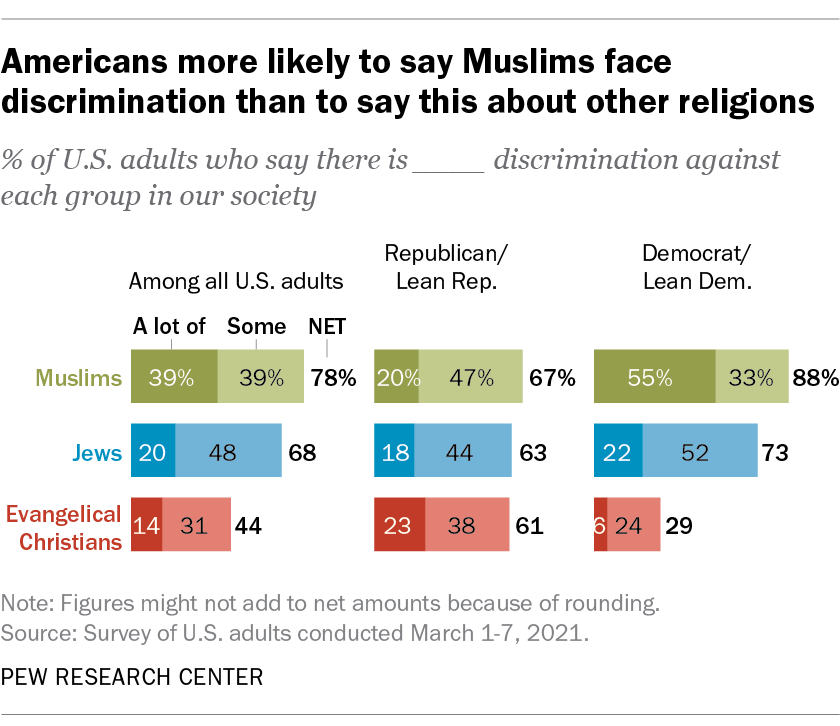


Islam in the United States
View on GrokipediaHistory
Early Presence Before the 20th Century
The earliest documented Muslims in the territory of the future United States arrived as enslaved Africans from West African regions where Islam had spread since the 8th century, beginning in the 16th century but primarily during the height of the transatlantic slave trade from the 17th to 19th centuries.[8] Scholars estimate that 10 to 30 percent of the roughly 388,000 Africans imported to North America were Muslim, equating to tens of thousands of individuals, though precise counts remain elusive due to incomplete records and deliberate suppression of their identities.[9] These Muslims, often literate in Arabic and versed in Quranic teachings, originated from areas like the Senegambia, Futa Toro, and Guinea, where Islamic scholarship flourished.[8] Enslaved Muslims encountered systematic efforts to eradicate their faith, including bans on Arabic literacy, forced baptisms, and punishment for practices like prayer or fasting, yet many preserved Islamic elements clandestinely through taqiyah (dissimulation), ring shouts echoing adhan calls, and hidden manuscripts.[8] [9] Archaeological and documentary evidence includes Arabic-inscribed artifacts, such as prayer beads and mats from the 19th century, and muster rolls from the Revolutionary War era noting Muslim soldiers.[8] No organized congregations or mosques formed; observance stayed individual, with some gaining manumission partly due to their skills, like translation or entrepreneurship.[9] Prominent cases illustrate resilience: Ayuba Suleiman Diallo, born 1701 in Bondu (modern Senegal) as son of an imam, was captured in 1730, arrived in Annapolis, Maryland, in 1731, and labored on a tobacco plantation until his Arabic literacy aided escape and eventual freedom in 1733, after which he sailed to England.[10] Yarrow Mamout, enslaved from Guinea circa 1752 and freed in 1796, resided in Georgetown, D.C., praying publicly five times daily facing east and investing in stocks for independence until his death around 1823; he was depicted in portraits by Charles Willson Peale in 1819.[11] Omar ibn Said, a Fula scholar born circa 1770 in Futa Toro, was enslaved in 1807, transported to South Carolina, and later North Carolina, where he penned a 1831 Arabic autobiography—the sole known slave narrative in that language—blending Quranic verses with claims of Christian conversion, dying in 1864.[12] [8] The early American republic also pursued diplomacy with Muslim North African states amid Barbary pirate threats to shipping. The Moroccan–American Treaty of Friendship, signed June 28, 1786, and ratified in 1787, marked the first U.S. treaty, securing peace and trade; President George Washington acknowledged it in correspondence with Sultan Mohammed ben Abdallah.[13] Similar pacts followed with Tripoli in 1796, involving tribute and military confrontations, but these yielded no Muslim settlement, underscoring Islam's limited, fragmented footprint before 1900.[8]African American Muslims and Early Movements
During the era of the transatlantic slave trade, a notable number of enslaved Africans transported to the American colonies practiced Islam, though their faith was systematically suppressed by enslavers to enforce Christian conversion and cultural assimilation.[8] Specific individuals preserved elements of Islamic scholarship and devotion amid bondage. Ayuba Suleiman Diallo, born in 1701 in Senegal as the son of an imam, was enslaved in 1731, briefly held in Maryland, and later ransomed to return to Africa in 1734 after demonstrating literacy in Arabic.[8] Yarrow Mamout, enslaved in the late 18th century and freed around 1796 in Washington, D.C., maintained Muslim practices into old age, as depicted in an 1819 portrait and confirmed by contemporary accounts of his recitations.[14] Omar ibn Said, born circa 1770 in Senegal, arrived enslaved in North Carolina in 1807; he authored a 1831 autobiography in Arabic, including Quranic verses, evidencing retained Islamic knowledge despite decades in captivity.[14] By the early 20th century, overt Islamic practice among African Americans had largely dissipated due to generational loss and prohibitions, but new movements emerged blending Islam with black nationalist ideologies to address racial oppression. The Moorish Science Temple of America, founded in 1913 in Newark, New Jersey, by Timothy Drew (1886–1929), who adopted the title Prophet Noble Drew Ali, posited African Americans as "Moors" or Asiatic Muslims descended from ancient Moroccan tribes, distinct from "Negro" identity imposed by slavery.[15] Drew Ali's teachings, outlined in The Holy Koran of the Moorish Science Temple, incorporated Masonic elements, Eastern mysticism, and claims of divine revelation, attracting urban black migrants; the group relocated its headquarters to Chicago in 1925, growing to several temples before Drew Ali's death in 1929 amid internal strife and legal troubles.[15] The Nation of Islam (NOI), established in 1930 in Detroit by Wallace Fard Muhammad, represented a more expansive early movement, initially claiming continuity with Moorish Science by portraying Fard as Drew Ali's reincarnation. Fard, whose background remains obscure and subject to competing accounts including possible Middle Eastern or white origins, preached to black factory workers amid the Great Depression, emphasizing self-reliance, dietary laws, and a cosmology deeming white people as "devils" created by a mad scientist named Yakub—doctrines diverging sharply from orthodox Sunni Islam.[16] Fard vanished in 1934, leaving Elijah Muhammad (born Elijah Poole, 1897–1975) to lead; under Elijah, the NOI expanded from a few hundred to an estimated 10,000 members by the 1950s, establishing temples, schools, and businesses while promoting racial separatism and economic autonomy, though its theology subordinated prophetic traditions to Fard's deification.[16][17] These groups, while invoking Islam, prioritized ethnoreligious identity over mainstream doctrinal adherence, influencing subsequent African American engagements with the faith.[18]Post-1965 Immigration and Growth
The Immigration and Nationality Act of 1965 abolished the national origins quota system that had restricted immigration from non-European countries, replacing it with family reunification and skilled worker preferences that facilitated entry from Asia, Africa, and the Middle East.[19][20] Prior to this legislation, the U.S. Muslim population stood at an estimated 100,000 to 150,000, largely comprising African American converts through movements like the Nation of Islam and small pre-1924 immigrant enclaves.[21][22] The Act's provisions enabled chain migration via family sponsorship, markedly accelerating Muslim inflows as initial skilled professionals from Muslim-majority nations brought relatives, shifting the community's composition toward foreign-born majorities. From 1966 to 1997, roughly 2.78 million people arrived in the U.S. from regions with large Muslim populations, including South Asia (e.g., Pakistan, India, Bangladesh), the Arab world (e.g., Egypt, Syria, Lebanon), and later Iran following the 1979 revolution.[23] By 2017, Pew Research Center surveys found that 58% of U.S. Muslim adults were first-generation immigrants, with an additional 16% being children of immigrants, and origins predominantly from these areas (e.g., 26% South Asian, 20% Arab).[5][24] This demographic surge elevated the overall Muslim population from under 0.1% of Americans in 1965 to approximately 1% (3.45 million adults) by 2017, with continued growth through the 2010s driven by sustained immigration despite policy fluctuations.[25] The influx prompted institutional expansion, including a proliferation of mosques and Islamic centers to serve diverse ethnic congregations.[26] By 1960, only about 230 mosques existed nationwide, often rudimentary or multi-use facilities; post-1965 immigration catalyzed dedicated constructions, with the count rising 42% from 1990 to 2000 amid broader religious infrastructure growth averaging 12% in that period.[27][28] Organizations like the Muslim Students Association (founded 1963, evolving into the Islamic Society of North America in 1981) emerged to unify immigrants, fostering educational, charitable, and advocacy networks that solidified community infrastructure.[29] This organizational maturation reflected not only numerical growth but also adaptation to U.S. pluralism, though it also amplified sectarian diversity from Sunni majorities to emerging Shia and Sufi groups.[3]Post-9/11 Developments and Policy Responses
The September 11, 2001, terrorist attacks, perpetrated by 19 al-Qaeda operatives predominantly from Saudi Arabia, resulted in nearly 3,000 deaths and prompted immediate U.S. policy shifts focused on counterterrorism. In the ensuing weeks, hate crimes against Muslims surged, with the Arab American Anti-Discrimination Committee documenting over 600 incidents targeting Arabs, Muslims, or those perceived as such in September 2001 alone. FBI data indicated a sharp rise in anti-Muslim bias incidents, peaking at levels not seen again until 2015, when physical assaults reached 9/11-era highs of around 160 reported cases.[30][31] The USA PATRIOT Act, enacted on October 26, 2001, expanded federal surveillance powers, including roving wiretaps, access to business records without court orders in national security cases, and eased restrictions on sharing intelligence between agencies. These measures disproportionately affected Muslim Americans through increased FBI monitoring of mosques and community centers, with reports of infiltrations and voluntary interviews leading to perceptions of overreach and chilled community-law enforcement relations. The National Security Entry-Exit Registration System (NSEERS), implemented in 2002, required registration of non-citizen males over 16 from 25 countries, mostly Muslim-majority, affecting approximately 80,000-94,000 individuals; it yielded no terrorism convictions but contributed to over 13,000 deportation proceedings, primarily for immigration violations, before its termination in 2011 due to ineffectiveness and high costs.[32][33][34] Post-9/11 counterterrorism efforts identified over 250 Muslim Americans involved in violent jihadist plots or attacks by 2014, including high-profile cases like the 2009 Fort Hood shooting (13 killed) and the 2015 San Bernardino attack (14 killed), often linked to self-radicalization via online Islamist propaganda. The Muslim population grew steadily despite these tensions, from an estimated 2.35 million in 2007 (0.8% of the U.S. population) to projections of 3.85 million by 2020 (1.1%), driven by immigration, higher fertility rates, and conversions at roughly 100,000 annually. Mosque numbers expanded from about 1,200 in 2000 to over 2,100 by 2010, reflecting suburbanization and community institutionalization amid heightened scrutiny.[35][36][37] The Department of Justice prioritized prosecuting post-9/11 bias crimes against Muslims, Arabs, and Sikhs, securing convictions in cases involving violence and vandalism, while President George W. Bush publicly distinguished between terrorists and the broader Muslim community, stating on September 17, 2001, that "Islam is peace" and affirming America's commitment to religious tolerance. Nonetheless, persistent public views remained unfavorable, with Pew surveys showing 43% of Americans in 2017 holding unfavorable opinions of Muslims, linked to ongoing Islamist threats abroad and domestic radicalization concerns rather than blanket discrimination. Later administrations maintained enhanced screening, including temporary travel restrictions from high-risk countries under Executive Order 13769 in 2017, upheld by the Supreme Court in 2018 as a national security measure.[38][39][40]Demographics
Population Estimates and Projections
The Muslim population in the United States is estimated at between 3.5 million and 4.5 million as of the early 2020s, representing approximately 1% to 1.3% of the total U.S. population of about 340 million.[41][1] The Pew Research Center's 2017 nationally representative survey, the most comprehensive to date using random sampling of households, identified 3.45 million Muslims, including both adults and children, based on self-identification and religious practice.[5] In contrast, the 2020 United States Religion Census, compiled by the Association of Statisticians of American Religious Bodies through aggregation of congregational reports, tallied 4.45 million adherents affiliated with Islamic congregations.[1] These figures highlight methodological variances: Pew's survey approach may undercount isolated or nominally identifying individuals who do not participate in organized communities, while congregational counts risk inflation from duplicate memberships or inclusive reporting by mosques.[42] Higher estimates, sometimes cited by advocacy groups like the Council on American-Islamic Relations (CAIR) at 7 million or more, rely on extrapolations from immigration data and self-reported community surveys but lack the random sampling rigor of Pew's methodology and have been critiqued for potential overstatement to amplify political influence.[42] The U.S. Census Bureau does not collect religion data, precluding official tallies and necessitating reliance on private surveys or indirect indicators like foreign-born populations from Muslim-majority countries, which numbered about 2.5 million in 2019 per Census foreign-born statistics. Growth since 2010 has been driven primarily by immigration (accounting for roughly 70% of increase per Pew analysis) and higher-than-average fertility rates among Muslim women (2.4 children per woman versus the national 1.8), compounded by a younger median age of 24 for U.S. Muslims compared to 36 for the general population.[5][43] Projections forecast the Muslim population doubling or more by mid-century under varying migration assumptions, fueled by sustained immigration from regions like South Asia and the Middle East, persistent fertility differentials, and modest net conversion gains (Pew estimates 100,000 more conversions to Islam than away annually).[5] The Pew Research Center's 2015 demographic modeling, incorporating U.S. Census migration trends and global fertility data, predicted 8.1 million Muslims by 2050 (2.1% of the population) in a medium-migration scenario, potentially rising to 17.2% globally but remaining secondary to Christianity domestically.[44] Lower-migration variants cap growth at 6 million, while high-migration paths could exceed 10 million, though recent policy restrictions on immigration from Muslim-majority nations since 2017 have tempered inflows.[44] These models assume stable retention rates around 80% among second-generation Muslims, with empirical data showing higher retention than among other immigrant faiths due to strong familial and communal ties.[5] North American trends, including a 52% regional increase to 5.9 million Muslims by 2020 (predominantly U.S.-driven), underscore Islam's status as the fastest-growing major religion, outpacing global averages through demographic momentum rather than solely proselytization.[43]Ethnic, Racial, and National Origin Breakdown
According to a 2025 Pew Research Center analysis of U.S. religious groups, Muslims exhibit significant racial diversity, with 30% identifying as Asian, 30% as White, 20% as Black, 11% as Hispanic, and 8% as multiracial or another race.[6] This distribution aligns with U.S. Census Bureau racial categories, under which individuals of Middle Eastern or North African descent—comprising a substantial portion of American Muslims—are classified as White.[45] The Asian category predominantly includes those of South Asian origin, such as from Pakistan, India, and Bangladesh, while the Black category largely encompasses African Americans, many of whom are converts or descendants of converts.[5] National origin further highlights this heterogeneity, with immigrants and their descendants forming key segments. A 2025 poll by the Institute for Social Policy and Understanding (ISPU) found that 28% of American Muslims identify as Black or African American, 24% as Asian (primarily South Asian), 20% as White, and smaller shares as Hispanic (12%) or other groups.[46] African Americans, often U.S.-born and representing indigenous Muslim communities shaped by movements like the Nation of Islam and later orthodox conversions, constitute roughly one-third of the total Muslim population per multiple estimates.[1] South Asians, driven by post-1965 immigration from Pakistan (the largest subgroup), India, and Bangladesh, account for about 25-33%; Arabs from countries like Egypt, Syria, Lebanon, and Iraq make up 20-25%; and smaller contingents hail from Iran, Turkey, sub-Saharan Africa, and Southeast Asia.[47][48]| Category | Approximate Percentage | Primary Examples |
|---|---|---|
| Black/African American | 20-30% | U.S.-born converts and descendants |
| South Asian | 24-33% | Pakistani, Indian, Bangladeshi immigrants |
| Arab/Middle Eastern | 18-25% | Egyptian, Syrian, Lebanese, Iraqi origins |
| White (non-Arab) | 20-24% | European converts or immigrants |
| Hispanic/Latino | 5-11% | Converts or Latin American immigrants |
| Other (e.g., sub-Saharan African, Iranian, multiracial) | 3-10% | Diverse immigrant and convert groups |
Geographic Concentrations by State and City
Muslim Americans exhibit geographic concentrations primarily in urban and metropolitan areas of the Northeast, Midwest, and select Western and Southern states, driven by immigration patterns, historical settlement, and economic opportunities. Estimates indicate that the total Muslim population stands at approximately 4.5 million as of recent assessments, with distributions reflecting both absolute numbers and percentages varying by state.[1] The states with the largest absolute Muslim populations are New York (724,475), California (504,056), Illinois (473,792), Texas (421,972), and New Jersey (321,652).[47] These figures derive from extrapolations of survey data and census-linked estimates, as the U.S. Census Bureau does not directly track religious affiliation. New York and Illinois also feature among the highest proportional concentrations, with Muslims comprising about 3.6% and 3.7% of their respective populations.[47] Michigan follows with 316,865 Muslims, or roughly 3.2% of the state, bolstered by Arab-American immigration to the Detroit area.[47]| State | Estimated Muslim Population | Approximate Percentage of State Population |
|---|---|---|
| New York | 724,475 | 3.6% |
| California | 504,056 | 1.3% |
| Illinois | 473,792 | 3.7% |
| Texas | 421,972 | 1.5% |
| New Jersey | 321,652 | 3.5% |
| Michigan | 316,865 | 3.2% |
| Virginia | 247,518 | 2.9% |
| Pennsylvania | 149,561 | 1.2% |
| North Carolina | 142,000 | 1.4% |
| Massachusetts | 131,749 | 1.9% |
Socioeconomic Indicators Including Education and Income
Muslim Americans demonstrate elevated educational attainment relative to the broader U.S. population. A 2025 Pew Research Center survey indicates that 44% of Muslim adults possess a bachelor's degree or higher, exceeding the rates for Christians (approximately 35%) and religiously unaffiliated individuals (around 40%). This pattern aligns with earlier Pew findings from 2017, where 31% of Muslims held college degrees, suggesting an upward trend potentially linked to selective immigration of skilled professionals from Asia and the Middle East.[6][5] In contrast, household income distributions reveal lower economic outcomes despite the educational advantages. The 2025 American Muslim Poll by the Institute for Social Policy and Understanding (ISPU) found that 35% of Muslim households earn $30,000 or less annually, compared to 11% of Jewish, 19% of Catholic, and 20% of Protestant households. Only 22% of Muslim households exceed $100,000, versus 44% for Jewish Americans, as reported in a Justice For All analysis drawing on recent polling data. This income-education gap persists even after controlling for age and nativity, with foreign-born Muslims (who comprise about 58% of the community) often facing barriers such as credential recognition and English proficiency, though native-born converts and second-generation individuals show convergence toward national medians.[54][1]| Indicator | Muslim Americans | General U.S. Population | Source |
|---|---|---|---|
| College Graduates (Adults) | 44% | ~40% | Pew Research Center, 2025[6] |
| Household Income ≤ $30,000 | 35% (or 33% per alt. est.) | ~25% | ISPU 2025; Justice For All 2025[54][1] |
| Household Income ≥ $100,000 | 22%–24% | ~30% | Justice For All 2025; Oxford RE 2025[1][25] |
Denominational and Ideological Diversity
Sunni and Mainstream Orthodox Groups
Sunni Islam represents the predominant branch among Muslims in the United States, with surveys indicating that 55% of American Muslims identify as Sunni, compared to 16% Shia and smaller percentages adhering to other sects or declining to specify a branch.[57] Other estimates from Muslim-led surveys place the Sunni share higher, at around 69%, reflecting the influence of immigration from Sunni-majority countries such as Pakistan, Egypt, and Bangladesh since the 1965 Immigration Act.[58] This demographic dominance stems from both indigenous conversions, particularly among African Americans following the shift from the Nation of Islam to orthodox Sunni Islam under Warith Deen Mohammed in 1975, and waves of post-1965 immigrants adhering to traditional Sunni jurisprudence.[5] The Islamic Society of North America (ISNA), established in 1981 as an outgrowth of the Muslim Students Association, functions as the primary umbrella organization for mainstream Sunni communities, coordinating over 200 mosques and Islamic centers across the country and promoting adherence to the Quran, Sunnah, and the four orthodox schools of jurisprudence (Hanafi, Maliki, Shafi'i, and Hanbali).[59] ISNA hosts annual conventions attended by tens of thousands, focusing on education, family values, and civic engagement while emphasizing orthodox rituals such as the five daily prayers and Ramadan observance.[59] Complementing ISNA, the Muslim American Society (MAS), founded in 1993, operates as a grassroots network emphasizing Sunni orthodoxy through local chapters that conduct Quran classes, youth programs, and community outreach, drawing heavily from South Asian and Arab Sunni traditions. These groups collectively manage a significant portion of the estimated 3,000 mosques in the U.S., most of which follow Sunni rites.[60] Mainstream orthodox Sunnis in the U.S. generally adhere to the classical madhabs, with Hanafi jurisprudence prevalent among South Asian immigrants and Shafi'i or Maliki among Arabs and Africans, fostering a diversity of ritual practices unified by core tenets like tawhid (monotheism) and following prophetic example.[25] The Fiqh Council of North America, affiliated with ISNA, issues fatwas grounded in these schools, addressing contemporary issues such as finance and bioethics while upholding sharia-derived rulings.[60] Among African American Sunnis, who comprise about 20% of the U.S. Muslim population, orthodox adoption has led to higher retention of traditional practices, with 45% of U.S.-born black Muslims identifying as Sunni and emphasizing mosque attendance and halal observance.[5] While these groups prioritize religious orthodoxy, some observers note influences from transnational Islamist networks, such as Muslim Brotherhood-inspired activism in ISNA and MAS precursors, which advocate for broader societal application of Islamic principles beyond personal piety.[61] Nonetheless, empirical data from Pew surveys show that most Sunni American Muslims view their faith as compatible with democratic values, with 86% believing multiple interpretations of Islam are valid and 64% supporting homosexuality's morality in line with evolving personal views rather than strict orthodoxy.[57] This blend of traditional adherence and adaptation characterizes mainstream Sunni Islam's institutional presence in the U.S.[62]Shia, Sufi, and Minority Sects
Shia Muslims represent a significant minority within the American Muslim community, comprising roughly 10% of the North American Muslim population as of estimates from the late 2000s, with the United States hosting the majority of these adherents alongside Canada.[63] This translates to an approximate U.S. Shia population of 200,000 to 400,000, drawn largely from post-1970s immigration waves from Iran, Iraq, Lebanon, Pakistan, and India, where Shia Islam predominates among certain ethnic groups.[63] These communities maintain distinct theological emphases on the Imamate and Twelver Shiism, with practices including commemoration of Ashura and veneration of figures like Imam Hussein, often centered in urban enclaves such as Dearborn, Michigan—home to a large Lebanese and Iraqi Shia population—and Houston, Texas, which hosts Iranian expatriates.[64] Key institutions include the Islamic Center of America in Dearborn, established in 1963 as the oldest purpose-built Shia mosque in the U.S. and the largest mosque in North America by square footage, serving as a focal point for religious education, cultural events, and advocacy amid historical tensions with Sunni majorities.[64] Sufism, Islam's esoteric and mystical tradition, arrived in the United States through diverse channels, beginning with 19th-century Asian immigrants and accelerating via 20th-century South Asian, Turkish, and African diasporas who established tariqas (Sufi orders).[65] Prominent orders include the Naqshbandi, Chishti, and Qadiriyya, which emphasize spiritual purification through dhikr (remembrance of God), meditation, and allegiance to a spiritual guide (shaykh), often adapting to American contexts by incorporating interfaith dialogues while preserving core rituals.[65] An early non-orthodox variant emerged in 1910 with Hazrat Inayat Khan's Sufi Order in the West, which blended Sufi principles with universalist spirituality and attracted Western converts, though subsequent decades saw more orthodox immigrant-led groups supplanting such syncretic forms.[66] Sufi communities remain decentralized and numerically modest, with no comprehensive demographic tallies available, but they exert influence through retreats, music (sama), and literature, appealing to both immigrants seeking continuity and American-born Muslims exploring spirituality amid mainstream orthodoxy.[65] Other minority sects within or adjacent to Islam include the Ahmadiyya movement, founded in 19th-century British India, which claims a U.S. presence dating to the early 20th century and emphasizes peaceful proselytization but faces widespread rejection from Sunni and Shia Muslims for doctrines affirming Mirza Ghulam Ahmad as a prophet after Muhammad, rendering Ahmadis non-Muslim in orthodox interpretations.[67] Ismaili Shiites, followers of the Aga Khan, form another distinct group with roots in South Asian and Persian communities, maintaining global institutions like the Aga Khan Development Network that extend to U.S. educational and charitable efforts, though specific American numbers remain elusive in public data. Smaller esoteric branches, such as the Dawoodi Bohras—a Musta'li Ismaili offshoot—operate tight-knit merchant communities with ritual purity codes and global trade ties, numbering in the low thousands domestically.[68] These sects collectively underscore Islam's sectarian pluralism in the U.S., often navigating isolation from broader Muslim networks due to theological divergences, with limited inter-sect integration reported in surveys of American Islamic diversity.[67]Indigenous and Heterodox Movements
The Moorish Science Temple of America (MSTA), founded in 1913 in Newark, New Jersey, by Timothy Drew, who adopted the title Prophet Noble Drew Ali, represents one of the earliest indigenous Islamic movements among African Americans.[15] Drew, born in 1886 or 1889 in North Carolina, taught that African Americans were descendants of the ancient Moabites, a Moorish people, and emphasized reclamation of this identity to uplift "fallen humanity" from oppression.[15] The group's teachings syncretize elements of Islam, Christianity, Freemasonry, and esoteric traditions, with members affirming belief in Allah as the supreme God and following a version of the "Everlasting Gospel of Islam," though diverging from orthodox Islamic doctrine in its racial cosmology and incorporation of non-Quranic narratives.[69][70] Membership remains small, with estimates in the low thousands across various branches, and the movement has influenced later Black nationalist groups despite internal schisms following Drew's death in 1929.[71] The Nation of Islam (NOI), established in 1930 in Detroit, Michigan, by Wallace D. Fard Muhammad, emerged as the most prominent heterodox movement, attracting African Americans disillusioned by systemic racism and economic marginalization during the Great Depression.[17] Fard, who presented himself as a divine figure and disappeared in 1934, was succeeded by Elijah Muhammad, who expanded the organization through teachings that portrayed Fard as the incarnation of Allah and Muhammad as his messenger, incorporating a theology of Black supremacy, the myth of Yakub (a scientist who created white people as devils), and strict separatism from white society.[17][72] These doctrines, blending Islamic terminology with unique racial eschatology, reject core orthodox tenets such as the finality of Muhammad as prophet and universal human equality under tawhid, positioning NOI outside mainstream Sunni or Shia Islam.[17] Under Elijah Muhammad's leadership until his death in 1975, the NOI developed economic self-sufficiency programs, including businesses and farms, peaking at an estimated 100,000 members in the 1960s; current active membership under Louis Farrakhan, who revived the group in 1977 after a brief orthodox shift, is approximately 20,000 to 50,000, with broader cultural influence.[72][73] Offshoots like the Five-Percent Nation, founded in 1963 by Clarence 13X (born Clarence Smith) in Harlem, New York, after his expulsion from the NOI, further exemplify heterodox evolution, emphasizing "Supreme Wisdom" lessons derived from NOI teachings but rejecting organizational structure for individual enlightenment.[74] Adherents, known as "Gods and Earths," hold that five percent of humanity comprises enlightened Black males as gods (manifestations of Allah) tasked with teaching the 85 percent "deaf, dumb, and blind" masses, while women ("Earths") embody productive femininity; this framework employs numerology, supreme mathematics, and hip-hop-infused proselytization, disavowing traditional Islamic rituals and scriptures in favor of a cultural cipher.[74] The group, influential in urban Black youth culture through artists like those in Wu-Tang Clan, maintains no formal membership counts but claims thousands of adherents, primarily in New York and other East Coast cities, and competes with NOI for recruits while being dismissed by orthodox Muslims as a non-religious ideology masked in Islamic rhetoric.[74] These movements, rooted in early 20th-century African American responses to slavery's legacy and Jim Crow, prioritize racial empowerment over doctrinal fidelity to global Islam, fostering distinct identities amid ongoing tensions with immigrant-led orthodox communities.[75]Conversion Dynamics and Retention Rates
Approximately 23% of American Muslim adults are converts to Islam, with the majority having previously identified as Christian—53% from Protestant backgrounds and 20% from Catholic ones.[76] Converts constitute about one-fifth of the U.S. Muslim population, predominantly African American (around 50%), and nearly all (92%) are U.S.-born.[77] Empirical surveys indicate that conversions often stem from perceptions of Islam's doctrinal simplicity, emphasis on monotheism, and communal structure, though individual motivations vary and include exposure through personal relationships or da'wa efforts.[78] [79] Annual net gains from conversion have been estimated at around 30,000 individuals, though recent data suggest this is increasingly offset or exceeded by departures, contributing minimally to overall Muslim population growth, which remains driven primarily by immigration and fertility.[80] A 2024 Pew survey across multiple countries, including the U.S., found the highest accession rates into Islam here compared to elsewhere, yet only 1% of U.S. adults identify as Muslim, reflecting limited scale relative to the general population.[80] Retention among those raised Muslim in the U.S. stands at approximately 77%, with 23% disaffiliating—higher than global averages for Islam (99% retention among those under 55) but indicative of secular influences, family integration challenges, and exposure to alternative worldviews in American society.[81] [82] This results in a net loss through switching, as outflows now surpass inflows, contrasting with earlier balances where conversions roughly equaled apostasy.[76] Factors cited in studies include doctrinal doubts, cultural assimilation, and social pressures, though apostasy remains underreported due to familial and communal stigma.[83]Institutions and Community Infrastructure
Mosques, Schools, and Community Centers
The United States hosts approximately 2,769 mosques as of the 2020 US Mosque Survey, reflecting a 31% increase from 2,106 in 2010, driven largely by immigration from Muslim-majority countries and population growth among American Muslims.[7] These institutions are present in all 50 states, with the highest concentrations in New York (343 mosques), California, and Illinois, often serving as multifunctional hubs for prayer, religious education, and social activities.[7] Many mosques incorporate architectural elements blending Islamic traditions with American styles, such as the Islamic Center of Greater Toledo, which features a prominent minaret and dome while adhering to local zoning and design norms. Islamic schools, numbering around 300 full-time K-12 institutions, educate over 50,000 students nationwide, integrating Quranic studies, Arabic language instruction, and Islamic ethics with secular curricula compliant with state standards.[1] These schools emerged prominently in the late 20th century amid rising Muslim immigration and a desire to preserve religious identity, with enrollment surging post-9/11 as parents sought insulated educational environments.[84] Accreditation bodies like the Council of Islamic Schools in North America ensure alignment with educational quality metrics, though challenges persist in funding, teacher certification, and balancing religious and civic education.[85] Muslim community centers frequently operate in tandem with or adjacent to mosques, providing spaces for cultural events, youth programs, marriage counseling, and charitable distribution, thereby fostering social cohesion within diverse Muslim demographics.[86] Surveys indicate that over 80% of mosques offer community services beyond worship, including food pantries and interfaith dialogues, adapting to local needs while navigating occasional controversies over funding sources or expansion permits.[7] This infrastructure supports retention of faith among second-generation Muslims, though retention rates vary by sect and ethnicity, with Sunni-majority centers emphasizing mainstream practices.[7]National Advocacy and Political Organizations
The Council on American-Islamic Relations (CAIR), established in 1994, operates as the largest self-described Muslim civil rights organization in the United States, with regional chapters advocating against perceived discrimination through litigation, media relations, and lobbying efforts.[87] CAIR has pursued legal actions, such as challenging workplace bans on religious attire, and engages in government relations to influence policies on immigration and surveillance.[88] However, CAIR has faced scrutiny for historical ties to the Holy Land Foundation, a charity convicted in 2008 of financing Hamas, where CAIR was named an unindicted co-conspirator in federal proceedings; critics, including congressional resolutions, cite these connections alongside founders' affiliations with the Muslim Brotherhood as evidence of an Islamist agenda prioritizing advocacy for Palestinian militants over broad civil liberties.[89] [90] In 2023, the White House disavowed CAIR after its executive director expressed support for Palestinians "resisting" Israel following the October 7 Hamas attacks, prompting renewed calls in Congress to designate CAIR a terrorist organization.[91] [92] The Muslim Public Affairs Council (MPAC), founded in 1988, emphasizes policy advocacy, media engagement, and civic leadership training to shape public understanding of Muslims and influence legislation on issues like national security and interfaith relations.[93] MPAC has co-hosted policy conferences with elected officials and promotes bipartisan participation, though its activities often align with progressive causes, including criticism of U.S. counterterrorism measures post-9/11.[94] Unlike CAIR, MPAC has maintained a lower profile on foreign policy extremism but has drawn criticism for downplaying radical ideologies within Muslim communities while focusing on anti-Islamophobia narratives. Emgage, a voter mobilization and political action committee launched in 2016, targets Muslim American electoral engagement, endorsing candidates and raising funds—primarily for Democrats—to advance policies on civil rights, foreign aid, and domestic equity, with over $1 million in contributions reported in recent cycles.[95] Emgage coordinates with coalitions like the 2024 American Muslim Election Taskforce to amplify turnout in key states, framing its work as empowering communities amid perceived marginalization.[96] The U.S. Council of Muslim Organizations (USCMO), formed in 2014 as an umbrella group, coordinates advocacy among affiliates including CAIR and the Islamic Circle of North America, organizing events like National Muslim Advocacy Day to lobby on Capitol Hill for issues such as refugee admissions and anti-hate crime legislation.[97] The Islamic Society of North America (ISNA), established in 1963 primarily for community infrastructure, extends into advocacy through interfaith dialogues and civil rights statements, though it too has been linked by federal investigators to Muslim Brotherhood networks and fundraising for designated terrorist groups.[59] These entities collectively represent a fraction of the estimated 3.5 million U.S. Muslims, with influence concentrated in Democratic-leaning circles despite claims of bipartisanship, and their effectiveness is debated given persistent public concerns over unassimilated ideologies evidenced by polling on sympathy for groups like Hamas.[61][98]Charitable, Educational, and Cultural Entities
Islamic charitable organizations in the United States emphasize zakat distribution, emergency relief, and community welfare programs aligned with Islamic tenets of charity. Islamic Relief USA, the American affiliate of the global Islamic Relief network founded in 1984, began operations in 1993 and focuses on humanitarian aid for disasters, poverty alleviation, and orphan sponsorship, operating in over 40 countries including domestic initiatives for food insecurity and refugee support.[99] In fiscal year 2022, it reported revenues exceeding $140 million, with funds directed toward emergency responses such as flood relief in Pakistan and ongoing aid in Gaza. Similarly, the Zakat Foundation of America, established in 2001, specializes in zakat collection and distribution, supporting orphans, disaster victims, and empowerment programs in more than 40 countries, including U.S.-based initiatives for homeless shelters and refugee resettlement.[100] Educational entities include K-12 Islamic schools and higher education institutions offering curricula in Islamic studies, Arabic, and liberal arts. As of 2023, approximately 250 full-time Islamic day schools operate across the U.S., accredited by bodies like Cognia, providing dual secular and religious education to around 40,000 students, concentrated in states like Michigan, New York, and California.[101] At the postsecondary level, Zaytuna College in Berkeley, California, founded in 1996 and accredited since 2015, is the nation's first Muslim liberal arts college, enrolling about 100 students in its Bachelor of Arts program integrating classical Islamic texts with Western humanities.[102] The American Islamic College in Chicago, established in 1981 and accredited by the Higher Learning Commission, offers undergraduate and graduate degrees in Islamic studies, emphasizing traditional scholarship with enrollment around 50 students as of 2024.[103] Cultural organizations foster Islamic heritage through arts, events, and interfaith dialogue, often housed in community centers. The Islamic Cultural Center of New York, opened in 1991, serves as a prominent venue for cultural programs including lectures, art exhibitions, and Ramadan iftars, attracting thousands annually while maintaining a library of Islamic texts.[104] The Muslim American Society, founded in 1993, operates chapters nationwide promoting cultural preservation via youth camps, media productions, and heritage festivals that highlight Islamic contributions to science and philosophy, with over 50,000 members reported in 2023.[105] These entities sometimes face scrutiny for funding sources or affiliations, as federal investigations have linked certain groups to overseas entities designated as terrorist financiers, though operational transparency varies.[61]Cultural and Social Integration
Religious Practices and Daily Life
Muslims in the United States observe the five daily prayers (salah) as a core pillar of Islam, with 59% reporting they pray several times a day and 43% attending mosque at least weekly, including 18% who attend more than once a week.[106] [6] These prayers require ritual ablution (wudu) and facing Mecca (qibla), often performed at home, work, or mosques, with employers required under Title VII of the Civil Rights Act of 1964 to provide reasonable accommodations such as prayer breaks or space unless causing undue hardship. [107] In schools and universities, similar accommodations are negotiated, including designated quiet areas for prayer rugs and privacy, though implementation varies by institution.[108] Dietary adherence to halal principles—prohibiting pork, alcohol, and requiring humane slaughter—shapes daily meals for 83% of U.S. Muslims who either prefer or require halal food.[109] The U.S. halal market, valued at approximately $22.6 billion in 2016 and growing with the Muslim population estimated at 3.45 million, supports widespread availability in supermarkets, restaurants, and online, facilitating observance amid diverse food environments.[110] [111] Fasting during Ramadan, observed by 80% of U.S. Muslims from dawn to sunset for 29-30 days, emphasizes spiritual discipline and community iftar meals breaking the fast.[112] This period, which in 2025 began around February 28 or March 1 depending on moon sighting, often involves workplace and school adjustments like flexible schedules or exempting fasting students from strenuous activities.[113] Eid al-Fitr, marking Ramadan's end, features congregational prayers at mosques or parks, family gatherings, and charity (zakat al-fitr), with celebrations varying by community but including feasts and attire reflecting cultural origins.[114] Eid al-Adha, commemorating Abraham's sacrifice, similarly involves prayers and ritual animal sacrifice (qurbani) distributed to the needy, held in rented halls or open spaces for larger groups.[115] Modesty in dress, including hijab for women covering hair and body except face and hands, is practiced variably as a religious obligation for devotion and protection, though not universally enforced in the U.S. context where personal choice and legal protections against discrimination apply.[116] Men typically wear loose clothing and caps during prayers. Daily life integrates these practices with American routines, such as using apps for prayer times or qibla direction, but observance rates differ by generation, sect, and immigrant status, with second-generation Muslims showing slightly lower ritual adherence in some surveys.[57]Family Structures, Gender Roles, and Women's Rights
Muslim families in the United States predominantly follow nuclear structures influenced by Islamic teachings on marriage as a contractual union, with emphasis on procreation and mutual support, though extended family networks persist among immigrant groups from South Asia, the Middle East, and Africa.[117] Surveys indicate that American Muslims prioritize early marriage, with median age at first marriage around 24 for women and 27 for men, lower than the national averages of 28 and 30, respectively, reflecting cultural norms favoring stability before cohabitation.[118] Polygamy, permitted for men under traditional Sharia interpretations allowing up to four wives, remains rare due to legal prohibitions and social adaptation, with fewer than 1% of Muslim men reporting multiple spouses in community studies.[119] Interfaith marriages are low, at approximately 20%, as Islamic doctrine discourages them, particularly for women, leading to higher retention of endogamous unions compared to other religious groups.[120] Divorce rates among U.S. Muslims range from 21% to 32%, aligning with or slightly exceeding the national rate of 25%, with women initiating more proceedings despite Sharia's asymmetry—men can pronounce talaq unilaterally, while women seek khula through arbitration or courts.[121][122] Marital satisfaction surveys reveal generally positive outcomes, but women report lower quality relationships, citing imbalances in decision-making and domestic roles, exacerbated by imported cultural expectations from origin countries.[123] Gender roles in American Muslim communities often adhere to traditional Islamic prescriptions, where men are positioned as qawwamun (maintainers/protectors) with authority over family matters, and women as primary caregivers, though socioeconomic pressures lead to dual-income households in over 60% of cases.[124] U.S. Muslims exhibit more conservative social views than the general population; for instance, only 52% support homosexuality in 2017, up from 27% in 2007, but still lagging broader acceptance at 62%.[125] A 2021 study found that higher religiosity correlates with endorsement of male headship, with 40-50% of respondents agreeing wives should obey husbands in key decisions, influenced by Quranic verses like 4:34 emphasizing male responsibility.[126] Women's educational attainment rivals or exceeds men's, with 31% of Muslim women holding college degrees compared to 39% of men in 2011 data, a trend continuing as immigrant selection favors skilled females.[127][128] However, labor force participation lags at 56% for Muslim women versus 72% for non-Muslims, with hijab-wearing women facing a 10-15% employment penalty due to perceived discrimination and cultural barriers prioritizing family over career.[129][130] Veiling (hijab or niqab) is practiced by 43% of U.S. Muslim women, symbolizing modesty but correlating with reduced workforce entry in service sectors.[131] Tensions arise from clashes between egalitarian American norms and Sharia-derived inequalities, such as unequal inheritance (women receive half of male shares) or testimony weighting (two women equaling one man in financial matters), which some communities apply informally via arbitration councils.[117] Rare but documented abuses include honor killings, with 32 incidents from 1990 to 2021 linked to familial control over women's sexuality or autonomy, often in immigrant subsets from Pakistan, Iraq, and Afghanistan.[132] Forced marriages affect an estimated 5,000-8,000 cases annually in U.S. immigrant communities, predominantly Muslim, involving coercion for cultural preservation, though underreporting persists due to community insularity and fear of authorities.[133] Advocacy groups note higher domestic violence rates in conservative households, tied to patriarchal interpretations, though empirical data remains limited by sampling biases in self-reported surveys.[123]Contributions to American Culture and Media
Muhammad Ali, born Cassius Clay and converting to Islam in 1964, became a transformative figure in American sports and culture, using his platform to challenge racial injustice and the Vietnam War draft, thereby influencing public discourse on civil rights and conscientious objection.[134] His 1971 Supreme Court victory against draft evasion charges amplified Muslim visibility in media narratives around patriotism and resistance.[135] In music, Islam has notably shaped hip-hop culture, particularly through the Nation of Islam and the Five-Percent Nation, whose teachings on self-knowledge and black empowerment informed the lyrical content and worldview of artists like Rakim, who referenced Islamic principles in albums such as Paid in Full (1987), and Public Enemy, whose work echoed Malcolm X's rhetoric. The Five-Percenters' numerology and cosmology permeated groups like Wu-Tang Clan, embedding esoteric Islamic motifs into mainstream rap by the 1990s, as seen in tracks promoting discipline and community uplift.[136] Contemporary Muslim entertainers have contributed to film and television, with Mahershala Ali earning Academy Awards for Moonlight (2016) and Green Book (2018), portraying complex characters that humanize Muslim experiences beyond stereotypes.[137] Riz Ahmed's roles in Sound of Metal (2019) and The Night Of (2016) similarly advanced nuanced depictions of Muslim identity in American media.[138] Comedians like Ramy Youssef and Hasan Minhaj have used stand-up and series such as Ramy (2019–present) to explore generational tensions and cultural hybridity, fostering dialogue on integration.[137] Despite these inputs, Muslim representation in Hollywood remains limited, comprising under 1% of speaking roles in top TV shows from 2017–2019, often tied to themes of violence or terrorism rather than everyday contributions.[139] This scarcity underscores that individual achievements, while impactful, have not yet translated to broad cultural shifts in media portrayal.Political Involvement
Historical and Recent Voting Patterns
Muslim Americans historically leaned Republican in the early 2000 presidential election, with estimates ranging from 40% to 78% supporting George W. Bush over Al Gore, influenced by Bush's outreach on faith-based initiatives and perceptions of Gore's foreign policy weaknesses.[140][141][142] This pattern shifted dramatically after the September 11, 2001 attacks, the Iraq War, and policies like the Patriot Act, which many Muslim Americans viewed as discriminatory and invasive, alienating them from the Republican Party and driving a pivot toward Democrats who emphasized civil liberties and opposition to perceived Islamophobia.[142] By the 2008 election, Muslim voters overwhelmingly backed Barack Obama, with surveys indicating around 90% support, a trend that continued in 2012 amid ongoing concerns over foreign policy and domestic surveillance.[143] In 2016, approximately 78% supported Hillary Clinton compared to 8% for Donald Trump, reflecting sustained Democratic loyalty despite Trump's campaign rhetoric on immigration and terrorism.[25] Voter turnout among Muslims remained relatively low but grew significantly by 2020, reaching nearly 1.1 million ballots, with 86% favoring Joe Biden and only 6% Trump, per mobilization group data, though Trump received slightly more support than in 2016.[144][145][146] The 2024 election marked a notable fracture in this Democratic alignment, driven primarily by dissatisfaction with the Biden-Harris administration's support for Israel amid the Gaza conflict, prompting protests like the "uncommitted" campaign in Democratic primaries.[147][148] Exit polls from advocacy groups showed a surge in third-party support, with 53% for Jill Stein, 21% for Trump, and sharply reduced backing for Kamala Harris, while post-election surveys indicated a closer partisan split of 53% Democratic-leaning versus 42% Republican-leaning among Muslims.[149][150] This shift, corroborated across multiple polls, suggests growing political diversity, with foreign policy—particularly Middle East issues—overriding traditional domestic alignments on civil rights and economics, though turnout data remains preliminary.[151][152]Representation in Congress and Local Government
As of the 119th United States Congress (2025-2027), four Muslim members serve in the House of Representatives, all Democrats: André Carson of Indiana's 7th district, Ilhan Omar of Minnesota's 5th district, Rashida Tlaib of Michigan's 12th district, and Lateefah Simon of California's 12th district.[153][154] Carson, first elected in a 2008 special election, is the longest-serving; Omar and Tlaib, elected in 2018, were the first Muslim women in Congress.[153] No Muslims serve in the Senate. Keith Ellison, elected to the House in 2006 as the first Muslim congressman, left in 2019 to become Minnesota's attorney general.[153] Muslim representation in Congress remains limited, with these four members constituting less than 1% of the 535 total seats, roughly proportional to the estimated 1% Muslim share of the U.S. population.[153] All current members won reelection or initial election in November 2024, amid districts with significant Muslim or immigrant populations, such as Tlaib's in metro Detroit.[155] At the local level, Muslim elected officials are more numerous in municipalities with high concentrations of Muslim residents, particularly in Michigan, where Arab-American and South Asian immigrants form substantial demographics. Dearborn, Michigan, with a population over 40% Arab-American, elected Abdullah Hammoud as its first Muslim mayor in November 2021; he was reelected in 2023.[156] Hamtramck, Michigan—the first U.S. city with a Muslim-majority population—elected an all-Muslim city council in 2021, comprising six members, and retained it in 2023; its mayor, Amer Ghalib, elected in 2021, is also Muslim.[157][158] Other examples include Amir Omar's election as mayor of Richardson, Texas, in May 2025, marking the first Muslim mayor in North Texas.[159] According to the Council on American-Islamic Relations (CAIR), a Muslim advocacy group, over 200 Muslims held local offices nationwide as of 2023, including mayors, council members, and judges, with Michigan leading at around 40 officials.[160] Representation has grown since the 2010s, driven by population increases in urban enclaves and organized voter mobilization, though it remains geographically concentrated and below national population proportions in most areas.[161]Key Policy Positions on Foreign and Domestic Issues
Muslim American advocacy organizations, such as the Council on American-Islamic Relations (CAIR), have consistently advocated for U.S. policies that prioritize Palestinian statehood and criticize Israeli actions in the Israeli-Palestinian conflict. CAIR has demanded concrete actions against what it describes as Israel's "occupation and genocide" in response to recognitions of Palestine, including calls for ending U.S. military aid to Israel and holding Israel accountable for alleged war crimes in Gaza as of October 2025.[162][163][164] This stance aligns with broader Muslim American priorities, where U.S. foreign policy in the Middle East, particularly regarding Gaza and U.S. funding of Israel, ranks highly in influencing political engagement, as noted in discussions by Muslim American leaders.[165] CAIR, designated an unindicted co-conspirator in the 2008 Holy Land Foundation terrorism financing trial alongside groups like the Islamic Association of Palestine, frames these positions as civil rights advocacy, though critics including the ADL highlight its historical ties to Islamist networks.[98] On other foreign issues, Muslim Americans broadly reject Islamic extremism and violence, with surveys showing lower support for such ideologies compared to Muslim populations in Europe; for instance, only 5% of U.S. Muslims in 2007 endorsed suicide bombing in defense of Islam, versus higher rates abroad.[166] Organizations like Emgage Action emphasize human rights abroad, including opposition to authoritarian regimes in Muslim-majority countries, while prioritizing U.S. policies that promote pluralism and counter extremism without broad profiling.[167] Pew Research indicates that foreign policy concerns, such as U.S. interventions in Iraq and Afghanistan, have historically shaped Muslim American voting, though domestic issues increasingly dominate.[168] Domestically, major Muslim advocacy groups like CAIR and Emgage push for protections against religious profiling, voter suppression, and surveillance policies enacted post-9/11, framing them as threats to constitutional rights.[87][169] They support expansive immigration reforms, with 85% of Muslim immigrants viewing newcomers as strengthening U.S. society, aligning with broader advocacy for family reunification and refugee admissions from Muslim-majority nations.[125] On social issues, attitudes diverge: a majority of Muslim Americans (56%) favor abortion legality in all or most cases, per 2023 surveys, often citing Islamic allowances for maternal health exceptions, though traditional interpretations restrict it post-ensoulment (around 120 days).[170][171] Regarding LGBTQ issues, Pew data from 2025 shows 55% of U.S. Muslims believe homosexuality should be discouraged by society, higher than the general public but reflecting conservative Islamic teachings on sexual conduct, though progressive subgroups like Muslims for Progressive Values advocate inclusion and reproductive justice.[150][172] On Sharia, most Muslim Americans (over 80% in surveys) view it as a personal ethical guide for family and ritual matters—such as halal dietary laws or inheritance—subordinate to the U.S. Constitution, rejecting its imposition as public law; only a small minority support overriding civil courts with Sharia in disputes.[173][174] This personal application informs advocacy for religious accommodations, like prayer spaces or modest dress, without seeking systemic legal replacement, amid state-level "anti-Sharia" bills that groups decry as discriminatory.[175] Overall, these positions reflect a blend of civil libertarianism and social conservatism, with 53% of Muslim adults leaning Democratic yet sharing Republican-like reservations on issues like homosexuality.[176][150]Controversies and Security Concerns
Jihadist Terrorism Incidents and Threats
The September 11, 2001, attacks orchestrated by al-Qaeda operatives, including 19 hijackers mostly from Saudi Arabia, resulted in 2,977 deaths across New York City, Arlington, Virginia, and Shanksville, Pennsylvania, marking the deadliest jihadist terrorist incident in U.S. history.[177] Subsequent jihadist terrorism in the United States has primarily involved homegrown radicals or immigrants inspired by groups like al-Qaeda and ISIS, with attacks causing over 100 fatalities excluding 9/11, according to tracking by the New America Foundation.[178] These incidents often feature lone actors or small cells radicalized online or through personal networks, reflecting a shift from coordinated foreign plots to decentralized, inspired violence.[179] Key post-9/11 jihadist attacks include the 2009 Fort Hood shooting by U.S. Army Major Nidal Hasan, who killed 13 and wounded 32 while communicating with al-Qaeda cleric Anwar al-Awlaki; the 2013 Boston Marathon bombing by brothers Tamerlan and Dzhokhar Tsarnaev, Chechen immigrants radicalized toward jihadism, killing 3 and injuring over 260; the 2015 San Bernardino shooting by Syed Rizwan Farook and Tashfeen Malik, an American and Pakistani national pledged to ISIS, killing 14; the 2016 Pulse nightclub massacre in Orlando by Omar Mateen, who pledged allegiance to ISIS and killed 49; and the 2017 New York City truck attack by Uzbek immigrant Sayfullo Saipov, ISIS-inspired, killing 8.[177] [179] More recently, on January 1, 2025, Shamsud-Din Jabbar, a U.S. Army veteran from Texas who had pledged allegiance to ISIS, drove a truck into a New Year's crowd in New Orleans, killing 15 and injuring dozens before being killed by police.[179]| Date | Incident | Perpetrator(s) | Location | Fatalities |
|---|---|---|---|---|
| November 5, 2009 | Fort Hood shooting | Nidal Hasan | Texas | 13 |
| April 15, 2013 | Boston Marathon bombing | Tsarnaev brothers | Massachusetts | 3 |
| December 2, 2015 | San Bernardino shooting | Farook and Malik | California | 14 |
| June 12, 2016 | Pulse nightclub shooting | Omar Mateen | Florida | 49 |
| October 31, 2017 | New York truck attack | Sayfullo Saipov | New York | 8 |
| January 1, 2025 | New Orleans truck attack | Shamsud-Din Jabbar | Louisiana | 15 |
Advocacy for Sharia and Legal Conflicts
Certain Muslim organizations in the United States, including those with historical ties to the Muslim Brotherhood, have advocated for the gradual implementation of Sharia principles as part of a "civilization-jihadist process" aimed at making Islamic law the dominant system.[183] A 1991 Muslim Brotherhood memorandum, entered as evidence in the 2008 Holy Land Foundation terrorism financing trial, outlined this strategy as "a kind of grand jihad in eliminating and destroying the Western civilization from within and 'sabotaging' its miserable house by their hands and the hands of the believers so that it is eliminated."[184] Groups such as the Council on American-Islamic Relations (CAIR) and the Islamic Society of North America (ISNA), identified in federal court as unindicted co-conspirators in the trial, have promoted Sharia-compliant practices in finance, family arbitration, and community governance, while framing opposition as Islamophobia.[61] Surveys indicate varying levels of support for Sharia among American Muslims. A 2015 nationwide poll commissioned by the Center for Security Policy found that 51% of respondents agreed Muslims in the U.S. should have the choice of being governed by Sharia courts when possible, and 29% viewed Sharia as superior to the U.S. Constitution in cases of conflict.[185] While global Pew Research Center data from 2013 showed majorities in many Muslim-majority countries favoring Sharia as official law, U.S.-specific data reflects lower but notable endorsement for its personal or communal application, such as in inheritance or marriage contracts.[186] Legal conflicts have arisen when Sharia principles are invoked in U.S. courts, particularly in family and contract disputes. In S.D. v. M.J.R. (2008), a New Jersey family court initially denied a Muslim woman's restraining order against her husband, citing the defendant's understanding of Islam permitting sexual relations within marriage regardless of consent, though the ruling was later overturned on appeal.[187] Sharia arbitration tribunals, operating in states like Texas and New York since the 1980s, handle disputes in divorce, business, and inheritance under Islamic rules, with outcomes enforceable if compliant with public policy; however, critics argue these can enforce unequal treatment, such as reduced inheritance for women or non-Muslims.[188] U.S. courts have occasionally granted comity to foreign Sharia judgments in custody cases, as in rulings recognizing Saudi or Pakistani decisions favoring paternal rights, but such recognitions are rejected when they violate due process or gender equality.[189] In response to these applications, several states enacted legislation to prohibit courts from considering Sharia or foreign laws incompatible with U.S. rights. Oklahoma voters approved State Question 755 in November 2010, amending the state constitution to bar judges from using Sharia or international law, though a federal appeals court struck it down in 2012 for potentially targeting Islam specifically.[190] Similar "anti-Sharia" measures passed in Kansas (2012), Alabama (2014), and others, often framed as protecting constitutional supremacy against parallel legal systems.[191] These conflicts highlight tensions between voluntary religious arbitration and mandatory adherence to secular law, with proponents of Sharia viewing restrictions as discriminatory and opponents citing empirical risks of outcomes like corporal punishments or apostasy penalties clashing with First Amendment limits and equal protection.[192]Cultural Clashes and Parallel Societies
Cultural clashes between Islamic practices and prevailing American norms have manifested in several documented incidents and ongoing tensions within U.S. Muslim communities, particularly in areas with high immigrant concentrations. Honor-based violence, including killings, has occurred despite legal prohibitions, with perpetrators often motivated by perceived familial dishonor linked to women's autonomy or relationships outside the faith. For instance, between 1990 and 2021, honor killings in the United States resulted in higher average fatalities per incident compared to typical domestic violence homicides, according to an analysis of reported cases.[132] Globally, the United Nations estimates around 5,000 such killings annually, with instances documented in the U.S. involving Muslim families, such as the 2009 beheading of Aasiya Zubair in New York by her husband after she sought divorce, framed by some observers as an honor-motivated act.[193] These cases highlight causal links to imported cultural expectations of female subservience, clashing with U.S. legal protections for individual rights, though underreporting persists due to community reluctance to involve authorities.[194] Female genital mutilation/cutting (FGM/C), a practice prevalent in some Muslim-majority regions like Somalia, has continued in U.S. enclaves despite federal criminalization under the 1996 FGM Act. Prosecutions have targeted Somali-American communities, exemplified by the 2017 indictment of a Michigan physician for performing the procedure on at least two girls aged 6 and 7, amid reports of "cutting parties" in immigrant networks.[195] Studies indicate elevated risks of sexual and psychological harm among affected Somali women in the U.S., with prevalence tied to pre-migration norms rather than religious doctrine per se, yet enforcement challenges arise from familial pressures and parallel social structures prioritizing community cohesion over state law.[196] Such practices underscore tensions in integrating groups where empirical data shows resistance to abandoning traditions deemed incompatible with Western biomedical and rights-based standards.[197] In concentrated Muslim-majority locales like Dearborn, Michigan—home to about 54% Arab Americans—parallel societal norms have fostered disputes over public space and customs. Recent conflicts include 2025 complaints against a mosque's amplified call to prayer, violating local noise regulations and symbolizing assertions of religious primacy over civic order.[198][199] Informal Sharia arbitration persists in family and commercial disputes within these communities, bypassing U.S. courts and raising concerns about equitable application, particularly for women, as evidenced by advocacy for Sharia-compliant resolutions in over 85 cases reviewed in academic surveys of U.S. tribunals.[200] While mainstream media often frames such dynamics as mere cultural diversity, causal analysis reveals systemic preferences for imported legal-moral frameworks—evident in subsets of U.S. Muslims favoring Sharia elements like gender roles—over assimilation, perpetuating enclaves with reduced intermingling and heightened friction on issues like free expression and secular governance.[186]Public Perceptions, Polls, and Islamophobia Claims
Public opinion polls indicate that Americans hold moderately favorable views toward Muslim Americans but less so toward Islam as a religion. A 2024 Brookings Institution survey found that 64% of respondents expressed favorable views of Muslims, compared to 48% for Islam, with prejudice levels toward Muslims rated highest among all religious and ethnic groups surveyed. These figures reflect a persistent gap, as favorable ratings for Islam lag behind those for other faiths, such as 77% for Judaism. Historical trends show improvement from post-9/11 lows, where unfavorable views exceeded 40%, but spikes occur amid global events like the rise of ISIS or the Israel-Hamas conflict, correlating with heightened concerns over Islamist extremism rather than blanket bias.[201] Surveys of American Muslims indicate that the vast majority reject extremism and violence in the name of Islam, with Pew Research Center polls from 2011 and 2017 showing overwhelming opposition to groups like al-Qaeda (only 1% favorable views in 2011) and to suicide bombings (86% say never justified), alongside prioritization of U.S. laws over conflicting religious interpretations. No mainstream Muslim organizations advocate for the establishment of an Islamic state in the U.S.; instead, they emphasize integration within the democratic system.[202][41] Demographic and partisan divides shape these perceptions. White evangelicals exhibit the highest unfavorable ratings, with up to 44% holding negative opinions of Muslims according to 2019 data, a pattern persisting in recent indices measuring endorsement of tropes like "Muslims are inherently violent." Republicans are more likely to view Islam unfavorably than Democrats, often citing empirical associations with terrorism; for instance, 11% of Americans in a 2025 poll believed U.S. Muslims provide a "great deal" of support for extremism. Overall, 59% of U.S. adults in 2023 reported neither favorable nor unfavorable views of Muslims, suggesting ambivalence rather than outright hostility. Perceptions of discrimination have declined, with only 34% of Americans in a May 2025 Pew survey stating there is "a lot" of discrimination against Muslims, down 10 points from the prior year.[203][204][205] Claims of Islamophobia, often defined by advocacy groups as irrational fear or prejudice against Muslims, frequently invoke inflated incident counts to argue systemic bias. Organizations like the Council on American-Islamic Relations (CAIR) reported 607 anti-Muslim hate incidents in 2023, including verbal harassment and online threats, portraying a surge tied to geopolitical tensions. However, Federal Bureau of Investigation (FBI) data, which tracks verified crimes, shows far lower verified offenses: 236 single-bias anti-Muslim incidents in 2023 and 228 in 2024, predominantly non-violent such as intimidation or vandalism, representing a small fraction of total hate crimes (under 2%) and dwarfed by anti-Jewish incidents (1,832 in 2023). These official figures, derived from law enforcement reports, contrast with advocacy tallies that include unverified complaints, highlighting potential overstatement; for context, anti-Muslim crimes remain below pre-2016 averages outside brief post-October 7, 2023 spikes. Critics note that while genuine incidents occur, equating criticism of Islamist ideology or security vetting with phobia conflates rational caution—rooted in events like jihadist attacks—with bigotry, as unfavorable views often track public awareness of doctrines incompatible with Western norms rather than ethnic animus.[206][207][208]| Year | FBI Anti-Muslim Incidents | Total Hate Crime Incidents | Anti-Jewish Incidents |
|---|---|---|---|
| 2023 | 236 | 11,041 | 1,832 |
| 2024 | 228 | 10,873 | ~1,930 (est. increase) |