Respect all members: no insults, harassment, or hate speech.
Be tolerant of different viewpoints, cultures, and beliefs. If you do not agree with others, just create separate note, article or collection.
Clearly distinguish between personal opinion and fact.
Verify facts before posting, especially when writing about history, science, or statistics.
Promotional content must be published on the “Related Services and Products” page—no more than one paragraph per service. You can also create subpages under the “Related Services and Products” page and publish longer promotional text there.
Do not post materials that infringe on copyright without permission.
Always credit sources when sharing information, quotes, or media.
Be respectful of the work of others when making changes.
Discuss major edits instead of removing others' contributions without reason.
If you notice rule-breaking, notify community about it in talks.
Do not share personal data of others without their consent.
Material of a wide range of synthetic or semi-synthetic organic solids
Household items made of various types of plastics
Plastics are a wide range of synthetic or semisynthetic materials composed primarily of polymers. Their defining characteristic, plasticity, allows them to be molded, extruded, or pressed into a diverse range of solid forms. This adaptability, combined with a wide range of other properties such as low weight, durability, flexibility, chemical resistance, low toxicity, and low-cost production, has led to their widespread use around the world.[1] While most plastics are produced from natural gas and petroleum, a growing minority are produced from renewable resources like polylactic acid.[2]
Between 1950 and 2017, 9.2 billion metric tons of plastic are estimated to have been made, with more than half of this amount being produced since 2004. In 2023 alone, preliminary figures indicate that over 400 million metric tons of plastic were produced worldwide.[3] If global trends in plastic demand continue, it is projected that annual global plastic production will exceed 1.3 billion tons by 2060.[3] The primary uses for plastic include packaging, which makes up about 40% of its usage, and building and construction, which makes up about 20% of its usage.[1]
The success and dominance of plastics since the early 20th century has had major benefits for mankind, ranging from medical devices to light-weight construction materials. The sewage systems in many countries relies on the resiliency and adaptability of polyvinyl chloride. It is also true that plastics are the basis of widespread environmental concerns,[4] due to their slow decomposition rate in natural ecosystems. Most plastic produced has not been reused. Some is unsuitable for reuse. Much is captured in landfills or as plastic pollution. Particular concern focuses on microplastics. Marine plastic pollution, for example, creates garbage patches. Of all the plastic discarded so far, some 14% has been incinerated and less than 10% has been recycled.[5]
In developed economies, about a third of plastic is used in packaging and roughly the same in buildings in applications such as piping, plumbing or vinyl siding.[6] Other uses include automobiles (up to 20% plastic[6]), furniture, and toys.[6] In the developing world, the applications of plastic may differ; 42% of India's consumption is used in packaging.[6] Worldwide, about 50 kg of plastic is produced annually per person, with production doubling every ten years.
The word plastic derives from the Ancient Greekπλαστικός (plastikos), meaning "capable of being shaped or molded," which itself comes from πλαστός (plastos), meaning "molded" or "formed."[10] In modern usage, the word plastic most commonly refers to the solid synthetic products of petrochemical-derived manufacturing.[11]
The word plasticity, as a noun, specifically refers to the deformability of the materials used in the manufacture of plastics. Plasticity allows molding, extrusion, or compression into a variety of shapes, including films, fibers, plates, tubes, bottles, and boxes, among many others. In materials science, plasticity also has a more technical definition, describing the nonreversible change in form of solid substances when subjected to external forces. However, this definition extends beyond the scope of this article.[citation needed]
Most plastics contain organic polymers.[12] The vast majority of these polymers are formed from chains of carbon atoms, with or without the attachment of oxygen, nitrogen or sulfur atoms. These chains comprise many repeating units formed from monomers. Each polymer chain consists of several thousand repeating units. The backbone is the part of the chain that is on the main path, linking together a large number of repeat units. To customize the properties of a plastic, different molecular groups called side chains hang from this backbone; they are usually attached to the monomers before the monomers themselves are linked together to form the polymer chain. The structure of these side chains influences the properties of the polymer.[citation needed]
A plastic handle from a kitchen utensil, deformed by heat and partially melted
One important classification of plastics is the degree to which the chemical processes used to make them are reversible or not.
Thermoplastics do not undergo chemical change in their composition when heated and thus can be molded repeatedly. Examples include polyethylene (PE), polypropylene (PP), polystyrene (PS), and polyvinyl chloride (PVC).[15]
Thermosets, or thermosetting polymers, can melt and take shape only once: after they have solidified, they stay solid and retain their shape permanently.[16] If reheated, thermosets decompose rather than melt. Examples of thermosets include epoxy resin, polyimide, and Bakelite. The vulcanization of rubber is an example of this process. Before heating in the presence of sulfur, natural rubber (polyisoprene) is a sticky, slightly runny material, and after vulcanization, the product is dry and rigid.
Thermosets consist of closely cross-linked polymers. Cross-links are shown as red dots in the figure.
Elastomers consist of wide-meshed cross-linked polymers. The wide mesh allows the material to stretch under tensile load.
Thermoplastics consist of non-crosslinked polymers, often with a semi-crystalline structure (shown in red). They have a glass transition temperature and are fusible.
Commodity, engineering, and high-performance plastics
Chemical structures and uses of some common plastics
Approximately 80% of global plastic production includes commodity plastics, a type of plastics primarily chosen for their low cost and ease of manufacturing. These plastics are mass-produced and used in everyday applications such as packaging, food containers, and household products. Most commodity plastics are identifiable by their Resin Identification Codes (RICs), a standardized numbering system developed by ASTM International.
Beyond the six most widely recognized listed above, there are more commodity plastics that are also mass-produced and commonly used, such as polyurethanes (PURs). PURs are a class of plastics also designated as commodity plastics due to their low cost, ease of manufacturing, and versatility. However, they lack RICs because they encompass many chemically diverse formulations such as foams and adhesives.
Packaging represents the largest application of commodity plastics, consuming 146 million metric tons (36% of global production) in 2015 alone. Beyond packaging, however, these plastics are critical in various other fields such as agriculture, construction, consumer goods, and healthcare.
Although many traits such as durability and resistance to biodegradability are desirable in various applications, they have led to significant environmental issues. An estimated 8 to 12 million tons of plastic enter oceans annually, primarily from mismanaged packaging waste. Commodity plastics account for the majority of this pollution, as their recycling rates remain low (e.g., only ~9% of all plastics are recycled globally). Microplastics derived from their degradation further threaten ecosystems and human health.
A huge number of plastics exist beyond the commodity plastics, with many having exceptional properties.
Engineering plastics are more robust and are used to manufacture products such as vehicle parts, building and construction materials, and some machine parts. In some cases, they are polymer blends formed by mixing different plastics together (ABS, HIPS etc.). Engineering plastics can replace metals in vehicles, lowering their weight and improving fuel efficiency by 6–8%. Roughly 50% of the volume of modern cars is made of plastic, but this only accounts for 12–17% of the vehicle weight.[20]
Polycarbonate + acrylonitrile butadiene styrene (PC + ABS): a blend of PC and ABS that creates a stronger plastic used in car interior and exterior parts, and in mobile phone bodies
Polyethylene + acrylonitrile butadiene styrene (PE + ABS): a slippery blend of PE and ABS used in low-duty dry bearings
Polymethyl methacrylate (PMMA) (acrylic): contact lenses (of the original "hard" variety), glazing (best known in this form by its various trade names around the world; e.g. Perspex, Plexiglas, and Oroglas), fluorescent-light diffusers, and rear light covers for vehicles. It also forms the basis of artistic and commercial acrylic paints, when suspended in water with the use of other agents.
Silicones (polysiloxanes): heat-resistant resins used mainly as sealants but also used for high-temperature cooking utensils and as a base resin for industrial paints
Urea-formaldehyde (UF): one of the aminoplasts used as a multi-colorable alternative to phenolics: used as a wood adhesive (for plywood, chipboard, hardboard) and electrical switch housings
High-performance plastics are a category of polymers exhibiting superior properties compared to commodity and engineering plastics. These plastics can withstand high temperatures, often above 302°F (150°C), are highly resistant to chemical corrosion and degradation, have excellent mechanical and electric properties, and are lightweight and extremely versatile.
Aramids: best known for their use in the manufacture of body armor, this class of heat-resistant and strong synthetic fibers also has applications in aerospace and military and includes Kevlar, Nomex, and Twaron.
Polyetheretherketone (PEEK): strong, chemical- and heat-resistant thermoplastic; its biocompatibility allows for use in medical implant applications and aerospace moldings. It is one of the most expensive commercial polymers.
Polyetherimide (PEI): a high-temperature, chemically stable polymer that does not crystallize
Polyimide: a high-temperature plastic used in materials such as Kapton tape
Polysulfone (PS): high-temperature melt-processable resin used in membranes, filtration media, water heater dip tubes and other high-temperature applications
Polytetrafluoroethylene (PTFE): heat-resistant, low-friction coatings used in non-stick surfaces for frying pans, plumber's tape, and water slides
Polyamide-imide (PAI): high-performance engineering plastic extensively used in high-performance gears, switches, transmissions, and other automotive components and aerospace parts[21]
Polyphenylene sulfide (PPS): extreme chemical resistance, flame retardancy, and thermal stability (up to 428°F).
Polyethersulfone (PES): best known for their clarity, high-temperature resistance (up to 392°F), and biocompatibility. Commonly used in medical devices, food-grade equipment, and aerospace lighting.
Polyvinylidene fluoride (PVDF): a nonreactive thermoplastic fluoropolymer known for extreme chemical resistance, ultraviolet stability, and piezoelectric properties. Commonly used in semiconductor tubing, lithium-ion battery binders, and architectural coatings.
Liquid-crystal polymers (LCPs): a class of polymers combining the properties of both liquids and crystals, known for extreme dimensional stability, low thermal expansion, and high dielectric strength. Commonly used in miniature electronics, fiber-optic cables, and surgical devices.
Polyimides (PIs): a class of high-performance thermosets, able to operate up to 572°F and best known for their excellent dielectric properties and radiation resistance. Commonly used in flexible printed circuits, space suit layers, and jet engine components.
Polybenzimidazole (PBI): extremely high heat resistance (up to 752°F short-term), low outgassing, and flame resistance. Commonly used in firefighting gear, semiconductor tools, and aerospace thermal shields.
Bismaleimide (BMI): known for its high glass transition temperature (around 482°F) and low moisture absorption. Commonly used in composite aircraft matrices and military radar systems.
Cyanate esters: known for their low dielectric loss and space-grade radiation resistance. Commonly used in satellite components and radar antennas.
Many plastics are completely amorphous, meaning they lack a highly ordered molecular structure.[22]Crystalline plastics exhibit a pattern of more regularly spaced atoms, such as high-density polyethylene (HDPE), polybutylene terephthalate (PBT), and polyether ether ketone (PEEK). However, some plastics are partially amorphous and partially crystalline in molecular structure, giving them both a melting point and one or more glass transitions (the temperature above which the extent of localized molecular flexibility is substantially increased). These so-called semi-crystalline plastics include polyethylene, polypropylene, polyvinyl chloride, polyamides (nylons), polyesters and some polyurethanes.
Intrinsically conducting polymers (ICPs) are organic polymers that conduct electricity. While a conductivity of up to 80 kilosiemens per centimeter (kS/cm) in stretch-oriented polyacetylene[23] has been achieved, it does not approach that of most metals. For example, copper has a conductivity of several hundred kS/cm.[24]
Biodegradable plastics are plastics that degrade (break down) upon exposure to biological factors, such as sunlight, ultra-violet radiation, moisture, bacteria, enzymes, or wind abrasion. Attacks by insects, such as waxworms and mealworms, can also be considered forms of biodegradation. Aerobic degradation requires the plastic to be exposed at the surface, whereas anaerobic degradation would be effective in landfill or composting systems. Some companies produce biodegradable additives to further promote biodegradation. Although starch powder can be added as a filler to facilitate degradation of some plastics, such treatment does not lead to complete breakdown. Some researchers have genetically engineered bacteria to synthesize completely biodegradable plastics, such as polyhydroxybutyrate (PHB); however, As of 2021,[update] these were still relatively expensive.[25]
While most plastics are produced from petrochemicals, bioplastics are made substantially from renewable plant materials like cellulose and starch.[26] Due both to the finite limits of fossil fuel reserves and to rising levels of greenhouse gases caused primarily by the burning of those fuels, the development of bioplastics is a growing field.[27][28] Global production capacity for bio-based plastics is estimated at 327,000 tonnes per year. In contrast, global production of polyethylene (PE) and polypropylene (PP), the world's leading petrochemical-derived polyolefins, was estimated at over 150 million tonnes in 2015.[29]
The plastic industry includes the global production, compounding, conversion and sale of plastic products. Although the Middle East and Russia produce most of the required petrochemical raw materials, the production of plastic is concentrated in the global East and West. The plastic industry comprises a huge number of companies and can be divided into several sectors:
Between 1950 and 2017, 9.2 billion tonnes of plastic are estimated to have been made, with more than half of this having been produced since 2004. Since the birth of the plastic industry in the 1950s, global production has increased enormously, reaching 400 million tonnes a year in 2021; this is up from 381 million metric tonnes in 2015 (excluding additives).[5][17] From the 1950s, rapid growth occurred in the use of plastics for packaging, in building and construction, and in other sectors.[5] If global trends on plastic demand continue, it is estimated that by 2050 annual global plastic production will exceed 1.1-billion tonnes annually.[5]
Plastics are produced in chemical plants by the polymerization of their starting materials (monomers); which are almost always petrochemical in nature. Such facilities are normally large and are visually similar to oil refineries, with sprawling pipework running throughout. The large size of these plants allows them to exploit economies of scale. Despite this, plastic production is not particularly monopolized, with about 100 companies accounting for 90% of global production.[30] This includes a mixture of private and state-owned enterprises. Roughly half of all production takes place in East Asia, with China being the largest single producer. Major international producers include:
Historically, Europe and North America have dominated global plastics production. However, since 2010 Asia has emerged as a significant producer, with China accounting for 31% of total plastic resin production in 2020.[31] Regional differences in the volume of plastics production are driven by user demand, the price of fossil fuel feedstocks, and investments made in the petrochemical industry. For example, since 2010 over US$200 billion has been invested in the United States in new plastic and chemical plants, stimulated by the low cost of raw materials. In the European Union (EU), too, heavy investments have been made in the plastics industry, which employs over 1.6-million people with a turnover of more than 360 billion euros per year. In China in 2016 there were over 15,000 plastic manufacturing companies, generating more than US$366 billion in revenue.[5]
Plastic is not sold as a pure unadulterated substance, but is instead mixed with various chemicals and other materials, which are collectively known as additives. These are added during the compounding stage and include substances such as stabilizers, plasticizers and dyes, which are intended to improve the lifespan, workability or appearance of the final item. In some cases, this can involve mixing different types of plastic together to form a polymer blend, such as high impact polystyrene. Large companies may do their own compounding prior to production, but some producers have it done by a third party. Companies that specialize in this work are known as Compounders.
The compounding of thermosetting plastic is relatively straightforward; as it remains liquid until it is cured into its final form. For thermosoftening materials, which are used to make the majority of products, it is necessary to melt the plastic in order to mix-in the additives. This involves heating it to anywhere between 150–320 °C (300–610 °F). Molten plastic is viscous and exhibits laminar flow, leading to poor mixing. Compounding is therefore done using extrusion equipment, which is able to supply the necessary heat and mixing to give a properly dispersed product.
The concentrations of most additives are usually quite low, however high levels can be added to create Masterbatch products. The additives in these are concentrated but still properly dispersed in the host resin. Masterbatch granules can be mixed with cheaper bulk polymer and will release their additives during processing to give a homogeneous final product. This can be cheaper than working with a fully compounded material and is particularly common for the introduction of color.
Converters (sometimes known as processors) are companies or specialists that fabricate finished plastic products from raw materials, often in the form of resins, pellets, or films.
Injection molding: involves injecting molten plastic into a mold cavity under high pressure. The plastic solidifies in the mold to form the desired shape.
Blow molding: involves heating a plastic tube called a parison and inflating it inside a mold to form hollow products such as bottles and toys.
Rotational molding: involves rotating a mold on two axes while it is heated. Plastic powder is added to the mold and melts and sticks to the walls as the mold is rotated, which forms thick-walled hollow parts such as intermediate bulk containers.
Casting: involves pouring liquid resin into a mold where it solidifies into a predesigned shape.
Film blowing: involves heating a polymer and blowing it into a thin, continuous sheet. Commonly used for making polyethylene and polypropylene films used in packaging.
Spinning: involves transforming a polymer melt or solution into continuous strands
3D printing: involves three-dimensionally printing an object layer by layer following a digital model using computer-aided design software.
For thermosetting materials, the process is slightly different, as the plastics are liquid to begin with and but must be cured to give solid products, but much of the equipment is broadly similar.
The most commonly produced plastic consumer products include packaging made from LDPE (e.g. bags, containers, food packaging film), containers made from HDPE (e.g. milk bottles, shampoo bottles, ice cream tubs), and PET (e.g. bottles for water and other drinks). Together these products account for around 36% of plastics use in the world. Most of them (e.g. disposable cups, plates, cutlery, takeaway containers, carrier bags) are used for only a short period, many for less than a day. The use of plastics in building and construction, textiles, transportation and electrical equipment also accounts for a substantial share of the plastics market. Plastic items used for such purposes generally have longer life spans. They may be in use for periods ranging from around five years (e.g. textiles and electrical equipment) to more than 20 years (e.g. construction materials, industrial machinery).[5]
Plastic consumption differs among countries and communities, with some form of plastic having made its way into most people's lives. North America (i.e. the North American Free Trade Agreement or NAFTA region) accounts for 21% of global plastic consumption, closely followed by China (20%) and Western Europe (18%). In North America and Europe, there is high per capita plastic consumption (94 kg and 85 kg/capita/year, respectively). In China, there is lower per capita consumption (58 kg/capita/year), but high consumption nationally because of its large population.[5]
The largest application for plastics is as packaging materials, but they are used in a wide range of other sectors, including: construction (pipes, gutters, door and windows), textiles (stretchable fabrics, fleece), consumer goods (toys, tableware, toothbrushes), transportation (headlights, bumpers, body panels, wing mirrors), electronics (phones, computers, televisions) and as machine parts.[17] In optics, plastics are used to manufacture aspheric lenses.[33]
Additives are chemicals blended into plastics to improved their performance or appearance.[34][35] Additives are therefore one of the reasons why plastic is used so widely.[36] Plastics are composed of chains of polymers. Many different chemicals are used as plastic additives. A randomly chosen plastic product generally contains around 20 additives. The identities and concentrations of additives are generally not listed on products.[5]
In the EU, over 400 additives are used in high volumes.[37][5] In a global market analysis, 5,500 additives were found.[38] At a minimum, all plastic contains some polymer stabilizers which permit them to be melt-processed (molded) without suffering polymer degradation.Additives in polyvinyl chloride (PVC), used widely for sanitary plumbing, can constitute up to 80% of the total volume.[5] Unadulterated plastic (barefoot resin) is rarely sold.[citation needed]
Additives may be weakly bound to the polymers or react in the polymer matrix. Although additives are blended into plastic they remain chemically distinct from it and can gradually leach back out during normal use, when in landfills, or following improper disposal in the environment.[39] Additives may also degrade to form other compounds that could be more benign or more toxic. Plastic fragmentation into microplastics and nanoplastics can allow chemical additives to move in the environment far from the point of use. Once released, some additives and derivatives may persist in the environment and bioaccumulate in organisms. They can have adverse effects on human health and biota. A recent review by the United States Environmental Protection Agency (US EPA) revealed that out of 3,377 chemicals potentially associated with plastic packaging and 906 likely associated with it, 68 were ranked by ECHA as "highest for human health hazards" and 68 as "highest for environmental hazards".[5]
As additives change the properties of plastics they have to be considered during recycling. Presently, almost all recycling is performed by simply remelting and fabricating used plastic into new items. Additives present risks in recycled products due to their difficulty to remove. When plastic products are recycled, it is highly likely that the additives will be integrated into the new products. Plastic waste, even if it is all of the same polymer type, will contain varying types and amounts of additives. Mixing these together can give a material with inconsistent properties, which can be unappealing to industry. For example, mixing different colored plastics with different plastic colorants together can produce a discolored or brown material and for this reason plastic is usually sorted both by polymer type and color prior to recycling.[5]
Lack of transparency and reporting across the value chain often results in lack of knowledge concerning the chemical profile of the final products. For example, products containing brominated flame retardants have been incorporated into new plastic products. Flame retardants are a group of chemicals used in electronic and electrical equipment, textiles, furniture and construction materials which should not be present in food packaging or child care products. A recent study found brominated dioxins as unintentional contaminants in toys made from recycled plastic electronic waste that contained brominated flame retardants. Brominated dioxins have been found to exhibit toxicity similar to that of chlorinated dioxins. They can have negative developmental effects and negative effects on the nervous system and interfere with mechanisms of the endocrine system.[5]
Plastics have proliferated in part because they are relatively benign. They are not acutely toxic, in large part because they are insoluble and or indigestible owing to their large molecular weight. Their degradation products also are rarely toxic. The same cannot be said about some additives, which tend to be lower molecular weight.
Controversies associated with plastics often relate to their additives, some of which are potentially harmful.[40][41][34] For example, some flame retardants, such as octabromodiphenyl ether and pentabromodiphenyl ether, are unsuitable for food packaging. Other harmful additives include cadmium, chromium, lead and mercury (regulated under the Minamata Convention on Mercury), which have previously been used in plastic production, are banned in many jurisdictions. However, they are still routinely found in some plastic packaging, including for food.[citation needed]
Additives can also be problematic if waste is burned, especially when burning is uncontrolled or takes place in low-technology incinerators, as is common in many developing countries. Incomplete combustion can cause emissions of hazardous substances such as acid gases and ash, which can contain persistent organic pollutants (POPs) such as dioxins.[5]
A number of additives identified as hazardous to humans and/or the environment are regulated internationally. The Stockholm Convention on Persistent Organic Pollutants is a global treaty to protect human health and the environment from chemicals that remain intact in the environment for long periods, become widely distributed geographically, accumulate in the fatty tissue of humans and wildlife, and have harmful impacts on human health or on the environment.[5] The use of bisphenol A (BPA) in plastic baby bottles is banned in many parts of the world but is not restricted in some low-income countries.[5]
In 2023, plasticosis, a new disease caused by the ingestion of plastic waste, was discovered in seabirds. Birds affected with this disease were found to have scarred and inflamed digestive tracts, which can impair their ability to digest food.[42] "When birds ingest small pieces of plastic, they found, it inflames the digestive tract. Over time, the persistent inflammation causes tissues to become scarred and disfigured, affecting digestion, growth and survival."[43]
80–90% of world production is used in PVC, much of the rest is used in cellulose acetate. For most products loadings are between 10 and 35%, high loadings are used for plastisols
Traditionally derivatives of lead, cadmium & tin. Safer modern alternatives include barium/zinc mixtures and calcium stearate, along with various synergists
Very common. All examples form a coating between the plastic and machine parts during production. Reduces pressure and power usage in the extruder. Reduces imperfections.
Plastics per se have low toxicity due to their insolubility in water and because they have a large molecular weight. They are biochemically inert. Additives in plastic products can be more problematic.[45] For example, plasticizers like adipates and phthalates are often added to brittle plastics like PVC to make them pliable. Traces of these compounds can leach out of the product. Owing to concerns over the effects of such leachates, the EU has restricted the use of DEHP (di-2-ethylhexyl phthalate) and other phthalates in some applications, and the US has limited the use of DEHP, DPB, BBP, DINP, DIDP, and DnOP in children's toys and child-care articles through the Consumer Product Safety Improvement Act. Some compounds leaching from polystyrene food containers have been proposed to interfere with hormone functions and are suspected human carcinogens (cancer-causing substances).[46] Other chemicals of potential concern include alkylphenols.[41]
While a finished plastic may be non-toxic, the monomers used in the manufacture of its parent polymers may be toxic. In some cases, small amounts of those chemicals can remain trapped in the product unless suitable processing is employed. For example, the World Health Organization's International Agency for Research on Cancer (IARC) has recognized vinyl chloride, the precursor to PVC, as a human carcinogen.[46]
Some plastic products degrade to chemicals with estrogenic activity.[47] The primary building block of polycarbonates, bisphenol A (BPA), is an estrogen-like endocrine disruptor that may leach into food.[46] Research in Environmental Health Perspectives finds that BPA leached from the lining of tin cans, dental sealants and polycarbonate bottles can increase the body weight of lab animals' offspring.[48] A more recent animal study suggests that even low-level exposure to BPA results in insulin resistance, which can lead to inflammation and heart disease.[49] As of January 2010, the Los Angeles Times reported that the US Food and Drug Administration (FDA) is spending $30 million to investigate indications of BPA's link to cancer.[50]Bis(2-ethylhexyl) adipate, present in plastic wrap based on PVC, is also of concern, as are the volatile organic compounds present in new car smell. The EU has a permanent ban on the use of phthalates in toys. In 2009, the US government banned certain types of phthalates commonly used in plastic.[51]
Because the chemical structure of most plastics renders them durable, they are resistant to many natural degradation processes. Much of this material may persist for centuries or longer, given the demonstrated persistence of structurally similar natural materials such as amber.[clarification needed]
Estimates differ as to the amount of plastic waste produced in the last century. By one estimate, one billion tons of plastic waste have been discarded since the 1950s.[52] Others estimate a cumulative human production of 8.3-billion tons of plastic, of which 6.3-billion tons is waste, with only 9% getting recycled.[53]
It is estimated that this waste is made up of 81% polymer resin, 13% polymer fibers and 32% additives. In 2018 more than 343 million tons of plastic waste were generated, 90% of which was composed of post-consumer plastic waste (industrial, agricultural, commercial and municipal plastic waste). The rest was pre-consumer waste from resin production and manufacturing of plastic products (e.g. materials rejected due to unsuitable color, hardness, or processing characteristics).[5]
The Ocean Conservancy reported that China, Indonesia, Philippines, Thailand, and Vietnam dump more plastic into the sea than all other countries combined.[54] The rivers Yangtze, Indus, Yellow, Hai, Nile, Ganges, Pearl, Amur, Niger, and Mekong "transport 88% to 95% of the global [plastics] load into the sea."[55][56][verify quote punctuation]
The presence of plastics, particularly microplastics, within the food chain is increasing. In the 1960s microplastics were observed in the guts of seabirds, and since then have been found in increasing concentrations.[57] The long-term effects of plastics in the food chain are poorly understood. In 2009 it was estimated that 10% of modern waste was plastic,[58] although estimates vary according to region.[57] Meanwhile, 50% to 80% of debris in marine areas is plastic.[57] Plastic is often used in agriculture. There is more plastic in the soil than in the oceans. The presence of plastic in the environment hurts ecosystems and human health.[59]
Research on the environmental impacts has typically focused on the disposal phase. However, the production of plastics is also responsible for substantial environmental, health and socioeconomic impacts.[60]
Prior to the Montreal Protocol, CFCs had been commonly used in the manufacture of the plastic polystyrene, the production of which had contributed to depletion of the ozone layer.
Efforts to minimize environmental impact of plastics may include lowering of plastics production and use, waste- and recycling-policies, and the proactive development and deployment of alternatives to plastics such as for sustainable packaging.[citation needed]
Micro plastics of diverse shapes in sediments from four rivers in Germany. White arrowheads indicate aluminium, glass and sand. (The white bars represent 1 mm for scale.)Photodegraded plastic straw. A light touch breaks larger straw into microplastics.
Microplastics are "synthetic solid particles or polymeric matrices, with regular or irregular shape and with size ranging from 1 μm to 5 mm, of either primary or secondary manufacturing origin, which are insoluble in water."[61]
The term microplastics is used to differentiate from larger, non-microscopic plastic waste. Two classifications of microplastics are currently recognized. Primary microplastics include any plastic fragments or particles that are already 5.0 mm in size or less before entering the environment. These include microfibers from clothing, microbeads, plastic glitter[62] and plastic pellets (also known as nurdles).[63][64][65] Secondary microplastics arise from the degradation (breakdown) of larger plastic products through natural weathering processes after entering the environment. Such sources of secondary microplastics include water and soda bottles, fishing nets, plastic bags, microwave containers, tea bags and tire wear.[66][65][67][68]
Approximately 35% of all ocean microplastics come from textiles or clothing, primarily due to the erosion of polyester, acrylic, or nylon-based clothing, often during the washing process.[70] Microplastics also accumulate in the air and terrestrial ecosystems. Airborne microplastics have been detected in the atmosphere, as well as indoors and outdoors.
Because plastics degrade slowly (often over hundreds to thousands of years),[71][72] microplastics have a high probability of ingestion, incorporation into, and accumulation in the bodies and tissues of many organisms. The toxic chemicals that come from both the ocean and runoff can also biomagnify up the food chain.[73][74] In terrestrial ecosystems, microplastics have been demonstrated to reduce the viability of soil ecosystems.[75][76] As of 2023, the cycle and movement of microplastics in the environment was not fully known.
Microplastics are likely to degrade into smaller nanoplastics through chemical weathering processes, mechanical breakdown, and even through the digestive processes of animals. Nanoplastics are a subset of microplastics and they are smaller than 1 μm (1 micrometer or 1000 nm). Nanoplastics cannot be seen by the human eye.[77]
Plastics degrade by a variety of processes, the most significant of which is usually photo-oxidation. Their chemical structure determines their fate. Polymers' marine degradation takes much longer as a result of the saline environment and cooling effect of the sea, contributing to the persistence of plastic debris in certain environments.[57] Recent studies have shown, however, that plastics in the ocean decompose faster than had been previously thought, due to exposure to the sun, rain, and other environmental conditions, resulting in the release of toxic chemicals such as bisphenol A. However, due to the increased volume of plastics in the ocean, decomposition has slowed down.[78] The Marine Conservancy has predicted the decomposition rates of several plastic products: It is estimated that a foam plastic cup will take 50 years, a plastic beverage holder will take 400 years, a disposable diaper will take 450 years, and fishing line will take 600 years to degrade.[79]
Microbial species capable of degrading plastics are known to science, some of which are potentially useful for disposal of certain classes of plastic waste.
In 1975, a team of Japanese scientists studying ponds containing waste water from a nylon factory discovered a strain of Flavobacterium that digests certain byproducts of nylon 6 manufacture, such as the linear dimer of 6-aminohexanoate.[80] Nylon 4 (polybutyrolactam) can be degraded by the ND-10 and ND-11 strands of Pseudomonas sp. found in sludge, resulting in GABA (γ-aminobutyric acid) as a byproduct.[81]
Several species of soil fungi can consume polyurethane,[82] including two species of the Ecuadorian fungus Pestalotiopsis. They can consume polyurethane both aerobically and anaerobically (such as at the bottom of landfills).[83]
Phenol-formaldehyde, commonly known as Bakelite, is degraded by the white rot fungus P. chrysosporium.[89]
Acinetobacter has been found to partially degrade low-molecular-weight polyethylene oligomers.[81] When used in combination, Pseudomonas fluorescens and Sphingomonas can degrade over 40% of the weight of plastic bags in less than three months.[90] The thermophilic bacterium Brevibacillus borstelensis (strain 707) was isolated from a soil sample and found capable of using low-density polyethylene as a sole carbon source when incubated at 50 °C. Pre-exposure of the plastic to ultraviolet radiation broke chemical bonds and aided biodegradation; the longer the period of UV exposure, the greater the promotion of the degradation.[91]
Hazardous molds have been found aboard space stations that degrade rubber into a digestible form.[92]
Several species of yeasts, bacteria, algae and lichens have been found growing on synthetic polymer artifacts in museums and at archaeological sites.[93]
In the plastic-polluted waters of the Sargasso Sea, bacteria have been found that consume various types of plastic; however, it is unknown to what extent these bacteria effectively clean up poisons rather than simply release them into the marine microbial ecosystem.
Plastic-eating microbes also have been found in landfills.[94]
Nocardia can degrade PET with an esterase enzyme.[95]
The fungus Geotrichum candidum, found in Belize, has been found to consume the polycarbonate plastic found in CDs.[96][97]
Futuro houses are made of fiberglass-reinforced polyesters, polyester-polyurethane, and PMMA. One such house was found to be harmfully degraded by Cyanobacteria and Archaea.[98][99]
Plastic recycling is the processing of plastic waste into other products.[100][101][102] Recycling can reduce dependence on landfills, conserve resources and protect the environment from plastic pollution and greenhouse gas emissions.[103][104][105] Recycling rates lag behind those of other recoverable materials, such as aluminium, glass and paper. From the start of plastic production through to 2015, the world produced around 6.3 billion tonnes of plastic waste, only 9% of which has been recycled and only ~1% has been recycled more than once.[106] Of the remaining waste, 12% was incinerated and 79% was either sent to landfills or released into the environment as pollution.[106]
Almost all plastic is non-biodegradable and without recycling, spreads across the environment[107][108] where it causes plastic pollution. For example, as of 2015, approximately 8 million tonnes of waste plastic enters the oceans annually, damaging oceanic ecosystems and forming ocean garbage patches.[109]
Almost all recycling is mechanical and involves the melting and reforming of plastic into other items. This can cause polymer degradation at the molecular level, and requires that waste be sorted by colour and polymer type before processing, which is often complicated and expensive. Errors can lead to material with inconsistent properties, rendering it unappealing to industry.[110] Though filtration in mechanical recycling reduces microplastic release, even the most efficient filtration systems cannot prevent the release of microplastics into wastewater.[111][112]
In feedstock recycling, waste plastic is converted into its starting chemicals, which can then become fresh plastic. This involves higher energy and capital costs. Alternatively, plastic can be burned in place of fossil fuels in energy recovery facilities, or biochemically converted into other useful chemicals for industry.[113] In some countries, burning is the dominant form of plastic waste disposal, particularly where landfill diversion policies are in place.
It has been advocated since the early 1970s,[114] but due to economic and technical challenges, did not impact the management of plastic waste to any significant extent until the late 1980s.
By heating to above 500 °C (932 °F) in the absence of oxygen (pyrolysis), plastics can be broken down into simpler hydrocarbons, which can be used as feedstocks for the fabrication of new plastics.[115] These hydrocarbons can also be used as fuels.[116]
According to the Organisation for Economic Co-operation and Development, plastic contributed greenhouse gases in the equivalent of 1.8 billion tons of carbon dioxide (CO2) to the atmosphere in 2019, 3.4% of global emissions.[117] They say that by 2060, plastic could emit 4.3 billion tons of greenhouse gas a year. The effect of plastics on global warming is mixed. Plastics are generally made from fossil gas or petroleum; thus, the production of plastics creates further fugitive emissions of methane when the fossil gas or petroleum is produced. Additionally, much of the energy used in plastic production is not sustainable energy; for example, high temperature from burning fossil gas. However, plastics can also limit methane emissions; for example, packaging to reduce food waste.[118]
A study from 2024 found that compared to glass and aluminum, plastic may actually have less of a negative effect on the environment and therefore might be the best option for must food packaging and other common uses.[119] The study found that, "replacing plastics with alternatives is worse for greenhouse gas emissions in most cases." and that the study involving European researchers found, "15 of the 16 applications a plastic product incurs fewer greenhouse gas emissions than their alternatives."[119]
In 2025, for the first time in history almost every country discussed not about just recycling but about reducing plastic production. This can be considered as indispensable part of the solution to the problem of climate change because plastic is responsible for 3-5% of emissions according to the United Nations and the US Lawrence Berkeley National Laboratory and this can triple by 2060 One of the reasons is that burning of plastics releases black carbon, which has a global warming potential of up to 5,000 times greater than CO2.[120]
Production of plastics from crude oil requires 7.9 to 13.7 kWh/lb (taking into account the average efficiency of US utility stations of 35%). Producing silicon and semiconductors for modern electronic equipment is even more energy consuming: 29.2 to 29.8 kWh/lb for silicon, and about 381 kWh/lb for semiconductors.[121] This is much higher than the energy needed to produce many other materials. For example, to produce iron (from iron ore) requires 2.5-3.2 kWh/lb of energy; glass (from sand, etc.) 2.3–4.4 kWh/lb; steel (from iron) 2.5–6.4 kWh/lb; and paper (from timber) 3.2–6.4 kWh/lb.[122]
Quickly burning plastics at very high temperatures breaks down many toxic components, such as dioxins and furans. This approach is widely used in municipal solid waste incineration. Municipal solid waste incinerators also normally treat the flue gas to decrease pollutants further, which is needed because uncontrolled incineration of plastic produces carcinogenicpolychlorinated dibenzo-p-dioxins.[123] Open-air burning of plastic occurs at lower temperatures and normally releases such toxic fumes.
The bacterium Blaptica dubia is claimed to help degradation of commercial polysterene. This biodegradation seems to occur in some plastic degrading bacteria inhabiting the gut of cockroaches. The biodegradation products have been found in their feces too.[126]
The development of plastics has evolved from the use of naturally plastic materials (e.g., gums and shellac) to the use of the chemical modification of those materials (e.g., natural rubber, cellulose, collagen, and milk proteins), and finally to completely synthetic plastics (e.g., bakelite, epoxy, and PVC). Early plastics were bio-derived materials such as egg and blood proteins, which are organic polymers. In around 1600 BC, Mesoamericans used natural rubber for balls, bands, and figurines.[6] Treated cattle horns were used as windows for lanterns in the Middle Ages.[citation needed] Materials that mimicked the properties of horns were developed by treating milk proteins with lye. In the nineteenth century, as chemistry developed during the Industrial Revolution, many materials were reported. The development of plastics accelerated with Charles Goodyear's 1839 discovery of vulcanization to harden natural rubber.
Plaque commemorating Parkes at the Birmingham Science Museum
Parkesine, invented by Alexander Parkes in 1855 and patented the following year,[127] is considered the first man-made plastic. It was manufactured from cellulose (the major component of plant cell walls) treated with nitric acid as a solvent. The output of the process (commonly known as cellulose nitrate or pyroxilin) could be dissolved in alcohol and hardened into a transparent and elastic material that could be molded when heated.[128] By incorporating pigments into the product, it could be made to resemble ivory. Parkesine was unveiled at the 1862 International Exhibition in London and garnered for Parkes the bronze medal.[129]
In 1893, French chemist Auguste Trillat discovered the means to insolubilize casein (milk proteins) by immersion in formaldehyde, producing material marketed as galalith.[130] In 1897, mass-printing press owner Wilhelm Krische of Hanover, Germany, was commissioned to develop an alternative to blackboards.[130] The resultant horn-like plastic made from casein was developed in cooperation with the Austrian chemist (Friedrich) Adolph Spitteler (1846–1940). Although unsuitable for the intended purpose, other uses would be discovered.[130]
The world's first fully synthetic plastic was Bakelite, invented in New York in 1907 by Leo Baekeland,[7] who coined the term plastics.[8] Many chemists have contributed to the materials science of plastics, including Nobel laureate Hermann Staudinger, who has been called "the father of polymer chemistry", and Herman Mark, known as "the father of polymer physics".[9] After World War I, improvements in chemistry led to an explosion of new forms of plastics, with mass production beginning in the 1940s and 1950s.[58] Among the earliest examples in the wave of new polymers were polystyrene (first produced by BASF in the 1930s)[6] and polyvinyl chloride (first created in 1872 but commercially produced in the late 1920s).[6] In 1923, Durite Plastics, Inc., was the first manufacturer of phenol-furfural resins.[131] In 1933, polyethylene was discovered by Imperial Chemical Industries (ICI) researchers Reginald Gibson and Eric Fawcett.[6]
The discovery of polyethylene terephthalate (PETE) is credited to employees of the Calico Printers' Association in the UK in 1941; it was licensed to DuPont for the US and ICI otherwise, and as one of the few plastics appropriate as a replacement for glass in many circumstances, resulting in widespread use for bottles in Europe.[6] In 1954 polypropylene was discovered by Giulio Natta and began to be manufactured in 1957.[6] Also in 1954 expanded polystyrene (used for building insulation, packaging, and cups) was invented by Dow Chemical.[6] Since the 1960s, plastic production has surged with the advent of polycarbonate and HDPE, widely used in various products.[132] In the 1980s and 1990s, plastic recycling and the development of biodegradable plastics began to flourish to mitigate environmental impacts.[133][134] From 2000 to the present, bioplastics from renewable sources and awareness of microplastics have spurred extensive research and policies to control plastic pollution.[135]
Work is currently underway to develop a global treaty on plastic pollution. On March 2, 2022, UN Member States voted at the resumed fifth UN Environment Assembly (UNEA-5.2) to establish an Intergovernmental Negotiating Committee (INC) with the mandate of advancing a legally-binding international agreement on plastics.[136] The resolution is entitled "End plastic pollution: Towards an international legally binding instrument." The mandate specifies that the INC must begin its work by the end of 2022 with the goal of "completing a draft global legally binding agreement by the end of 2024."[137]
^Brandl H, Püchner P (1992). "Biodegradation Biodegradation of Plastic Bottles Made from 'Biopol' in an Aquatic Ecosystem Under In Situ Conditions". Biodegradation. 2 (4): 237–43. doi:10.1007/BF00114555. S2CID37486324.
^Pfaendner, Rudolf (September 2006). "How will additives shape the future of plastics?". Polymer Degradation and Stability. 91 (9): 2249–2256. doi:10.1016/j.polymdegradstab.2005.10.017.
^"Impact modifiers: how to make your compound tougher". Plastics, Additives and Compounding. 6 (3): 46–49. May 2004. doi:10.1016/S1464-391X(04)00203-X.
^Franzen H (November 30, 2017). "Almost all plastic in the ocean comes from just 10 rivers". Deutsche Welle. Retrieved December 18, 2018. It turns out that about 90 percent of all the plastic that reaches the world's oceans gets flushed through just 10 rivers: The Yangtze, the Indus, Yellow River, Hai River, the Nile, the Ganges, Pearl River, Amur River, the Niger, and the Mekong (in that order).
^Green, Dannielle Senga; Jefferson, Megan; Boots, Bas; Stone, Leon (January 2021). "All that glitters is litter? Ecological impacts of conventional versus biodegradable glitter in a freshwater habitat". Journal of Hazardous Materials. 402 124070. Bibcode:2021JHzM..40224070G. doi:10.1016/j.jhazmat.2020.124070. PMID33254837.
^Klein S, Dimzon IK, Eubeler J, Knepper TP (2018). "Analysis, Occurrence, and Degradation of Microplastics in the Aqueous Environment". In Wagner M, Lambert S (eds.). Freshwater Microplastics. The Handbook of Environmental Chemistry. Vol. 58. Cham.: Springer. pp. 51–67. doi:10.1007/978-3-319-61615-5_3. ISBN978-3-319-61614-8. See Section 3, "Environmental Degradation of Synthetic Polymers".
^Nex, Sally (2021). How to garden the low carbon way: the steps you can take to help combat climate change (First American ed.). New York: DK. ISBN978-0-7440-2928-4. OCLC1241100709.
^"Microplastics Research". US EPA. April 22, 2022. Retrieved December 16, 2024. This article incorporates text from this source, which is in the public domain.
^Ward PG, Goff M, Donner M, Kaminsky W, O'Connor KE (April 2006). "A two step chemo-biotechnological conversion of polystyrene to a biodegradable thermoplastic". Environmental Science & Technology. 40 (7): 2433–7. Bibcode:2006EnST...40.2433W. doi:10.1021/es0517668. PMID16649270.
^Cappitelli F, Principi P, Sorlini C (August 2006). "Biodeterioration of modern materials in contemporary collections: can biotechnology help?". Trends in Biotechnology. 24 (8): 350–4. doi:10.1016/j.tibtech.2006.06.001. PMID16782219.
^Lazarevic, David; Aoustin, Emmanuelle; Buclet, Nicolas; Brandt, Nils (December 2010). "Plastic waste management in the context of a European recycling society: Comparing results and uncertainties in a life cycle perspective". Resources, Conservation and Recycling. 55 (2): 246–259. Bibcode:2010RCR....55..246L. doi:10.1016/j.resconrec.2010.09.014.
^Andrady, Anthony L. (February 1994). "Assessment of Environmental Biodegradation of Synthetic Polymers". Journal of Macromolecular Science, Part C: Polymer Reviews. 34 (1): 25–76. doi:10.1080/15321799408009632.
^Ahmed, Temoor; Shahid, Muhammad; Azeem, Farrukh; Rasul, Ijaz; Shah, Asad Ali; Noman, Muhammad; Hameed, Amir; Manzoor, Natasha; Manzoor, Irfan; Muhammad, Sher (March 2018). "Biodegradation of plastics: current scenario and future prospects for environmental safety". Environmental Science and Pollution Research. 25 (8): 7287–7298. Bibcode:2018ESPR...25.7287A. doi:10.1007/s11356-018-1234-9. PMID29332271. S2CID3962436.
Hopmann, Christian; Greif, Helmut; Wolters, Leo (December 8, 2023). Training in Plastics Technology. Carl Hanser Verlag GmbH & Company KG. ISBN978-1-56990-935-5.
Fink, Johannes Karl (2024). Future Trends in Modern Plastics. Wiley. ISBN978-1-394-23757-9.
Li, Zibiao; Lim, Jason Y. C.; Wang, Chen-Gang (February 21, 2023). Circularity of Plastics: Sustainability, Emerging Materials, and Valorization of Waste Plastic. Elsevier. ISBN978-0-323-91435-2.
Plastics are synthetic or semisynthetic materials composed of polymers, large molecules formed by the repetition of smaller units called monomers, which exhibit plasticity—the ability to be deformed without breaking and to retain shape upon cooling or hardening.[1] The first fully synthetic plastic, Bakelite, was invented in 1907 by Leo Baekeland, marking the beginning of widespread industrial use of these moldable substances derived primarily from petrochemical feedstocks like ethylene and propylene through polymerization processes.[1]Plastics encompass two main categories: thermoplastics, which soften upon heating and can be reshaped multiple times, such as polyethylene and polypropylene used in packaging and containers; and thermosets, which harden irreversibly after curing, like epoxies in adhesives and composites.[2] Global production has surged to approximately 436 million metric tons in 2023, driven by demand in construction, automotive, electronics, and consumer goods, where plastics' low weight, corrosion resistance, and cost-effectiveness have enabled innovations in product durability, energy efficiency in transport, and reduced food waste through extended shelf life.[3][4]Despite these advantages, plastics' environmental persistence—degrading over 100 to 1,000 years or more—has led to widespread accumulation in ecosystems, with 19-23 million tonnes leaking annually into aquatic environments, contributing to biodiversity disruption, microplastic contamination, and chemical leaching.[5][6] Actual recycling rates remain low, often below 10% globally due to sorting challenges and economic factors, fueling debates over production curbs versus improved waste management and alternatives, though empirical evidence underscores plastics' net societal benefits in health, safety, and resource conservation when lifecycle impacts are fully assessed.[4]
Fundamentals
Etymology and Definition
The term "plastic" derives from the ancient Greek adjective plastikos (πλαστικός), meaning "capable of being shaped or molded," which stems from the verbplassein (πλάσσειν), "to mold or form."[7][8] This root entered Latin as plasticus, referring to moldable substances like clay or wax, and was applied figuratively to artistic or formative processes as early as the 17th century in English, denoting materials amenable to shaping.[8] By the 19th century, with the advent of synthetic moldable compounds, "plastic" specifically designated engineered materials exhibiting pliability under heat or pressure, distinct from natural resins or rubbers.[9]In scientific usage, plastics are synthetic or semisynthetic solid polymers—large molecules formed by linking repeating monomer units—primarily derived from petrochemical feedstocks like ethylene or propylene, though some originate from bio-based sources such as cellulose.[10][11] Their defining property is plasticity: the ability to deform without fracturing under applied heat and pressure, enabling molding into desired forms that retain shape upon cooling, unlike rigid metals or brittle ceramics.[12] This stems from the long-chain molecular structure of polymers, which allows viscoelastic flow during processing while providing mechanical strength and durability in end-use.[9] Plastics encompass a broad class exceeding 50 common types, differentiated by polymerization method and additives, but all share high molecular weight (typically 10,000–1,000,000 g/mol) and organic composition centered on carbon backbones.[10] Semisynthetics, like cellulose acetate invented in 1865, modify natural polymers for enhanced moldability, bridging to fully synthetic variants like Bakelite (1907).[11]
Molecular Structure and Properties
Plastics are synthetic polymers consisting of long molecular chains composed of repeating monomer units linked by covalent bonds, typically numbering in the thousands to millions per chain.[13] These macromolecules exhibit high molecular weights, often exceeding 10,000 atomic mass units, which confer unique mechanical and thermal properties distinct from small molecules.[14]
The primary molecular architectures of plastic polymers include linear, branched, cross-linked, and networked structures, each influencing chain entanglement, packing density, and intermolecular forces.[14] Linear polymers feature unbranched chains of covalently bonded monomers, enabling relatively free chain sliding under heat or stress, which underpins thermoplastic behavior.[15] Branched polymers incorporate side chains off the main backbone, disrupting close packing, reducing crystallinity, and lowering density compared to linear counterparts, as seen in low-density polyethylene versus high-density polyethylene.[15] Cross-linked polymers contain covalent bonds bridging multiple chains, forming a rigid three-dimensional network that resists melting and deformation, characteristic of thermosets.[16]
Key properties arise from these structures interacting with factors like chain length, tacticity, and degree of polymerization; longer chains increase entanglement, enhancing tensile strength and viscosity but reducing processability.[17] Crystallinity, the ordered alignment of chain segments into crystalline regions amid amorphous domains, boosts modulus and yield strength while decreasing ductility; semi-crystalline plastics like polyethylene exhibit moduli around 1 GPa, far exceeding fully amorphous ones.[18] Thermal properties, such as glass transition temperature (Tg) and melting point (Tm), depend on chain flexibility and intermolecular forces—stiff chains raise Tg, while cross-linking eliminates Tm altogether.[16] Mechanical anisotropy stems from strong intrachain covalent bonds versus weaker van der Waals interchain forces, yielding high elasticity along chains but brittleness perpendicularly without additives.[19]
Classifications
Thermoplastics and Thermosets
Plastics are broadly classified into thermoplastics and thermosets based on their response to heat and underlying molecular architecture. Thermoplastics feature predominantly linear or branched polymer chains held together by weaker intermolecular forces, such as van der Waals bonds or hydrogen bonds, which allow the chains to disentangle and slide past one another upon heating, resulting in softening or melting without chemical degradation.[20][13] This reversible process enables thermoplastics to be molded, extruded, or reshaped multiple times, facilitating recycling through remelting.[21] In contrast, thermosets possess a covalently cross-linked molecular network formed during a curing reaction, where additional chemical bonds rigidly interconnect the polymer chains into an insoluble, infusible structure that resists flow even at elevated temperatures, decomposing instead of melting when overheated.[22][23]The distinction stems from polymerization chemistry: thermoplastics are often produced via chain-growth or step-growth mechanisms yielding uncross-linked chains, whereas thermosets require a secondary cross-linking step, typically involving heat, catalysts, or radiation, to achieve their final properties.[24] This cross-linking imparts thermosets with enhanced mechanical strength, thermal stability up to 350°C in some cases, and resistance to solvents and creep under load, though it renders them brittle and non-reprocessible by conventional melting.[25] Thermoplastics, conversely, offer superior ductility, impact resistance, and ease of processing, making them dominant in high-volume applications; they constitute approximately 85% of global plastic production tonnage.[26]Common thermoplastics include polyethylene (PE), first synthesized in 1933 and widely used for films and containers due to its low density and flexibility; polypropylene (PP), developed in 1954 for its fatigue resistance; and polyvinyl chloride (PVC), valued for rigidity in pipes and cables.[27] Thermosets encompass epoxy resins, cross-linked for adhesives and composites since the 1940s; phenolic resins, invented by Leo Baekeland in 1907 for electrical insulators; and unsaturated polyesters for laminates.[28] These categories influence material selection: thermoplastics suit disposable or reformable items, while thermosets excel in structural roles demanding permanence, such as engine components or circuit boards.[29]
Plastics are classified into performance-based categories according to their mechanical, thermal, chemical, and other functional properties, which determine suitability for specific applications. These categories—commodity plastics, engineering plastics, and high-performance plastics—reflect a hierarchy of increasing material sophistication, cost, and capability, with commodity plastics suited for high-volume, low-demand uses; engineering plastics for structural and functional roles requiring balanced properties; and high-performance plastics for extreme environments.[32][33] This classification prioritizes empirical performance metrics over chemical composition alone, enabling selection based on load-bearing capacity, temperature resistance (e.g., up to 100–150°C for engineering grades versus over 200°C for high-performance), and durability under stress.[34][35]Commodity plastics, produced in the largest volumes at lowest cost, exhibit basic properties adequate for non-structural, disposable, or packaging applications. Key examples include polyethylene (PE), polypropylene (PP), polyvinyl chloride (PVC), polystyrene (PS), and polyethylene terephthalate (PET), which account for over 80% of global plastic production due to their ease of processing via extrusion or injection molding.[36] These materials typically offer densities of 0.9–1.4 g/cm³, tensile strengths around 10–50 MPa, and limited heat resistance (softening below 100–120°C), making them ideal for items like bottles, films, and containers but unsuitable for high-load or harsh conditions.[32] Their widespread use stems from economic efficiency, with global output exceeding 300 million metric tons annually for such grades, though they often lack inherent flame retardancy or UV stability without additives.[37]Engineering plastics bridge commodity and high-performance tiers, providing enhanced strength, rigidity, and resistance to impact, chemicals, and moderate temperatures (up to 150–200°C) for demanding yet cost-sensitive applications. Common types include polyamides (PA, or nylon), polycarbonates (PC), polyoxymethylene (POM), polybutylene terephthalate (PBT), and acrylonitrile butadiene styrene (ABS), which demonstrate tensile strengths of 40–80 MPa and better dimensional stability under load.[38][39] These are employed in automotive components (e.g., gears, housings), consumer electronics, and machinery parts, where they replace metals to reduce weight by 30–50% while maintaining performance; for instance, PA-6,6 offers a melting point of 255°C and high abrasion resistance.[33] Market data indicate engineering plastics comprise about 10–15% of thermoplastics by volume but command higher prices due to specialized polymerization and compounding.[40]High-performance plastics, at the apex of the performance pyramid, deliver exceptional properties such as continuous use temperatures above 200°C, superior chemical inertness, and low coefficients of friction, justifying premiums 10–100 times that of commodities. Exemplars include polyetheretherketone (PEEK), polyphenylene sulfide (PPS), polytetrafluoroethylene (PTFE), and polyetherimide (PEI), with PEEK exhibiting a glass transition temperature of 143°C, tensile strength over 90 MPa, and resistance to radiation and hydrolysis.[35][41] These materials serve in aerospace (e.g., turbine components), medical implants, and semiconductor processing, where failure risks are high; PTFE, for example, withstands -200°C to 260°C and is nearly inert to solvents.[33] Production volumes are low—under 1% of total plastics—due to complex synthesis and processing challenges, but their reliability in causal terms (e.g., minimizing downtime in oil & gas seals) drives adoption despite costs exceeding $50/kg for PEEK.[42][43]
Specialty plastics refer to a category of advanced polymers engineered for niche, high-demand applications where standard commodity or even engineering plastics fall short, prioritizing attributes like extreme thermal stability, chemical resistance, and specialized mechanical behaviors over cost or volume production. These materials are typically synthesized through complex processes, resulting in low-volume output and premium pricing, often exceeding that of engineering plastics by factors of 10 to 100.[44][45][46]Fluoropolymers, such as polytetrafluoroethylene (PTFE), exemplify specialty plastics with their near-universal chemical inertness, friction coefficients as low as 0.05-0.10, and service temperatures from -200°C to 260°C, properties derived from strong carbon-fluorine bonds that resist degradation in corrosive environments. PTFE finds critical use in semiconductor manufacturing for wafer handling components, chemical processing seals, and vascular grafts due to its biocompatibility and non-thrombogenic surface.[47][48]Polyether ether ketone (PEEK), a semi-crystalline thermoplastic, delivers tensile strengths up to 100 MPa, continuous operating temperatures above 250°C, and hydrolysis resistance, enabling lightweight replacements for metals in demanding sectors. In aerospace, PEEK composites reduce aircraft weight by up to 40% in structural parts; in medicine, its FDA-approved grades support implants and surgical instruments sterilized via autoclave or gamma radiation.[49][46]Other notable types include polyetherimide (PEI), valued for its glass transition temperature of 217°C, inherent flame retardancy (UL94 V-0 rating), and high dielectric strength over 30 kV/mm, which suit it for electronics housings, aircraft ducting, and sterile medical trays. These plastics' development stems from targeted molecular design, such as incorporating ether and imide linkages for thermal resilience, contrasting with the simpler hydrocarbon chains in commodity variants. Applications span oilfield downhole tools, where chemical and pressure resistance prevents failure rates exceeding 20% seen in lesser materials, to precision optics in lasers.[50]The specialty plastics sector, while comprising less than 5% of total polymer output, drives innovation in performance-critical fields, with market valuations projected to reach $14.48 billion by 2030 at a 5.6% CAGR, fueled by demands in electrification and advanced manufacturing rather than general consumption.[51][52]
Production
Polymerization Processes
Polymerization processes form the core of plastic production, linking small monomer molecules into long-chain polymers through chemical reactions. These reactions typically occur in reactors under controlled conditions of temperature, pressure, and catalysis, yielding polymers with specific molecular weights and structures that determine material properties. Industrial polymerization requires precise control to achieve desired chain lengths, often ranging from thousands to millions of monomer units, and minimizes side reactions for high purity.[53][54]Addition polymerization, also known as chain-growth polymerization, dominates production of major thermoplastics such as polyethylene (PE), polyvinyl chloride (PVC), and polystyrene (PS). In this process, monomers containing carbon-carbon double bonds, like ethylene for PE or vinyl chloride for PVC, undergo initiation by free radicals, cations, or coordination catalysts, followed by propagation where the active chain end adds successive monomers, and termination to halt growth. Free radical mechanisms, initiated by peroxides under high pressure (up to 3000 bar) and temperatures (150-300°C), produce low-density polyethylene (LDPE) with branched chains, while coordination catalysis yields linear high-density polyethylene (HDPE). Ziegler-Natta catalysts, developed in the 1950s using titanium compounds and aluminum alkyls, enable stereospecific polymerization of propylene into isotactic polypropylene (PP), resulting in crystalline, high-strength materials unsuitable for free radical methods due to tacticity control. Cationic and anionic variants offer alternatives for specialized monomers but are less common industrially for commodity plastics.[55][56][57]Condensation polymerization, or step-growth polymerization, produces plastics like polyethylene terephthalate (PET) and nylons by reacting bifunctional monomers, such as diols and dicarboxylic acids for polyesters or diamines and diacids for polyamides, with elimination of small byproducts like water. This stepwise process builds chains gradually, requiring high monomer conversion (over 99%) for high molecular weights, often facilitated by catalysts like antimony oxides for PET production from ethylene glycol and terephthalic acid at 250-300°C. Unlike addition methods, it does not rely on unsaturated bonds, allowing incorporation of heteroatoms for diverse properties, though it generates waste and demands purification to remove volatiles. Industrial setups use continuous reactors to handle the equilibrium-driven reaction, ensuring polymers suitable for fibers and bottles.[58][59]Reactors vary by process: tubular or autoclave for high-pressure free radical polymerization of PE, fluidized-bed or slurry for Ziegler-Natta olefin polymerizations, and melt or solution phase for condensation reactions. Catalysts enhance efficiency, with Ziegler-Natta systems offering higher stereoregularity and linearity than free radical approaches, leading to superior mechanical properties like tensile strength in HDPE (up to 40 MPa) versus LDPE (10-20 MPa). These methods scale to produce millions of tons annually, with global PE output exceeding 100 million metric tons in 2023, underscoring their economic primacy.[53][56]
Manufacturing and Compounding
Plastic compounding entails the melt-blending of base polymers with additives, including stabilizers, colorants, fillers, plasticizers, and reinforcements, to create homogeneous formulations exhibiting specific thermal, physical, mechanical, or aesthetic properties. This preparatory step follows polymerization and enables customization of resins for end-use requirements, such as enhanced strength or UV resistance.[60][61]
The process typically utilizes continuous extrusion equipment, particularly twin-screw extruders, which provide superior mixing through co- or counter-rotating screws that shear and distribute additives uniformly in the molten polymer. Materials are fed via gravimetric systems for precise metering, heated to melt, compounded under controlled shear and temperature, then extruded as strands, cooled in water baths, and cut into pellets for storage and transport.[62][63]
Batch mixing with internal mixers or co-kneaders serves niche applications requiring intensive dispersion, though extrusion dominates industrial-scale production due to its efficiency and scalability. Compounded pellets form the feedstock for downstream manufacturing, where they are reshaped into final products.[64][65]
Manufacturing processes convert these pellets into usable forms through thermomechanical shaping. Injection molding, the predominant method for high-volume production of intricate parts, involves feeding pellets into a heated barrel, plasticizing via screw rotation, injecting molten material under pressures up to 200 MPa into a cooled mold cavity, and ejecting the solidified component after dwell time. Cycle times range from seconds to minutes, enabling outputs of millions of units annually for items like automotive parts and consumer goods.[66][67]
Extrusion produces continuous profiles such as pipes, sheets, or films by forcing molten polymer through a shaped die, followed by calibration, cooling, and hauling; this method suits two-dimensional geometries and operates at throughput rates exceeding 1000 kg/hour in large setups.[68][69]
Blow molding extends extrusion principles for hollow objects, where a parison tube is extruded, clamped in a mold, and inflated with air to conform to cavity walls, yielding bottles and containers with wall thicknesses controlled via programming; variants like injection blow molding integrate compounding-like preforms for precision necks.[70] Other techniques, including compression and rotational molding, apply to thermosets or large hollow items but less commonly to compounded thermoplastics.[66]
Global Scale and Economics
Global production of plastics exceeded 400 million metric tons annually by the early 2020s, reaching 413.8 million metric tons in 2023, reflecting a compound annual growth rate of approximately 4% since 2000.[71] This volume has more than doubled over the past two decades, driven primarily by demand in packaging, construction, and consumer goods sectors, with thermoplastics comprising the majority due to their recyclability and versatility in manufacturing processes.[71] Historical data indicate production started at just 2 million metric tons in 1950, underscoring the material's rapid industrialization post-World War II, fueled by abundant petrochemical feedstocks from expanded oilrefining capacities.[72]Asia dominates global output, with China alone accounting for roughly 32% of production in recent assessments, followed by other Asian regions at 15%, the United States at 14%, and the European Union at 14%.[73] The top primary polymer-producing nations in 2023 included China, the United States, India, South Korea, and Saudi Arabia, leveraging access to low-cost natural gas and crude oil derivatives like ethylene and propylene derived from steam cracking of hydrocarbons. Production economics hinge on feedstock costs, which constitute 70-90% of manufacturing expenses; fluctuations in oil prices directly impact profitability, as over 90% of plastics originate from fossil-based petrochemicals rather than bio-alternatives.[74]The global plastics market generated an economic value of approximately USD 647 billion in 2024, projected to expand at a 4.6% compound annual growth rate through 2033 amid rising demand in emerging economies.[75]Trade in plastics exceeded USD 1.1 trillion in 2023, representing about 5% of merchandise trade, with exports concentrated in processed resins and finished products from efficient producers benefiting from scale and subsidies in regions like the Middle East.[3] While the industry supports substantial employment and GDP contributions—estimated at billions in shipments globally—overcapacity in petrochemical facilities has pressured margins, particularly in Asia, where new plants continue to come online despite softening demand in mature markets.[76]
Applications and Benefits
Packaging and Preservation
Plastics constitute approximately 40% of food packaging materials globally, valued for their ability to form lightweight, impermeable barriers that protect contents from oxygen, moisture, light, and microbial contamination.[77] Common thermoplastics include polyethylene terephthalate (PET) for rigid bottles, offering clarity and gas barrier properties; high-density polyethylene (HDPE) for opaque containers, providing chemical resistance and durability; low-density polyethylene (LDPE) for flexible films and wraps, enabling moisture seals; and polypropylene (PP) for microwaveable trays, with heat stability up to 100°C.[78] These materials facilitate techniques such as modified atmosphere packaging (MAP), where gases like nitrogen and carbon dioxide replace air inside sealed plastic films to inhibit oxidation and bacterial growth.[79]Empirical studies demonstrate shelf-life extensions: MAP in plastic packaging for fresh produce can increase viability from 5-10 days to weeks, reducing retail food loss from 16% to 4%.[79] For beef, pre-sealed plastic trays extend display life from 3 days in open air to up to 14 days by limiting oxygen exposure.[80] Vacuum-sealed LDPE bags for fruits preserve freshness by removing air, slowing enzymatic browning and spoilage, as seen in applications doubling the refrigerated shelf life of items like cucumbers to two weeks.[81] Such preservation correlates with lower food waste; in the U.S., efficient plastic packaging diverts an estimated 72,000 tons of food from landfills annually by minimizing spoilage during transport and storage.[82]Beyond food, plastics preserve non-perishables like pharmaceuticals and chemicals through similar barrier functions, with HDPE drums resisting corrosion and permeation for years.[78] However, effectiveness depends on product specifics; for instance, while plastics excel in gas barriers, consumer overestimation of extended shelf life for unpackaged versus packaged fresh produce can inadvertently increase waste in some cases, per behavioral studies.[83] Overall, the causal mechanism—polymers' low permeability (e.g., PET's oxygen transmission rate of 0.5-2 cm³/m²/day)—directly enables preservation superior to alternatives like glass or paper in weight efficiency and cost.[84]
Medical and Hygiene Applications
Plastics serve critical roles in medical devices through their biocompatibility, ease of sterilization via autoclaving or gamma irradiation, and ability to be molded into precise shapes at low cost. Commodity thermoplastics constitute over 75% of plastics used in medical applications due to their processability and performance.[85][86] The global medical plastics market reached US$22.26 billion in value as of recent estimates, representing 2% of total plastics production and expanding at 6.1% annually, driven by demand for disposable and durable components.[87]Polypropylene is widely employed in disposable syringes and laboratory ware, facilitating single-use protocols that minimize cross-contamination risks compared to reusable glass alternatives; its chemical resistance and clarity support accurate dosing.[88][89]Polyvinyl chloride (PVC), often plasticized for flexibility, forms intravenous tubing, catheters, and blood bags, enabling efficient fluid delivery while withstanding repeated flexing without cracking.[90][91]Polyethylene, valued for its low toxicity and moisture barrier properties, appears in sterile packaging, prosthetic components, and IV bags, where high-density variants provide durability for containment.[92][93]In hygiene applications, plastics enable barrier products that curb pathogen transmission in healthcare settings. Non-woven high-density polyethylene fabrics construct disposable gowns and suits, offering breathable yet impermeable protection during procedures or decontamination, as seen in Tyvek materials that resist liquids and microbes.[94]Polyethylene films line sanitary pads and diapers, providing absorbency backings that prevent leakage and support disposability for infection control in patient care.[95] These single-use items have empirically reduced hospital-acquired infections by limiting reuse; for instance, widespread adoption of plastic disposables correlates with declines in hepatitis transmission from shared syringes post-1980s.[96]Polycarbonate housings in diagnostic equipment further aid hygiene by allowing repeated disinfection without degradation.[89] Overall, plastics' lightweight nature and reduced sterilization energy needs—versus metals or glass—enhance procedural efficiency and accessibility in resource-limited environments.[96]
Durable Goods and Infrastructure
Plastics are extensively used in durable goods such as furniture, appliances, and household items due to their lightweight nature, moldability, and resistance to corrosion and wear. Polypropylene (PP) and high-density polyethylene (HDPE) are common in items like chairs and stools, providing structural integrity at lower weights than alternatives like wood or metal, which reduces transportation costs and enhances portability.[97] In the United States, durable goods contributed 19.5% of municipal solid waste generation in 2018, with plastics integral to their longevity in applications requiring consistent performance over years.[98]In infrastructure, plastics account for approximately 17% of global plastic consumption, primarily in construction and utilities. Polyvinyl chloride (PVC), polyethylene (PE), and polypropylene (PP) dominate piping systems for water distribution, sewage, and drainage, offering corrosion resistance and longevity exceeding 50 years in many soil conditions, outperforming metal pipes in maintenance costs.[99] The global plastic pipe market reached USD 56.55 billion in 2023, driven by infrastructure demands, with U.S. demand projected to grow from $21.1 billion in 2023 to $26.8 billion by 2028 at a 4.8% annual rate.[100][101] Plastic pipes install 30% faster than alternatives, facilitating rapid deployment in urban and rural projects while minimizing leaks due to flexibility and joint integrity.[102]Plastics also insulate electrical cables and provide thermal barriers in buildings, reducing energy loss; for instance, PVC-sheathed cables resist moisture and chemicals, extending service life in harsh environments.[103] In road and bridge construction, additives like HDPE geotextiles stabilize soil and prevent erosion, while recycled plastics reinforce asphalt for enhanced crack resistance and durability under traffic loads.[104] These properties stem from plastics' inherent chemical stability and low thermal conductivity, enabling infrastructure that withstands environmental stresses without frequent replacement, though long-term performance depends on UV stabilizers and proper formulation to avoid brittleness.[105]
Transportation and Electronics
Plastics constitute approximately 12-15% of the weight in a typical modern passenger vehicle weighing 1,500 kg, equating to over 2,000 individual plastic components ranging from interior trim to exterior panels.[106] Between 2012 and 2021, the average plastic content in automobiles rose by 16% to 411 pounds (186 kg) per vehicle, driven by demands for reduced mass and enhanced design flexibility.[107] This substitution of plastics for metals like steel achieves weight savings, where a 10% reduction in overall vehiclemass correlates with 6-8% improvement in fueleconomy due to lower rolling resistance and energy required for motion.[108]Common automotive applications include polypropylene (PP) for bumpers, dashboards, and battery cases, which provide impact resistance and moldability; polyvinyl chloride (PVC) for wiring insulation and seals; and polyethylene (PE) variants for fuel tanks and underbody protection.[106] In aircraft, engineering plastics and composites such as polyetheretherketone (PEEK) and carbon-fiber-reinforced polymers replace aluminum in structural elements like wing panels and fuselage sections, potentially halving component weight compared to metals and thereby cutting fuel consumption by proportional amounts per flight.[109] These material choices prioritize causal factors like density and tensile strength over density alone, enabling sustained payload capacity while minimizing propulsionenergy needs across transportation modes.In electronics, plastics serve as electrical insulators, housings, and substrates, with the global market for such applications valued at $37.72 billion in 2023 and projected to reach $53.27 billion by 2030.[110] Materials like polycarbonate (PC) and acrylonitrile butadiene styrene (ABS) form device casings for smartphones and computers, offering shatter resistance and lightweight profiles that facilitate portability without compromising structural integrity.[110] Polyimides and fluoropolymers provide high-temperature stability and dielectric properties essential for circuit boards and connectors, preventing short circuits and enabling miniaturization in consumer electronics, where plastics accounted for a $6.4 billion segment in 2024.[111] This reliance stems from plastics' inherent low conductivity and thermal resilience, which outperform alternatives in high-volume production while supporting energy-efficient designs through reduced material mass.
Additives
Types and Functions
Plastic additives are non-polymeric compounds incorporated into base polymers to modify physical, chemical, or aesthetic properties, typically comprising 1-50% by weight depending on the application.[112] These substances enable plastics to meet performance requirements unattainable by neat polymers alone, such as enhanced durability or processability, while often reducing production costs.[113] Additives are selected based on polymer type and end-use, with common categories including plasticizers, stabilizers, fillers, flame retardants, and processing aids.Plasticizers function by intercalating between polymer chains to reduce crystallinity and increase chain mobility, thereby improving flexibility, elongation, and low-temperature performance in otherwise rigid materials like polyvinyl chloride (PVC).[114]Phthalates, such as di(2-ethylhexyl) phthalate (DEHP), represent over 90% of plasticizer usage globally, primarily in flexible PVC for applications like flooring and medical tubing, though alternatives like adipates are used where migration resistance is needed.[115] Their effectiveness stems from low volatility and compatibility with the host polymer, but overuse can lead to softening or leaching.[116]Stabilizers counteract degradation mechanisms, including thermal oxidation, photodegradation, and hydrolysis, by scavenging free radicals or neutralizing acids formed during processing or service life.[117] Heat stabilizers, often organotin or calcium-zinc compounds for PVC, prevent dehydrochlorination at temperatures above 150°C during extrusion or molding.[116] UV stabilizers, such as hindered amine light stabilizers (HALS), absorb or dissipate ultraviolet radiation to extend outdoor lifespan, while antioxidants like hindered phenols inhibit peroxide formation in polyolefins.[118] These additives are critical for maintaining mechanical integrity, with typical loadings of 0.1-3% by weight.[112]Fillers and extenders, predominantly inorganic materials like calcium carbonate, talc, or glass fibers, increase stiffness, reduce shrinkage, and lower density or cost by displacing expensive resin—often comprising up to 60% of the formulation in commodity plastics.[112] They enhance tensile strength and heat deflection temperature through reinforcement or nucleation effects but can reduce impact resistance if poorly dispersed.[119] Particulate fillers like mica improve dimensional stability, while fibrous ones boost modulus in engineering thermoplastics.[120]Flame retardants suppress ignition or flame spread by diluting combustible gases, promoting char formation, or interfering with radical chain reactions in the vapor phase.[112] Halogenated types, including brominated compounds, release halogens to inhibit oxidation but face regulatory scrutiny due to toxicity concerns; inorganic alternatives like aluminum hydroxide or magnesium hydroxide decompose endothermically to release water vapor, cooling the polymer surface.[116] Phosphorus-based retardants form protective intumescent layers, commonly used at 10-30% loadings in electronics housings and textiles to achieve UL 94 V-0 ratings.[121]Additional functional additives include colorants (pigments or dyes) for opacity and hue stability, lubricants to reduce friction during melt processing, and antistatic agents like ethoxylated amines to dissipate surface charges and prevent dust attraction.[112] Impact modifiers, such as rubber particulates, toughen brittle resins by crazing or shear yielding mechanisms.[117] Compatibility and synergy among additives are engineered during compounding to avoid antagonism, ensuring the final plastic meets precise specifications.[122]
Migration and Stability Issues
Additives incorporated into plastics, including plasticizers, antioxidants, and flame retardants, exhibit a tendency to migrate from the polymer matrix to the surface or into adjacent media through diffusion driven by concentration gradients and thermodynamic incompatibility.[116] This process accelerates under elevated temperatures, exposure to solvents, or mechanical stress, with low-molecular-weight additives demonstrating higher migration rates due to increased mobility within the polymer.[123] For instance, in polyvinyl chloride (PVC), plasticizers like di(2-ethylhexyl) phthalate (DEHP) can leach out over time, reducing the material's ductility and leading to surface tackiness or cracking.[124][125]Migration compromises the long-term stability of plastics by depleting functional additives, thereby exposing the base polymer to degradative forces such as oxidation or ultraviolet radiation.[116] Loss of heat stabilizers, for example, results in thermal degradation during processing or use, manifesting as chain scission, discoloration, and reduced mechanical strength, with studies showing up to 20% property loss after repeated exposure cycles in unstabilized polymers.[126] In microplastics, environmental aging further enhances additive release, as surface weathering increases porosity and facilitates leaching, which in turn accelerates bulk polymer breakdown via mechanisms like chain stripping.[127][116]Stability issues extend to additive-polymer interactions, where incompatible formulations promote phase separation or volatilization, undermining structural integrity in applications like packaging or durable goods.[128]Pyrolysis studies of common additives reveal that thermal instability generates secondary degradation products, such as volatile organics, which can further catalyze polymerhydrolysis or embrittlement under humid conditions.[129] In recycled materials, diminished additive efficacy from prior migration exacerbates degradation during reprocessing, with rheological data indicating significant viscosity drops and reduced thermal resistance after multiple cycles without replenishment.[130] These effects underscore the need for formulation strategies that minimize diffusion coefficients, such as using polymeric additives with higher compatibility.[116]
Environmental Impacts
Full Lifecycle Analysis
Life cycle assessment (LCA) evaluates the environmental impacts of plastics across extraction of raw materials, manufacturing, distribution, use, and end-of-life disposal or recycling, quantifying metrics such as greenhouse gas (GHG) emissions, energy use, and resource depletion.[131] Empirical LCAs indicate that plastics' global life-cycle GHG emissions total approximately 1.7 Gt CO2e per year, representing about 3-4% of anthropogenic emissions, with production dominating at 60-70% of impacts due to fossil fuel feedstock and processing energy.[131][132] However, this figure must account for counterfactuals: fossil feedstocks displace fuels that would otherwise be combusted for energy, potentially yielding neutral or lower net emissions on a marginal basis, unlike biomass alternatives requiring dedicated land and inputs.[133]In the production phase, extracting naphtha or natural gas for ethylene and propylene cracking emits 1.5-3 kg CO2e per kg of plastic, varying by region and efficiency; for instance, U.S. shale gas-based production achieves lower intensities (around 1.2 kg CO2e/kg for polyethylene) compared to oil-heavy processes elsewhere.[134]Polymerization and compounding add 0.5-1 kg CO2e/kg, with electricity from coal grids exacerbating impacts in coal-dependent nations like China, which produced 32% of global plastics in 2022.[72] Use-phase benefits often offset these: lightweight plastics in vehicles reduce fuel consumption by 5-10% per 10% weight reduction, saving 0.5-1 Gt CO2e annually from transportation alone, per sector-specific LCAs.[135] In packaging, plastics extend shelf life and minimize spoilage; substituting with glass or paper increases GHG by 2-3 times due to higher material mass and energy for production, with one study finding plastic bags emit 80% less than paper equivalents over their lifecycle.[136][133]End-of-life management reveals divergent impacts: landfilling, which handles ~50% of plastic waste globally, produces minimal methane due to plastics' chemical stability, unlike organic waste; modern sanitary landfills capture 75-90% of gases in regulated systems.[72]Incineration with energy recovery, used for 20% of waste in Europe as of 2023, offsets 0.5-1 kg CO2e per kg incinerated by displacing fossilelectricity, though without recovery it equates to direct emissions.[137]Recycling, at global rates below 10% in 2022, saves 1-3 kg CO2e per kg versus virgin production but is limited by sorting inefficiencies and downcycling; mechanical recycling for PET bottles yields 70% emission reductions, while chemical methods like pyrolysis remain nascent with higher upfront energy.[138] Mismanaged waste (11% globally) contributes to ocean leakage, but LCAs emphasize that poor wasteinfrastructure, not inherent material flaws, drives this; improving collection could cut emissions hotspots without material substitution.[72]Comparative LCAs consistently show plastics outperforming alternatives in GHG metrics for most applications: a 2024 meta-analysis of 53 studies found replacements like aluminum or cotton increase emissions by 10-500% across packaging, textiles, and durables, attributable to plastics' low density (e.g., 0.9 g/cm³ for polyethylene vs. 2.7 for aluminum) and barrier properties reducing replacement frequency.[139][135]Food preservation via plastic films averts 1.3 Gt CO2e yearly from avoided waste decomposition, exceeding production emissions in net terms.[133] Caveats include additive leaching in incineration or uncounted upstream flaring (adding 0.2-0.5 Gt CO2e), but these are site-specific and mitigated by best practices; academic and industry LCAs aligned on these savings diverge from advocacy reports overstating disposal harms without use-phase credits.[132][136] Overall, optimizing reuse and recovery amplifies plastics' efficiency, with first-order physics favoring low-mass, durable materials over heavier substitutes.
Decomposition and Persistence
Plastics, being synthetic polymers, exhibit high environmental persistence due to their chemical stability, decomposing primarily through abiotic mechanisms such as photodegradation, thermo-oxidation, and mechanical fragmentation rather than biological breakdown under typical natural conditions.[140]Photodegradation involves ultraviolet radiation breaking polymer chains, reducing molecular weight and causing brittleness, while thermo-oxidation occurs via exposure to oxygen and heat, further fragmenting the material without full mineralization to CO2 and water.[141] These processes do not eliminate the polymer but convert macroplastics into smaller fragments, contributing to long-term accumulation.[142]Degradation rates vary by polymer type, environmental compartment, and additives. Polyethylene (PE) and polypropylene (PP), among the most common plastics, demonstrate half-lives ranging from 50 to 1200 years in natural settings, influenced by UV exposure and oxygen availability.[143] Polyethylene terephthalate (PET) persists similarly, with studies indicating minimal mass loss over decades in soil or marine environments due to its crystalline structure resisting hydrolysis.[140] In landfills, where anaerobic conditions prevail and light is absent, decomposition of low-density polyethylene (LDPE), high-density polyethylene (HDPE), PP, polystyrene (PS), and PET is negligible, with plastics comprising 48-60% of waste volume showing no significant breakdown over centuries.[144]In marine environments, surface plastics undergo faster initial photodegradation, but deep-sea deposition reveals stability over extended periods, with polyethylene showing no substantial degradation in abyssal conditions lacking UV and oxygen.[145]Soil environments yield variable rates; for instance, PE fragments persist and migrate due to inherent stability, exacerbating accumulation.[146] Empirical data from long-term exposure tests confirm that without specialized conditions like high microbial activity or designed biodegradability, conventional plastics maintain structural integrity for hundreds to thousands of years, as evidenced by minimal degradation in controlled oceanic simulations spanning years.[147]
Microplastics: Empirical Evidence
Microplastics are plastic particles smaller than 5 mm, originating from primary sources such as microbeads in cosmetics, tire wear particles, and industrial pellets, or secondary sources from the fragmentation of larger plastic debris through weathering, abrasion, or UV degradation.[148] Primary microplastics account for intentional small-scale manufacturing, while secondary dominate in environmental samples due to widespread plastic litter breakdown, with tire abrasion and textile fibers identified as leading contributors in empirical inventories.[149][150]In marine environments, subsurface microplastic concentrations vary from 10^{-4} to 10^4 particles per cubic meter, influenced by particle size and ocean currents, with plastics comprising 60-80% of floating marine waste.[151][148] Agricultural soils exhibit approximately 23 times higher microplastic levels than ocean surface waters, driven by applications of sewage sludge, plastic mulches, and atmospheric deposition.[152] Atmospheric microplastics show global dispersion, but empirical modeling indicates low emissions from oceans relative to terrestrial sources like road dust and synthetic textiles.[153]Human biomonitoring studies have detected microplastics in blood, with polymer-specific analysis via μFTIR revealing concentrations up to 1.6 μg/mL across sampled individuals, confirming bioavailability through ingestion, inhalation, and dermal routes.[154][155] In placentas, microplastics and nanoplastics occur universally, with preterm samples showing significantly elevated levels—up to 2-3 times higher than term pregnancies—suggesting transplacental transfer.[156][157] Detection extends to lungs, liver, feces, and sputum, with autopsy and biopsy data indicating accumulation in organs, though quantification remains challenged by analytical contamination risks and varying particle sizes below 10 μm.[158][159]Empirical evidence for health impacts in humans is limited to associations and in vitro/animal models, lacking robust causal data at environmental exposure levels. Cell and rodent studies demonstrate oxidative stress, inflammation, and cytotoxicity from microplastics, but human epidemiological links—such as correlations with cardiovascular events or reduced fertility—rely on observational data without dose-response validation.[160][161] Reviews highlight gaps, noting that most toxicity tests use unrealistically high concentrations (e.g., mg/L) far exceeding detected human tissue levels (ng/g), and no large-scale cohort studies confirm direct causation of disease.[162][163] While additives like phthalates in microplastics pose known endocrine risks, particle-specific effects remain speculative pending longitudinal human trials.[164]
Health Effects
Human Exposure Routes
Humans encounter plastic-derived substances, including polymer particles and additives such as phthalates and bisphenol A (BPA), primarily through three routes: ingestion, inhalation, and dermal contact.[165][166] These pathways facilitate the entry of chemicals that may leach from plastics during use, degradation, or environmental dispersion, with exposure levels varying by lifestyle, occupation, and proximity to plastic-intensive environments.[167]Ingestion represents a dominant route for the general population, occurring when additives migrate from plastic packaging into food and beverages or when microplastics contaminate consumables. BPA, for instance, leaches from polycarbonate bottles and epoxy-lined cans into liquids, particularly under heat or acidity, contributing to dietary uptake estimated at up to 1-2 micrograms per kilogram body weight daily in some populations.[168]Phthalates enter via flexible PVC wraps, tubing in food processing, or microplastic particles in seafood, tap water, and processed foods, with urinary metabolites in U.S. adults indicating widespread exposure averaging 1-10 micrograms per kilogram per day for di(2-ethylhexyl) phthalate (DEHP).[166]Microplastics ingested through bottled water (up to 240,000 particles per liter in some brands as of 2024) or table salt further amplify this pathway, though absorption efficiency remains low due to particle size and gut barriers.[169][170]Inhalation provides another significant exposure vector, especially indoors where microplastic concentrations can exceed outdoor levels by factors of 10-100. Airborne fibers and fragments from synthetic textiles, tire wear, or degraded plastics settle as dust, which individuals inhale at rates of 50-200 microplastic particles daily based on atmospheric sampling in urban homes.[171][172] Volatile additives like certain phthalates volatilize from PVC flooring or furnishings, contributing to indoor air burdens measured at 0.1-10 micrograms per cubic meter, with occupational settings such as plastic manufacturing showing elevated risks from respirable dust.[166] Detection of microplastics in humanlung tissue confirms this route's bioavailability.[170]Dermal contact, while less quantified than ingestion or inhalation, occurs through personal care products containing plastic-derived microbeads or phthalates, as well as synthetic clothing that sheds microfibers during wear and washing. Skin absorption of lipophilic additives like phthalates from lotions or cosmetics can reach 1-5% of applied doses, with hand-to-mouth transfer augmenting ingestion.[166][169]Microplastics in cosmetics or polluted water may penetrate compromised skin barriers, though empirical penetration rates remain below 1% for particles larger than 100 micrometers.[165] Aggregate exposures across routes are influenced by plastic use patterns, with children and workers in polymer industries facing higher cumulative doses due to hand-object interactions and proximity.[173]
Chemical-Specific Risks
Bisphenol A (BPA), used in polycarbonate plastics and epoxy resins for food containers and can linings, leaches into food and beverages, particularly under heat or acidic conditions, leading to widespread human exposure.[174] Epidemiological studies associate low-dose BPA exposure with endocrine disruption, including altered hormone signaling, reproductive abnormalities such as reduced sperm quality and polycystic ovary syndrome, and developmental effects like behavioral changes in children.[175] Animal models demonstrate BPA mimicking estrogen, promoting mammary gland proliferation and prostate effects at doses relevant to human exposure levels, though human causation remains associative due to confounding variables in observational data.[174] The European Environment Agency classifies BPA as a hormone disruptor capable of damaging fertility and child development based on in vitro and rodent evidence.[176]Phthalates, plasticizers primarily in polyvinyl chloride (PVC) for flexible tubing, flooring, and packaging, migrate into air, dust, and food via direct contact or volatilization, with urinary metabolites detected in over 75% of U.S. population samples.[166] Meta-analyses link phthalate exposure to reduced testosterone, low birth weight, endometriosis, attention-deficit/hyperactivity disorder, and type 2 diabetes, with mechanisms involving peroxisome proliferator-activated receptor antagonism and steroidogenesis inhibition.[177] A global modeling study estimates 356,238 cardiovascular deaths in 2018 attributable to di(2-ethylhexyl) phthalate (DEHP) from plastics, particularly in middle-aged populations, based on exposure data and dose-response models from cohort studies.[178] PVC medical devices contribute to neonatal exposure, correlating with respiratory issues and immunotoxicity in vulnerable groups.[179]Styrene, the monomer in polystyrene (PS) foams and packaging, off-gases into food and indoor air, with occupational cohorts showing elevated urinary levels.[180] The U.S. National Toxicology Program lists styrene as reasonably anticipated to be a humancarcinogen based on limited epidemiological evidence of leukemia and lymphoma in reinforced plastics workers, alongside rodent genotoxicity and lung tumors via metabolic activation to styrene oxide.[181] However, reanalyses of international cohorts find no consistent excess lung or bladder cancer risk with styrene exposure after adjusting for confounders like smoking, indicating inconclusive human carcinogenicity despite positive animal data.[182]Polybrominated diphenyl ethers (PBDEs), additive flame retardants in electronics and furniture plastics, bioaccumulate and disrupt thyroid function by competing with thyroxine binding and inhibiting deiodinase enzymes, leading to neurodevelopmental delays in exposed children per prospective cohort studies.[183] Prenatal PBDE exposure associates with lower IQ and attention deficits, with rodent models confirming endocrine-mediated behavioral impairments at environmentally relevant doses.[184] Recent analyses link PBDEs to increased cancer mortality, though primarily through hormonal interference rather than direct genotoxicity.[185] Overall, leaching risks amplify with plastic degradation, but exposure levels vary by product use and regulatory bans on certain congeners since 2004 have reduced but not eliminated PBDE body burdens.[186]
Countervailing Health Advantages
Disposable plastic syringes and needles, introduced widely in the 1950s, have substantially lowered the incidence of bloodborne pathogen transmissions compared to reusable glass alternatives, which were prone to incomplete sterilization and breakage.[187] Reused needles historically contributed to one-third of global Hepatitis B infections, 40% of Hepatitis C cases, and 5% of new HIV transmissions, risks mitigated by single-use plastics that eliminate cross-contamination in clinical settings.[187] In hospitals, single-use plastic devices such as IV tubing, catheters, and surgical drapes reduce hospital-acquired infections (HAIs) by providing sterile, contamination-resistant barriers, with materials like PVC enabling stable storage of blood and fluids without promoting haemolysis, unlike glass predecessors.[95] Empirical outcomes from minimally invasive surgeries, facilitated by biocompatible plastics in access ports and endoscopes, show drastically lower infection rates and complications relative to open procedures, shortening recovery times and minimizing blood loss.[86]Medical-grade plastics further enhance hygiene through their design flexibility and sterilizability via methods like gamma radiation or ethylene oxide, allowing for ergonomic, hypoallergenic tools such as gloves, masks, and face shields that curb pathogen spread during procedures and pandemics.[188] High-performance polymers like polyether ether ketone (PEEK) in reusable instruments withstand repeated aggressive disinfection without degrading, supporting sustained sterility and reducing HAI risks in resource-constrained environments.[86] These attributes have enabled scalable production of cost-effective devices, broadening access to safe care and averting millions of infections annually, as evidenced by pre-plastic era outbreaks from inadequate sterilization.[95]Beyond direct medical applications, plastic packaging preserves food integrity by forming barriers against moisture, oxygen, and contaminants, thereby extending shelf life and diminishing spoilage-related bacterial growth that contributes to foodborne illnesses.[189] Increased use of such packaging for perishable items like produce has been linked to lower contamination incidences, with durable polyethylene films preventing microbial ingress and supporting tamper-evident seals that enhance overall supply chainhygiene.[189] In water distribution, corrosion-resistant plastic pipes such as PVC facilitate reliable delivery of treated water, minimizing leaks and biofilm formation that could foster waterborne pathogens, thereby supporting public health infrastructure in preventing diseases like cholera in piped systems.[190] These applications collectively offset potential exposure risks by prioritizing empirical hygiene gains over unsubstantiated fears of chemical migration at typical use levels.[188]
Recycling and Sustainability
Current Methods and Rates
Mechanical recycling remains the predominant method for processing plastic waste, involving physical steps such as collection, sorting by resin type using technologies like near-infrared spectroscopy, shredding, washing to remove contaminants, melting, and extrusion into pellets for reuse in lower-grade products.[191] This approach is cost-effective and energy-efficient compared to alternatives but is limited to clean, single-polymer streams, leading to quality degradation over cycles and often resulting in downcycling rather than true circularity.[192] Chemical recycling, which depolymerizes plastics via pyrolysis, gasification, or solvolysis to recover monomers or basic hydrocarbons, addresses mixed or contaminated waste but requires higher energy inputs and has not achieved commercial scale, with global implementation rates under 1% as of 2024.[193][194]Globally, only about 9% of plastic waste generated annually—roughly 36 million metric tons out of 400 million metric tons in 2024—was recycled in recent years, with the remainder primarily landfilled, incinerated, or mismanaged.[195][196] This stagnant rate persists despite technological advances, due to insufficient collection infrastructure, economic disincentives favoring cheaper virgin plastics derived from fossil fuels, and sorting challenges from multilayer or composite materials that comprise over 40% of packaging.[197] In the United States, the plastic recycling rate fell to 5% by 2023, reflecting policy gaps and market volatility post-China's 2018 import ban on waste.[198]In the European Union, recycling rates for plastic packaging waste reached 40.7% in 2022, driven by mandatory targets under the Packaging and Packaging Waste Directive, extended producer responsibility schemes, and deposit-return systems in countries like Germany (over 60% for PET bottles).[199][200] However, even in high-performing regions, effective closed-loop recycling—reusing material in equivalent applications—hovers below 10% for most polymers, as recycled content often displaces only low-value uses like fleece or park benches due to inconsistent quality and regulatory hurdles.[201] Overall, current methods recover less than 1% of historical plastic production cumulatively, underscoring that recycling alone cannot offset rising demand projected to double by 2050 without systemic shifts in production and consumption.[202][203]
Advanced Technologies
Advanced recycling technologies encompass chemical and biological processes that break down plastic polymers into monomers, oligomers, or basic hydrocarbons, enabling the production of virgin-quality materials from mixed or contaminated waste streams that mechanical recycling cannot handle effectively. Unlike mechanical methods, which grind and remelt plastics with quality degradation after few cycles, advanced approaches aim for infinite recyclability by reversing polymerization. These include pyrolysis, gasification, depolymerization, and enzymatic hydrolysis, with global capacity projected to reach only a fraction of the 400 million metric tons of annual plastic production due to persistent scalability hurdles.[204][205]Pyrolysis involves heating plastics in an oxygen-free environment at 400–600°C to yield liquid oils (up to 80% for certain feedstocks like polyethylene), gases, and char, which can be refined into fuels or new plastics. Yields vary widely by feedstock; conventional processes achieve 15–20% usable output after purification, while optimized variants reach 25–30%, but economic viability remains limited by high energy demands (often exceeding 1 MWh per ton) and wax buildup requiring frequent reactor cleaning. Gasification, operating at higher temperatures (800–1,200°C) with controlled oxygen, converts plastics to syngas (hydrogen and carbon monoxide) for chemical synthesis, offering cleaner outputs but facing similar heat transfer inefficiencies and contamination sensitivities. Commercial plants, such as those by Plastic Energy, processed over 20,000 tons annually by 2024, yet over 50% of 2025-scheduled projects have delayed due to capital costs exceeding $200 million per facility and inconsistent feedstock quality.[206][207][193]Depolymerization targets specific polymers like polyethylene terephthalate (PET) via solvolysis or hydrolysis, reclaiming monomers such as terephthalic acid with purities over 99%, surpassing mechanical rPET's 90% limit. Eastman Chemical's methanolysis plant in Kingsport, Tennessee, recycled 110,000 tons of PET in 2023, demonstrating feasibility for bottles, but scalability for polyolefins remains nascent due to stable C-C bonds requiring catalysts like zeolites, which degrade under industrial conditions. Challenges include solvent recovery losses (10–20%) and energy inputs comparable to virgin production, prompting critiques that these methods complement rather than replace fossil feedstocks without policy incentives like carbon pricing.[208][209]Biological methods, particularly enzymatic degradation, employ engineered hydrolases like PETase from Ideonella sakaiensis to cleave ester bonds in polyesters at ambient conditions, potentially reducing energy use by 80% versus thermal processes. Directed evolution has boosted PETase activity 100-fold since 2016, with Carbios achieving pilot-scale breakdown of 90% of amorphous PET in hours at 70°C, but throughput lags at grams per liter daily, far below industrial needs for mixed waste. Microbial consortia, including fungi like Aspergillus species, show promise for polyurethanes via cutinases, yet inhibition by additives and slow kinetics (weeks for 10% degradation) confine applications to lab or niche post-consumer streams. These technologies, while empirically superior for selectivity, face credibility questions from overhyped claims; independent assessments note that without genetic engineering breakthroughs, commercial enzymatic recycling may not scale before 2030.[210][211][212]Integration of artificial intelligence for sorting—via near-infrared spectroscopy and machine vision—enhances feedstock purity for these processes, with systems like AMP Robotics achieving 95% accuracy in identifying polymer types at 100,000 items per hour, addressing a key bottleneck in mixed municipal waste. Overall, advanced technologies process under 1% of global plastic waste as of 2025, with lifecycle analyses indicating potential greenhouse gas reductions of 0.5–1.5 tons CO2 equivalent per ton recycled versus landfilling, contingent on renewable energy inputs and excluding indirect emissions from construction. Skepticism persists regarding net environmental benefits, as some analyses reveal higher upfront emissions and toxic byproducts like dioxins in incomplete pyrolysis, underscoring the need for empirical validation over promotional narratives from industry stakeholders.[213][214][193]
Bioplastics and Alternatives
Bioplastics encompass polymers derived partially or wholly from renewable biomass sources, such as corn starch, sugarcane, or cellulose, distinguishing them from conventional plastics sourced from fossil fuels. They are categorized into bio-based plastics, which prioritize renewable feedstocks but may mimic the non-biodegradable properties of petroleum-based counterparts like bio-polyethylene (bio-PE), and biodegradable plastics, which can theoretically decompose via microbial action into water, carbon dioxide, and biomass under specific conditions. Common types include polylactic acid (PLA) from fermented plant sugars, polyhydroxyalkanoates (PHA) produced by bacterial fermentation, and starch-based blends; however, not all bio-based variants are biodegradable, and vice versa, as biodegradability depends on molecular structure rather than origin alone.[215][216]Global production capacity for bioplastics reached approximately 2.47 million metric tons in 2024, representing less than 1% of the roughly 400 million metric tons of total plastic production, with projections for growth to 5.73 million tons by 2029 driven by demand in packaging and agriculture. Biodegradable variants accounted for about 56% of this output, primarily PLA and starch plastics. Despite expansion, scalability remains constrained by high production costs—often 2-3 times those of conventional plastics—limited feedstock availability, and the need for specialized processing infrastructure.[217][218]Empirical studies indicate that biodegradability claims for many bioplastics are conditional and overstated for real-world environments. For instance, PLA achieves over 90% biodegradation in industrial composting facilities at 58°C and 50-60% humidity within months, but degrades minimally in home compost, soil, or marine settings, fragmenting into microplastics rather than fully mineralizing. PHA shows faster breakdown in soil (up to 80% in one month under optimal lab conditions) but slows in unmanaged environments due to insufficient microbial activity. Overall, bioplastics do not reliably decompose without controlled aerobic conditions, potentially exacerbating microplastic pollution if landfilled or littered, as evidenced by field tests revealing incomplete degradation over years in natural soils.[219][220][221]Lifecycle assessments reveal mixed environmental outcomes compared to conventional plastics. Bio-based plastics often emit 20-50% fewer greenhouse gases during production due to renewable feedstocks, but this advantage diminishes when accounting for agricultural inputs like fertilizers, irrigation, and land-use changes, which can increase eutrophication and biodiversity loss. For example, scaling sugarcane-derived bio-PE requires vast arable land, competing with food crops and contributing to deforestation in regions like Brazil, with water footprints exceeding those of fossil plastics by factors of 2-4 in some cases. In packaging applications, bioplastics reduce fossil fuel dependence but necessitate separate waste streams, as co-recycling with conventional plastics contaminates streams and lowers quality.[222][223]Alternatives to plastics in packaging and consumer goods include paper-based materials, glass, metals, and emerging bio-composites like bamboo or mycelium, each with distinct trade-offs. Paper and cardboard offer recyclability and lower persistence but demand 2-4 times more energy for production and generate higher transport emissions due to greater weight; lifecycle analyses show they can exceed plastic's global warming potential by 70% in some scenarios when virgin fibers are used. Glass provides durability and infinite recyclability yet incurs high melting energy (4-5 times plastic's) and breakage risks, while metals like aluminum are energy-intensive to extract but recyclable with low losses. Innovative options such as seaweed-derived films or mushroom-based foams biodegrade rapidly but lack scalability, with costs 5-10 times higher and unproven long-term performance. Empirical comparisons underscore that no universal substitute matches plastic's low-impact profile across weight, cost, and functionality, often shifting burdens to resource depletion or emissions elsewhere.[224][139][225]
History
Invention and Early Synthetics
The development of early plastics began with semi-synthetic materials derived from modified natural polymers, primarily cellulose, as inventors sought substitutes for scarce resources like ivory and tortoiseshell. In 1856, British inventor Alexander Parkes patented Parkesine, the first man-made thermoplastic, created by treating nitrocellulose—derived from plant cellulose—with solvents such as camphor and vegetable oils to produce a moldable material that hardened upon cooling.[12][226]Parkes publicly demonstrated Parkesine at the 1862 Great International Exhibition in London, showcasing items like combs, knife handles, and buckles, positioning it as a versatile alternative for decorative and functional goods.[12] However, Parkesine's commercial viability was limited by its instability, flammability, and tendency to degrade, leading to the failure of the Parkesine Company by 1868.[227]Building on Parkes's work, American inventor John Wesley Hyatt refined the formula in 1869, patenting Celluloid (U.S. Patent 88,633) as a more stable semi-synthetic plastic by mixing nitrocellulose with camphor under heat and pressure, eliminating many impurities and additives that caused Parkesine's issues.[228][229] Hyatt's motivation stemmed from a $10,000 prize offered in 1865 for an ivory substitute in billiard balls, as ivory supplies dwindled; Celluloid balls reduced the risk of explosive impacts from ivory collisions while enabling mass production of items like photographic film, dentures, and collars.[228] Despite its success—Celluloid Manufacturing Company formed in 1872— the material remained flammable and brittle over time, restricting broader applications.[230]The transition to fully synthetic plastics occurred in 1907 when Belgian-American chemist Leo Hendrik Baekeland synthesized Bakelite, the first thermosetting plastic not reliant on natural polymers, by reacting phenol and formaldehyde under controlled heat and pressure to form a hard, insoluble resin.[1][231] Patented on December 7, 1907, Bakelite was engineered for electrical insulation and mechanical durability, addressing limitations of semi-synthetics like flammability; Baekeland initially aimed to impregnate wood for varnishes but pivoted to the resin's standalone properties.[1] This invention marked a causal shift toward polymer chemistry independent of biological feedstocks, enabling heat-resistant applications in telephony, jewelry, and machinery, though production scaled slowly until World War I demands.[1][232]
Mass Production Era
The transition to mass production of plastics began in the 1930s, as chemists shifted from natural or semi-synthetic feedstocks to petroleum-derived monomers, enabling scalable synthesis via polymerization processes. Polyvinyl chloride (PVC), invented in 1926, achieved commercial viability in the mid-1930s through additives that addressed its brittleness, with Union Carbide and IG Farben initiating large-scale output for applications like flooring and wire insulation.[233]Polystyrene followed in 1936, commercialized by companies such as Dow Chemical for lightweight molded goods, while polyethylene—discovered accidentally in 1933—was first produced industrially in 1939 by Imperial Chemical Industries (ICI) in the UK, initially for radar insulation.[234] These developments coincided with expanding petrochemical infrastructure, particularly in the US and Europe, where abundant oil supplies from refineries lowered costs and supported continuous production lines.[235]World War II catalyzed explosive growth, as wartime shortages of metals, rubber, and glass drove substitution with plastics for military and civilian needs. In the United States, plastic production tripled between 1939 and 1945, reaching over 200,000 tons annually by war's end, with synthetic rubbers alone comprising 85% of rubber output by 1944 to replace natural sources disrupted by Japanese conquests.[228]Nylon, commercialized by DuPont in 1939, transitioned from consumer stockings to parachutes and tires, while acrylics and polycarbonates filled optical and armor roles. European firms like ICI and BASF adapted similar technologies under resource constraints, producing polyethylene for submarine cables and explosives packaging. This era demonstrated plastics' durability under extremes, with production efficiencies improving via high-pressure reactors and catalysts, laying groundwork for postwar scalability.[236]Postwar economic recovery and consumer demand propelled plastics into ubiquity, with global output surging from approximately 500,000 metric tons in 1945 to over 5 million tons by 1960. The US industry grew at more than 15% annually from 1946 to 1960—outpacing steel by a factor of four—fueled by investments in olefin crackers and ethylene plants tied to expanding oil refining.[237] Innovations like high-density polyethylene (1940s, commercialized 1953) and polypropylene (invented 1951, scaled 1957 by Phillips Petroleum and Montecatini) enabled rigid containers and fibers, replacing wood, glass, and metals in packaging, appliances, and automobiles. By 1960, plastics exceeded aluminum in volume, supporting mass consumerism through low-cost injection molding and extrusion, though early environmental concerns were minimal amid evident material efficiencies.[238] This proliferation stemmed from causal advantages in weight reduction, corrosion resistance, and moldability, verifiable in metrics like reduced shipping costs and extended product lifespans compared to alternatives.[239]
Modern Developments
The widespread adoption of polyethylene terephthalate (PET) for beverage bottles began in 1973, following its patent, enabling lightweight, shatter-resistant packaging that rapidly displaced glass containers in the consumer market.[232] By 1978, major producers like Coca-Cola and Pepsi introduced 2-liter PET bottles, accelerating global use in food and beverage sectors due to their durability and cost efficiency.[240]Plastics facilitated critical advancements in medical devices during this period, including the 1970 commercialization of flexible IV bags, which supported closed transfusion systems and minimized infection risks compared to reusable glass alternatives.[241] In 1982, the first fully artificial heart, constructed primarily from polyurethane, was implanted in a humanpatient, demonstrating polymers' role in enabling complex biomedical prosthetics.[232]In electronics and transportation, plastics underpinned the development of portable devices and lightweight structures; for instance, the 1979 introduction of commercial mobile phones relied on insulating and durable polymer casings, while the 2009 Boeing 787 airliner incorporated 50% plastics by weight, including full composite skins for fuel efficiency.[232] These applications stemmed from polymers' electrical insulation, moldability, and strength-to-weight advantages, contributing to the miniaturization of computers and consumer electronics from the 1970s onward.[228]Environmental concerns over plastic waste prompted industry-led recycling initiatives starting in the 1970s, with the first dedicated plastic recycling mill established in Pennsylvania in 1972.[242] By 1988, the Society of the Plastics Industry introduced resin identification codes (RICs) with triangular symbols to standardize sorting, though global recycling rates remained low at approximately 9% of the 6.3 billion metric tons of plastic produced cumulatively by 2015.[241][243]Waste management challenges intensified with observations of ocean debris, such as plastic pellets in seabirds reported in 1977 and the 1997 discovery of the Great Pacific Garbage Patch.[241]Policy responses emerged in the late 20th and early 21st centuries, including Bangladesh's 2002 ban on single-use plastic bags due to flooding risks and the 2019 Basel Convention amendment regulating plastic waste trade, ratified by nearly 180 countries.[241] National efforts, such as New Zealand's 2019 ban on single-use shopping bags and phase-out of polystyrene packaging by 2022, reflected growing regulatory focus on hard-to-recycle items, though critics note that such measures often overlook plastics' functional benefits in hygiene and resource conservation.[241] Innovations like recycled PET fleece clothing pioneered by Patagonia in 1993 and enzyme-based recycling research continued to address accumulation, with annual global production reaching 345 million tons by 2018.[241][241]
Controversies
Exaggerated Pollution Claims
Claims that vast quantities of plastic waste enter the oceans annually, such as the 2015 estimate of 4.8 to 12.7 million metric tons per year from land-based sources by Jambeck et al., have been critiqued for relying on modeled mismanagement rates rather than direct measurements, with actual floating plastic accumulations in ocean gyres found to be orders of magnitude lower, around 100,000 tons according to surveys by Eriksen and Cózar et al..[244][245] Early alarmist assertions, like Charles Moore's 2001 claim of six times more plastic by weight than zooplankton in the North Pacific Subtropical Gyre, exaggerated impacts by ignoring zooplankton's greater abundance (five times higher) and restricting sampling to surface layers where plastics concentrate, while deeper waters hold most plankton.[246] Similarly, projections that 99% of seabird species would ingest plastic by 2050, based on a 2015 PNAS study, were misconstrued in media as applying to individual birds rather than species-level exposure, with actual ingestion rates showing minimal population-level mortality compared to threats like fishing bycatch or invasive predators.[246][247]Human exposure claims, such as ingesting a credit card's worth (5 grams) of microplastics weekly popularized by a 2019 WWF report citing University of Newcastle data, stem from inflated extrapolations; revised analyses indicate actual intake closer to 0.005 grams per week, as most particles are lightweight fibers or sub-millimeter fragments not equating to bulk mass.[246] Perceptions of plastic as a primary environmental threat are amplified by researcher and media hype, where laboratory studies use unrealistically high concentrations to induce effects, overlooking that over 80% of marine plastic mass consists of macroplastics (>5 mm) with limited ingestion risks for many species, and natural particulates may pose comparable or greater harms.[247] Microplastics' current environmental concentrations yield predicted no-effect concentration (PNEC) ratios below 1 (e.g., 0.3 in freshwaters), indicating no immediate risks, with speculative future harms projected only under unchecked production increases by 2033–2048, diverting attention from more acute pollutants like oil spills or nutrient overloads.[248]Single-use plastics' overall lifecycle impacts are often overstated relative to alternatives; studies show they generally produce lower greenhouse gas emissions and resource demands than single-use glass or metal, with reusable options requiring dozens of cycles to achieve parity, while bans risk amplifying unseen harms from increased energy-intensive production of substitutes.[249] Environmental NGOs and media, incentivized by funding tied to crisis narratives, contribute to this distortion, as evidenced by persistent promotion of debunked statistics despite contradictory field data from expeditions showing stable or declining surface plastic levels over decades.[247] While mismanaged waste, particularly from 10 major rivers in developing regions, accounts for most oceanic inputs (often fishing nets rather than consumer packaging), the focus on plastics eclipses broader waste management failures and overlooks their role in reducing food spoilage-related emissions.[245]
Critiques of Bans and Activism
Critics of plastic bans argue that such policies often overlook the material's functional advantages, including its role in reducing food spoilage and enabling lightweight transport that lowers fuel consumption. Plastic packaging has been shown to extend the shelf life of perishable goods, such as increasing beef viability from three days in open air to longer periods when sealed, thereby curbing global food waste which accounts for up to 8-10% of anthropogenic greenhouse gas emissions. [80][250] Lifecycle analyses indicate that plastic packaging contributes less than 10% of total emissions for 23 out of 30 common food products studied, underscoring how bans could inadvertently exacerbate waste and emissions by shifting to less efficient alternatives. [250]Economically, bans on single-use plastics, such as shopping bags, have demonstrated negative effects on retailers and consumers. In regions implementing bag bans, stores reported an average sales decline of nearly 6% over a one-year period spanning before and after enforcement, attributed to shopper inconvenience and higher costs for alternatives. [251] These measures disproportionately burden low-income households, who rely on inexpensive plastics for hygiene and storage, while job losses in plastic manufacturing and distribution sectors have been documented without commensurate gains elsewhere. [252] For instance, California's 2014 ban on thin plastic grocery bags led to widespread adoption of thicker "reusable" plastic bags, resulting in higher overall plastic consumption and no net reduction in litter, as consumers purchased additional bags for single uses. [253]Environmentally, alternatives promoted in bans frequently yield worse outcomes when assessed via full lifecycle analysis. Plastic bags generate 39% less greenhouse gas emissions than uncomposted paper bags and 68% less than composted ones, while producing 7 kg of municipal solid waste compared to 33.9 kg for paper equivalents. [254][255]Paper bag production emits 70 times more air pollution and 50 times more water pollution than plastic, and requires four times the energy input. [256] Bans thus risk increasing total emissions and resource depletion, as substitutes like paper or cotton demand more virgin materials and transport weight, with cotton bags requiring over 20,000 uses to offset their production footprint relative to plastic. [255][257]Activism advocating plastic bans has faced scrutiny for prioritizing visible pollution over empirical trade-offs, often amplifying marine debris concerns while downplaying plastics' net benefits in waste prevention. Sources critical of such campaigns note that bans mask systemic issues like inadequate waste management, which contributes far more to oceanpollution than consumerpackaging, and that activist-driven narratives in media and academia exhibit systemic bias toward restrictionist policies despite contrary data from lifecycle studies. [258][259] Empirical reviews reveal that narrow bans on thin plastics fail to curb overall waste, as unregulated thicker variants proliferate, leading to unintended rises in environmental footprint. [260] This approach, critics contend, reflects causal oversimplification rather than rigorous assessment of plastics' role in modern supply chains, where substitution could elevate global emissions by forcing reliance on heavier, less durable materials. [257]
Socioeconomic Trade-offs
The plastics industry generates substantial economic value, with the U.S. sector alone contributing $1.1 trillion in economic output and supporting nearly 5 million jobs as of 2025.[261] Globally, the industry adds trillions of dollars to economies through manufacturing, logistics, and downstream applications, employing millions in production and related fields.[262] These benefits stem from plastics' low production costs, versatility, and efficiency in replacing heavier materials like glass or metal, which reduces transportation expenses and enables affordable consumer goods, packaging, and infrastructure components.[263]In developing countries, plastic use facilitates socioeconomic advancement by improving hygiene, storage, and food preservation, thereby reducing spoilage and associated poverty. Plastic packaging extends shelf life for perishable goods, yielding an average economic return of $14 for every $1 invested in waste reduction efforts, which is particularly vital where refrigeration is limited.[264] Imports of plastic materials have correlated with per capita GDP growth in lower-income nations, supporting informal economies through recycling and reuse for items like water storage that curb disease transmission.[265] However, the lifecycle burdens of plastic waste management disproportionately affect these regions, with low-income countries incurring social and environmental costs up to eight times higher per kilogram than high-income ones due to inadequate infrastructure.[266]Policy interventions like bans illustrate stark trade-offs, often prioritizing environmental goals at the expense of economic stability in vulnerable populations. In Kenya, plastic bag prohibitions led to 60-90% job losses in the manufacturing sector, disrupting livelihoods without commensurate pollution reductions from unviable alternatives.[259] Broader single-use plastic restrictions could result in 1.45 million global job losses and $350 billion in revenue shortfalls, while alternatives like paper or reusables frequently increase greenhouse gas emissions by 10-90% across applications due to higher resource intensity.[252][133] Annual global social and environmental costs from plastic pollution range from $300-460 billion, yet these must be weighed against plastics' role in enabling scalable, low-cost solutions that have lifted billions from poverty through modern supply chains.[267] Empirical analyses underscore that unsubstantiated restrictions exacerbate inequality, as costlier substitutes burden low-income households and small enterprises disproportionately.[251]
Policy and Future Directions
Regulatory Frameworks
International efforts to regulate plastics have centered on negotiating a global treaty under the United Nations Environment Assembly (UNEA). In March 2022, UNEA Resolution 5/14 mandated the development of an international legally binding instrument to address plastic pollution, including production, design, and waste management, with negotiations concluding by the end of 2024 but facing delays into 2025 due to disagreements over scope and enforcement.[268] This framework aims to reduce plastic pollution by 80% by 2040, though critics argue voluntary national measures have historically underperformed, with global plastic waste projected to triple without binding caps on production.[269]In the European Union, the Single-Use Plastics Directive (Directive (EU) 2019/904), adopted on June 5, 2019, prohibits placing certain items like plastic cutlery, plates, straws, and cotton buds on the market from July 3, 2021, while requiring extended producer responsibility for others such as beverage cups.[270] The directive mandates 25% recycled content in PET bottles by 2025, rising to 30% by 2030, and aims to cut marine litter from these products by 50% by 2025, though enforcement varies by member state and effectiveness depends on substitution materials' lifecycle impacts.[271] Complementing this, Commission Regulation (EU) 2023/2055, effective October 17, 2023, restricts intentionally added microplastics in products like cosmetics and detergents, phasing out uses below 0.01% concentration by 2027-2035 depending on the application.[272]The United States lacks comprehensive federal plastic regulations, with policies fragmented at state and local levels; for instance, eight states including California and New York have enacted single-use plastic bag bans or fees since 2014, reducing bag consumption by up to 90% in affected areas.[273] Federally, the Microbead-Free Waters Act of 2015 bans microbeads in cosmetics and rinse-off products, effective July 2018, while the EPA's National Strategy to Prevent Plastic Pollution, released November 2024, promotes voluntary reduction targets without mandates.[274] Studies on bag bans show mixed environmental outcomes: shoreline litter from bags dropped 25-47% post-policy, but substitution with thicker "reusable" plastics or paper increased overall waste weight by 40-120% in some jurisdictions, potentially raising greenhouse gas emissions due to paper's higher production footprint.[275][276]Other regions feature targeted measures; China implemented a national plastic bag thickness minimum of 0.025 mm in 2008, expanding to bans on ultra-thin bags and single-use plastics in major cities by 2020, reducing usage by 30% but shifting pollution to unregulated alternatives.[277] In developing nations, regulations often prioritize extended producer responsibility schemes, as seen in India's 2022 Plastic Waste Management Rules mandating 30% recycled content in packaging by 2025, though compliance lags due to informal waste sectors.[278] Overall, regulatory efficacy hinges on verifiable reductions in net pollution rather than proxies like bag counts, with evidence indicating bans curb targeted litter but seldom address root causes like poor wasteinfrastructure without economic incentives.[252]
Innovation Pathways
Advanced chemical recycling technologies represent a primary innovation pathway, enabling the conversion of mixed or contaminated plastic waste into reusable monomers or hydrocarbons, complementing mechanical recycling's limitations. Processes such as pyrolysis, gasification, and depolymerization break polymers into basic building blocks, yielding materials equivalent to virgin resins; for example, ExxonMobil's facilities process waste into molecular feedstocks for new plastics production.[279] Enzymatic recycling has advanced significantly, with National Renewable Energy Laboratory researchers achieving improved breakdown efficiency and monomer recovery from polyethylene terephthalate in laboratory-scale demonstrations as of June 2025.[210] The global market for these technologies is projected to surpass $9 billion by 2031, driven by investments exceeding $1 billion in venture capital, though scalability remains constrained by high energy demands and yields below 80% in commercial pilots.[280] Critics, including environmental groups, contend that many implementations function primarily as incineration variants, generating hazardous byproducts and diverting attention from reduction strategies, with evidence from operational facilities showing net emissions comparable to landfilling in some cases.[281][282]Bio-based polymers offer another pathway by substituting fossil-derived feedstocks with biomass sources like agricultural residues or algae, aiming to decouple production from petroleum volatility. European Bioplastics reports global capacity expanding from 2.47 million tonnes in 2024 to 5.73 million tonnes by 2029, with bio-polyethylene and bio-polypropylene gaining traction through drop-in compatibility with existing infrastructure.[217] Synthetic routes, such as metathesis polymerization of bio-ethylene, enable performance parity with conventional variants, as demonstrated in pilot plants producing bio-based packaging films.[283] TNO outlines three virgin production pathways: novel biobased alternatives with inherent biodegradability, drop-in biobased mimics of petrochemical polymers, and recycled-content integration, though lifecycle analyses indicate bio-based options may increase land and water use without guaranteed emission reductions if sourced from food crops.[284] Challenges persist in cost, currently 1.5-3 times higher than petroleum equivalents, limiting adoption beyond niche applications like flexible films.Material science innovations, accelerated by computational tools, focus on designing polymers with enhanced durability, selectivity, or functionality to extend service life and minimize waste. Artificial intelligence models now predict properties like tensile strength and thermal stability for millions of hypothetical structures, reducing synthesis trials; Georgia Tech's algorithms, for instance, screen candidates for electronics-grade polymers in hours rather than years.[285]Nanocomposite reinforcements, incorporating carbon nanotubes, boost mechanical properties by factors of 2-5 in thermoplastics, enabling lighter automotive components with 20-30% reduced material use.[286] Stanford research advances earth-abundant organic polymers for flexible semiconductors, potentially displacing rare-earth dependencies in photovoltaics.[287] These pathways prioritize causal improvements in utility—such as self-healing or stimuli-responsive behaviors—over disposability, with depolymerization research showing exponential publication growth since 2016, signaling scalable enzymatic catalysts for end-of-life reversal.[288] Overall, integration of these innovations into circular systems could recycle 50% of packaging by 2025 targets in pacts like the U.S. Plastics Pact, contingent on policy support for infrastructure over restrictive bans.[289]
Long-Term Projections
Global plastic production is projected to reach approximately 590 million metric tons annually by 2050 under business-as-usual scenarios, driven by rising demand in packaging, construction, and consumer goods amid population growth and economic development in emerging markets.[290] This represents a continuation of historical trends, with production volumes having increased from around 2 million tons in the 1950s to over 400 million tons by 2020, reflecting plastics' cost-effectiveness and versatility in reducing material use compared to alternatives like glass or metal. Without policy interventions, annual plastics use and waste generation could rise by 70% to 736 million tons by 2040 relative to 2020 levels of 435 million tons, as forecasted by the OECD, primarily due to insufficient infrastructure for collection and processing in low-income regions.[291]Plastic waste generation is expected to grow to 687 million tons per year by 2050, with mismanaged waste—through littering, open dumping, or incineration without controls—potentially doubling to 121 million tons annually if current trends persist, exacerbating localized environmental issues but representing a small fraction of total output when proper management is implemented.[292][293] Cumulative plastic waste produced since the 1950s could total 26 billion metric tons by 2050, with roughly half directed to landfills or the environment under baseline projections; however, empirical evidence from regions with advanced recycling systems, such as parts of Europe and Japan, indicates that technological advancements like chemical recycling and sorting automation could capture 40% or more of post-consumer plastics for reuse, mitigating accumulation.[294] These projections underscore that waste outcomes hinge on causal factors like infrastructure investment and governance rather than inherent material properties, as plastics' durability—often cited as a drawback—enables longevity in applications like durable goods, reducing replacement frequency.[295]Long-term socioeconomic benefits of plastics are anticipated to outweigh environmental costs in net terms, with demand for engineering plastics projected to expand at a compound annual growth rate of 8.1% through 2035, supporting sectors like automotive lightweighting that cut fuel consumption and emissions.[296] Forecasts suggest that even in accelerated energy transition scenarios, polyethylene and polypropylenedemand could reach 220 million and 170 million tons by 2050, respectively, as alternatives fail to match plastics' performance in insulation, hygiene products, and food preservation, which demonstrably lower global food waste by up to 50% in packaging applications.[297] Regulatory pushes for circularity, including expanded mechanical and advanced recycling, may shift 40% of 2050 consumption toward secondary production, but outright production caps risk supply shortages and higher emissions from substitutes, as evidenced by life-cycle analyses showing plastics' lower carbon footprint in many uses compared to paper or aluminum.[295][298] Overall, sustained innovation in polymer design and waste-to-energy systems positions plastics as integral to resource-efficient futures, provided investments prioritize scalable, evidence-based solutions over ideologically driven restrictions.

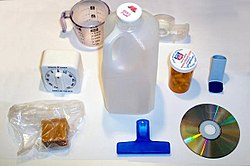







 Polyethylene terephthalate (PET or PETE)
 High-density polyethylene (HDPE or PE-HD)
 Polyvinyl chloride (PVC or V)
 Low-density polyethylene (LDPE or PE-LD),
 Polypropylene (PP)
 Polystyrene (PS)


 A Slovnaft facility in Bratislava, Slovakia
 A SOCAR Polymer polypropylene plant in Sumgayit, Azerbaijan


 Water bottles made of PET
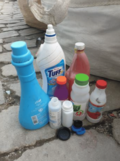 High density polythene (HDPE) is used for making sturdy containers; transparent containers may be made of PET.
 Disposable suits can be made from non-woven HDPE fabric.
 Plastic mailing envelopes made of HDPE
 A Ziploc bag made of LDPE
 Food wrap made of LDPE
![Metalized polypropylene film is a commonly used snack pack material.[32]](//upload.wikimedia.org/wikipedia/commons/thumb/1/1f/Image-from-rawpixel-id-5957725-original.jpg/250px-Image-from-rawpixel-id-5957725-original.jpg) Metalized polypropylene film is a commonly used snack pack material.[32]
Metalized polypropylene film is a commonly used snack pack material.[32] Kinder Joy shell made of polypropylene
 A polypropylene chair
 Stools made of HDPE
 Expanded polystyrene foam ("Thermocol")
 Extruded polystyrene foam ("Styrofoam")
 Thermocol take-away food container
 Egg tray made of PETE
 A piece of packaging foam made of LDPE
 A kitchen sponge made of polyurethane foam
 iPhone 5c, a smartphone with a polycarbonate "unibody" shell
 To withstand the extreme water pressure, this 10-meter deep Monterey Bay Aquarium tank has windows made of acrylic glass up to 33 cm thick.
 PVC pipes
 PVC blister pack

.jpg)


![Metalized polypropylene film is a commonly used snack pack material.[32]](https://en.wikipedia.org/wiki/File:Image-from-rawpixel-id-5957725-original.jpg)


.jpg)

_01.jpg)


 This article incorporates text from this source, which is in the public domain.


 This article incorporates text from a free content work. Licensed under Cc BY-SA 3.0 IGO (license statement/permission). Text taken from Drowning in Plastics – Marine Litter and Plastic Waste Vital Graphics, United Nations Environment Programme.


